Add a Curriculum Bundle to Your Account!
Please select a bundle.



The Pack contains associated resources for the learning experience, typically in the form of articles and videos. There is a teacher Pack (with only teacher information) and a student Pack (which contains only student information). As a teacher, you can toggle between both to see everything.
Here are the teacher pack items for The Emancipation Proclamation:

Overview In this experience, students examine the Emancipation Proclamation by analyzing how its language, limits, and purpose shaped its historical significance. First, they reflect on the word emancipation by considering how people who wanted slavery to continue and people who wanted slavery to end might have understood the term differently. Next, students examine the limits and purpose of the Emancipation Proclamation to understand why it functioned as a wartime action rather than an immediate end to slavery. Then, students closely read and analyze the Emancipation Proclamation to determine how it functioned as a military strategy and how it shifted the course of the Civil War. Finally, the Elaborate scene invites students to examine Jefferson Davis’s response to the proclamation to explore how opposition reactions reveal the broader impact and meaning of emancipation during the Civil War. Estimated Duration: 45–60 minutes Vocabulary Words and Definitions Objectives:
In this experience, students work in small groups in the Explain scene to read and analyze the entire Emancipation Proclamation. Because the document is long and complex, plan grouping to support close reading and interpretation as students work through the full text.
Before starting the lesson, briefly review the term emancipation to ensure students share a basic understanding of the term. This helps prevent confusion later in the experience, especially as students analyze images, discuss impacts, and work with the full primary source. Clarifying this term upfront allows students to focus on reasoning about effects and significance rather than getting stuck on vocabulary.
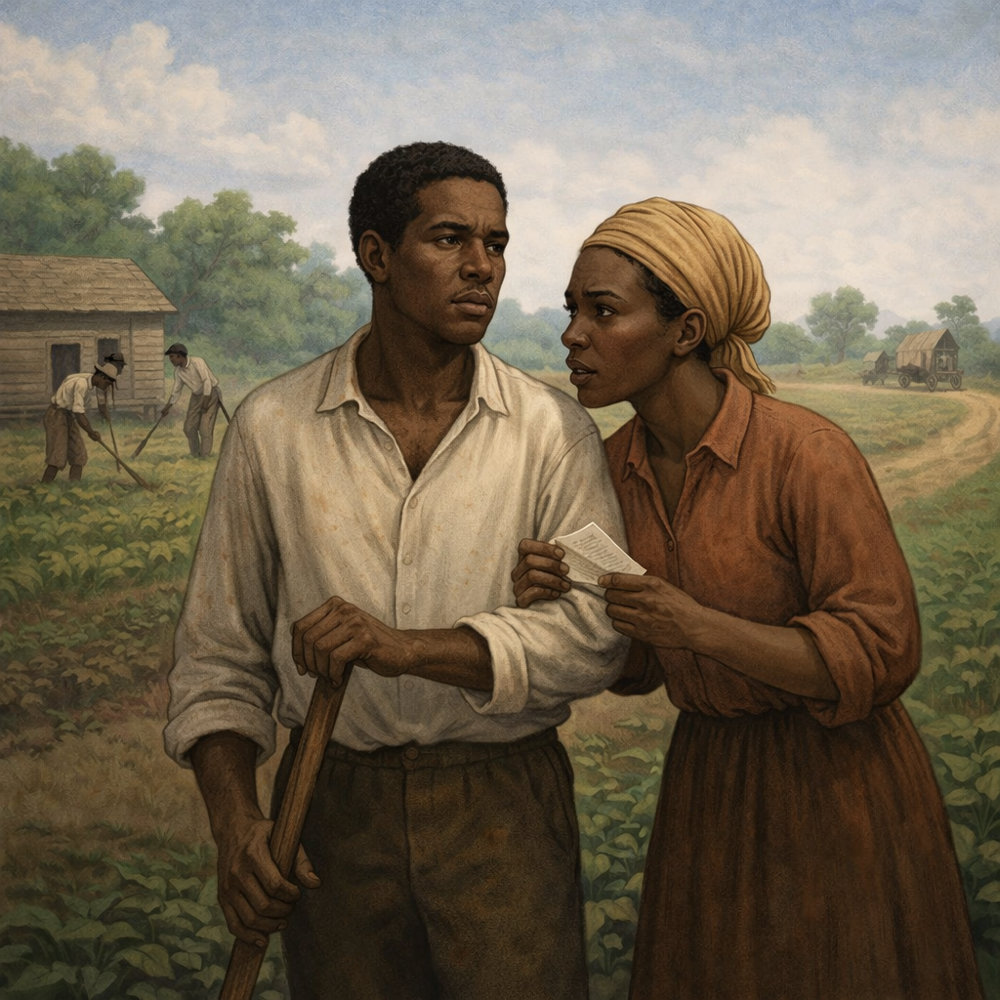
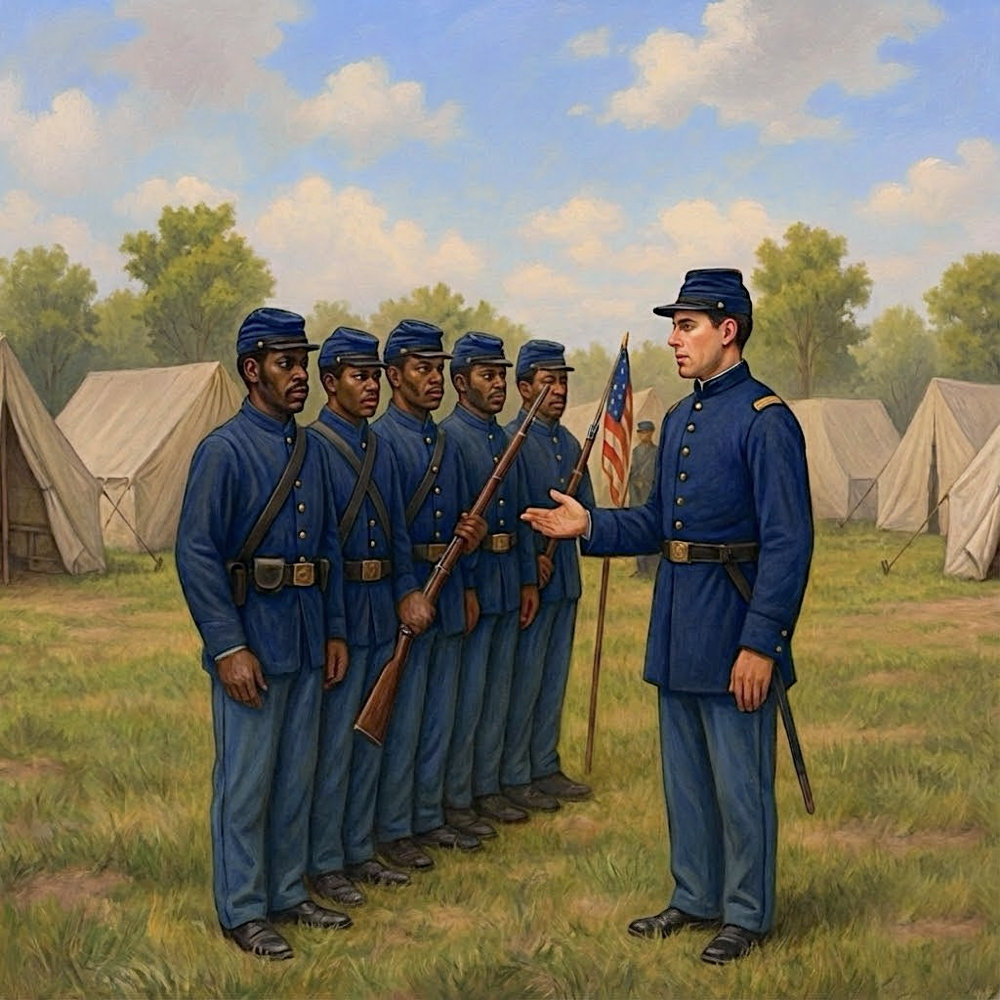
The Civil War led to important changes that affected people’s lives. The image below shows one moment from that time.
Look at the image below and think about what is happening and why it might matter. Then, share your ideas in the discussion wall.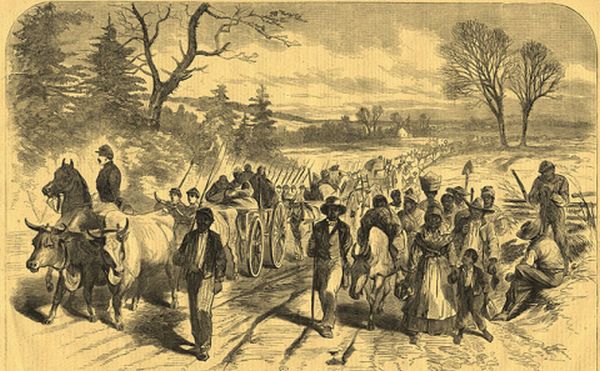
Look closely at the image. What is happening, and what details in the image show that something important or impactful is taking place?
When reviewing the discussion wall, guide a discussion about how the details students highlighted show that something meaningful or consequential is happening in the image. Ask: Why do the details you chose highlight something impactful? Encourage students to explain why specific details stood out to them. Then ask: How might these details capture the broader changes happening at the moment?
The Emancipation Proclamation was issued during the Civil War and changed the legal status of slavery in parts of the United States. This decision had real effects on the war and on people’s lives.
Consider what might have been affected as people responded to this change, and then add one or two ideas to the class list.If freedpeople were leaving plantations as a result of the Emancipation Proclamation, what else might have been affected because of this?
Add one or two ideas to the class list to answer this question.
After reviewing the class list, guide a discussion that helps students make sense of how the Emancipation Proclamation created changes beyond the people shown in the image. Ask: What systems or parts of life depended on enslaved labor? and How would those systems be affected if large numbers of people were leaving plantations? Use student ideas to surface connections to agriculture, the economy, military resources, and daily life during the war, reinforcing that the proclamation had wide-reaching effects even where freedom was uneven or contested.
In this experience, you will investigate the Emancipation Proclamation to understand why it was issued during the Civil War, who it applied to, and how it began to change the meaning and direction of the war.
Objectives: