Add a Curriculum Bundle to Your Account!
Please select a bundle.




The Pack contains associated resources for the learning experience, typically in the form of articles and videos. There is a teacher Pack (with only teacher information) and a student Pack (which contains only student information). As a teacher, you can toggle between both to see everything.
Here are the teacher pack items for The Dred Scott Case:


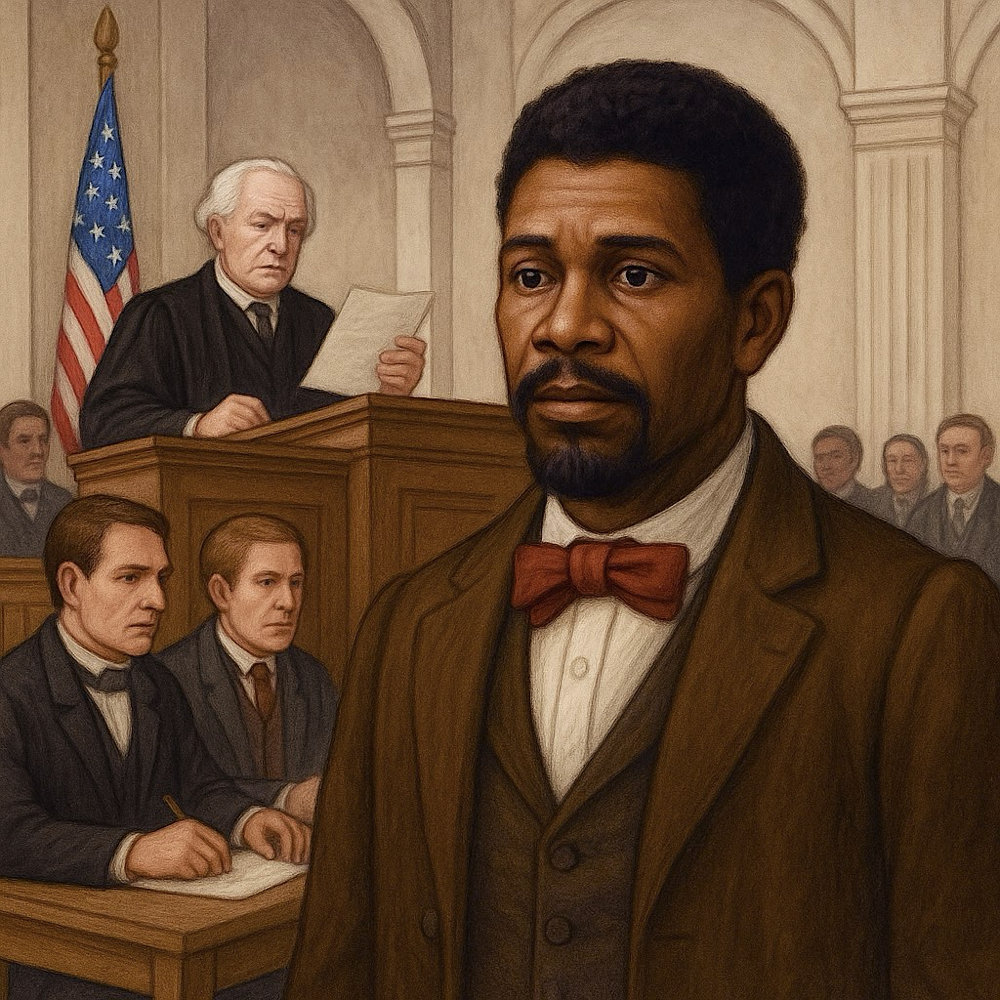
Overview In this experience, students investigate why the Dred Scott decision became a significant turning point in United States history by examining how the Supreme Court’s ruling intensified national divisions over slavery, citizenship, and federal power. First, students consider what makes an event historically significant and develop shared criteria for judging significance. Next, they analyze the Dred Scott case to understand what Dred Scott argued, how the Supreme Court ruled, and how the Court justified its decision, including its claims about citizenship and congressional authority. Then, students examine reactions to the decision from different regions and perspectives to see how the ruling deepened sectional tensions and shaped national debates. Finally, the Elaborate scene invites students to synthesize these ideas through structured discussion as they evaluate who or what should be held responsible for the Dred Scott decision and why it mattered to the nation at that moment in time. Estimated Duration: 45–60 minutes Vocabulary Words and Definitions Objectives:
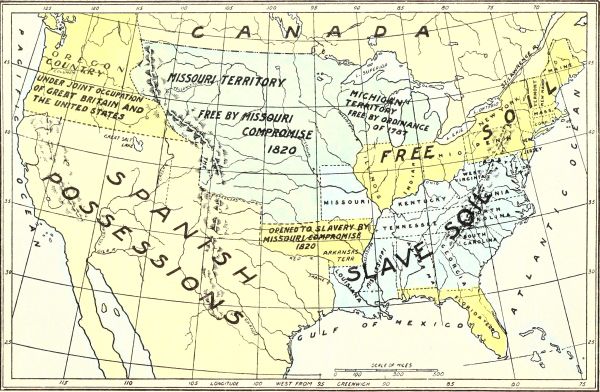
A map showing how the 1820 Missouri Compromise divided the United States into free and unfree territories
Historians organize the past by making choices about what to examine and remember. These choices shape how historical narratives are constructed and how the past is interpreted. Think about events you have learned about in history that stand out to you, and then share your ideas in the discussion wall.
What makes events in history significant?
When reviewing student answers to the discussion wall, highlight answers that describe significance in terms of impact, lasting consequences, change over time, or moments that affected how people lived, thought, or made decisions. Then, help students connect those general ideas about historical significance to prior learning in U.S. history by asking: What are some significant events or tensions you’ve already learned about that were shaping the nation in the 1850s? To close the discussion, ask: What do the events you named have in common? Use student responses to begin building a shared understanding of the characteristics that make events historically significant, which students will continue to add to in the next activity.
Establishing a shared understanding of historical significance at this point supports students across the entire unit. As they examine events, laws, and conflicts related to slavery and sectionalism, students will repeatedly return to questions of why certain moments mattered and how they shaped later developments. Clarifying significance now allows students to engage more deeply with future experiences by evaluating events not in isolation, but in terms of their lasting impact and role in larger historical patterns.
Now, consider how historians judge significance when investigating the past. Then add your ideas to the class list.
What criteria should we consider when determining if an event is significant? Add an idea to the class list.

When reviewing the class list, ensure students are articulating criteria that can be used to evaluate historical significance by asking: How would this idea help us decide whether an unfamiliar event was significant? Highlight opportunities to clarify and refine shared criteria by asking: Which ideas on our list help explain why events continue to matter over time? Close by explaining that students will continue to investigate what makes historical events significant throughout the unit.
In this experience, you will learn how a Supreme Court decision reshaped the debate over slavery and citizenship and why reactions to that ruling deepened divisions between the North and the South.
Objectives: