Overview
In this experience, students review and reinforce key learning from the unit through reflection, vocabulary, and content practice. First, students activate their knowledge by reflecting on big ideas and takeaways from the unit. Then, students work with a partner to review key vocabulary terms using flashcards and apply their understanding through a collaborative task. Next, students repeat this structure with important content from the unit, using flashcards and an interactive activity to make connections across what they’ve learned. Finally, the Elaborate scene invites students to extend their learning through an optional writing activity that asks them to respond to big-picture questions, followed by a short exit ticket aligned to key standards.
Estimated Duration: 45–60 minutes
Vocabulary Words and Definitions:
- agency: the ability to make choices and take action for oneself even when facing limits or control
- amnesty: a government decision to officially forgive a group of people for past actions, often related to rebellion or war
- Bleeding Kansas: a period of violent conflict in the Kansas Territory over whether slavery would be allowed
- Border Ruffians: proslavery supporters from Missouri who crossed into Kansas to influence elections and intimidate opponents
- conscription: a system in which the government requires people to serve in the military
- contraband: enslaved people who escaped to Union lines and were treated as seized enemy property
- desertion: leaving the military without permission, especially during a time of war
- designate: to officially choose or name someone or something for a specific role or purpose
- discontent: a feeling of unhappiness or dissatisfaction with a situation
- disenfranchise: to take away a person’s right to vote or participate in government
- draft: the process of selecting people to join the military, often during a war
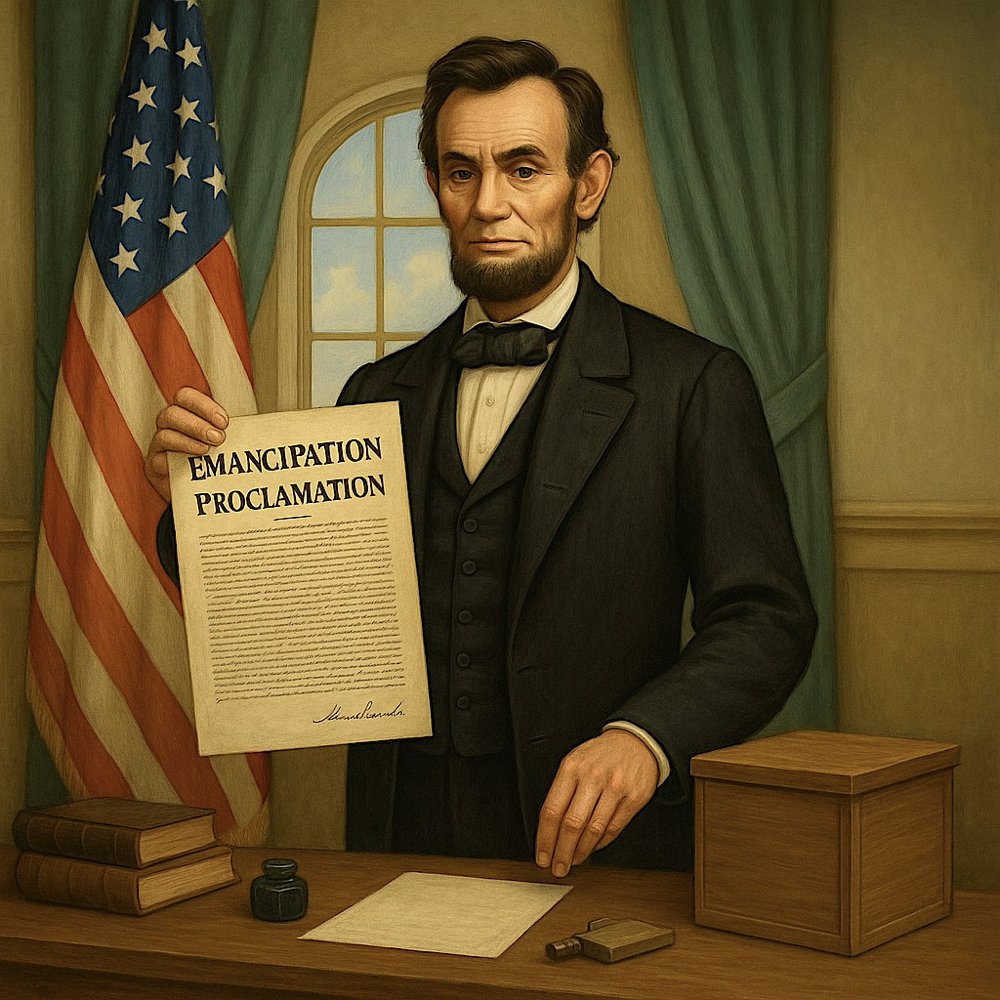
- emancipation: the act of freeing people from slavery or control and granting them freedom
- executive order: a rule or command issued by the President that has the force of law without approval from Congress
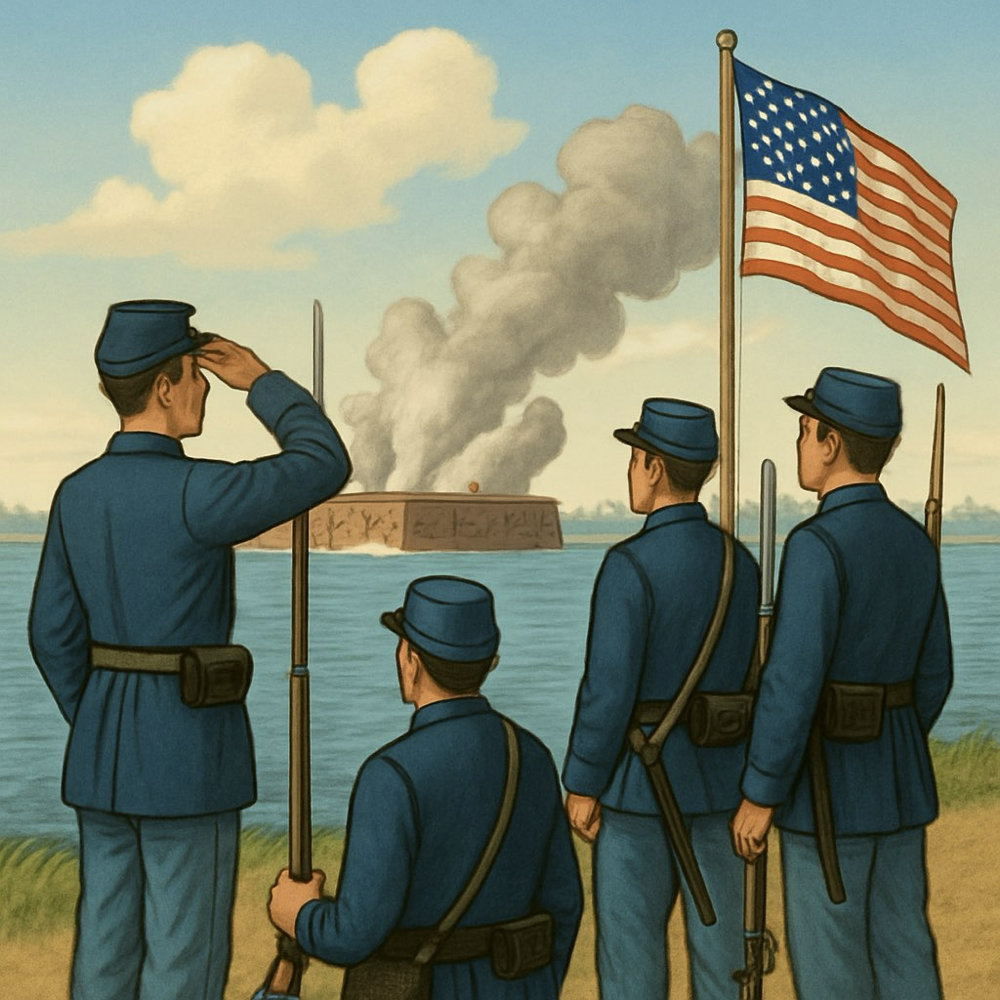
- Fort Sumter: a United States military fort in South Carolina, where the first shots of the Civil War were fired
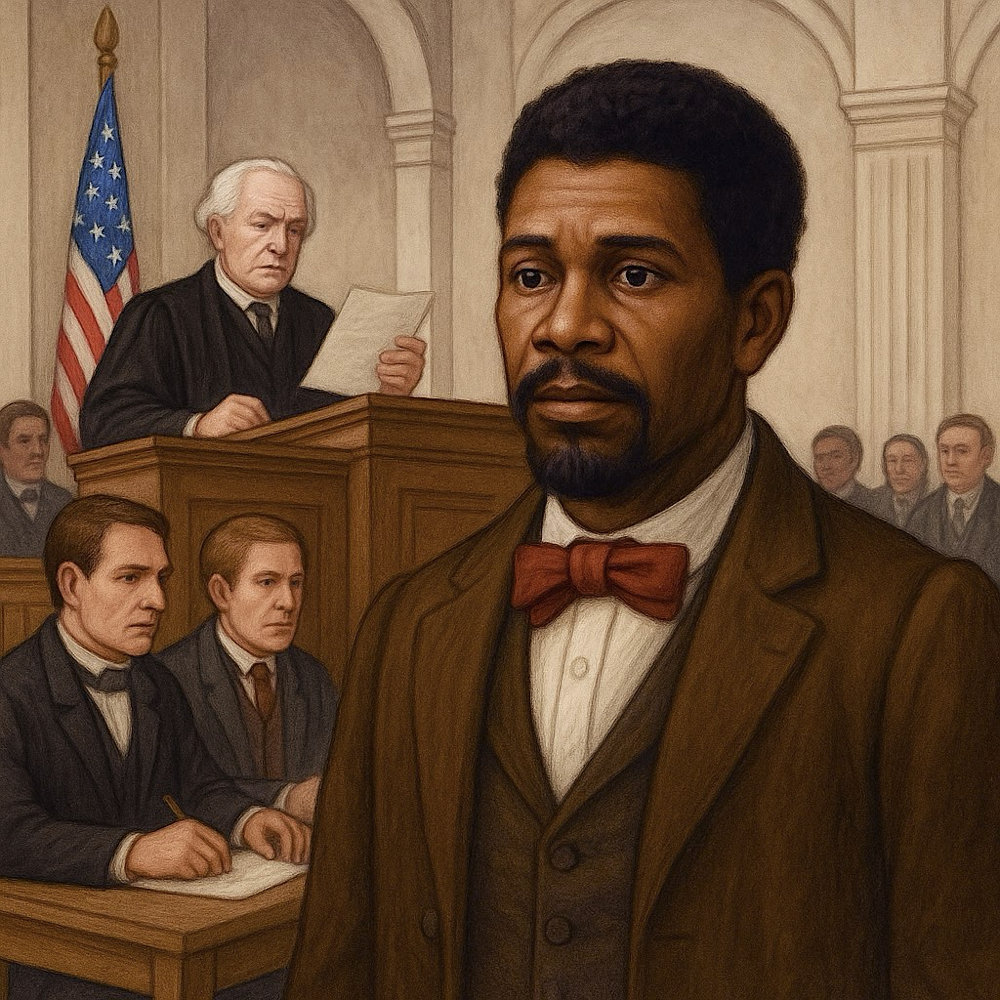
- freedom suit: a lawsuit filed by an enslaved person claiming the right to freedom based on legal grounds
- Free-Soilers: people who opposed the expansion of slavery into western territories and wanted land available for free workers
- Free-Staters: settlers in Kansas who opposed the expansion of slavery and wanted the territory to be free
- home front: the everyday life and activities of people at home during a time of war
- inflation: an increase in prices that makes money buy less than it did before
- irreconcilable: describing differences or disagreements that cannot be resolved
- jurisdiction: the authority of a government or court to make decisions and enforce laws in a specific area
- loot: to steal goods, especially during a riot, war, or disaster
- Militia Act of 1862: a law that allowed African American men to serve in the Union Army, first in non-combat roles
- naval blockade: a strategy where ships block ports or coastlines to stop supplies and trade from reaching an enemy
- parole: the release of captured soldiers after they promise not to fight again unless officially exchanged
- popular sovereignty: the idea that people living in a territory should vote to decide whether slavery would be allowed
- precedent: an earlier action or decision that is used as an example for future situations
- preserve: to keep something safe, protected, or unchanged
- preliminary: happening before the main event or action
- profiteering: making unfair or excessive profit, especially during a time of crisis
- quota: a set limit on the amount of something that is allowed or required
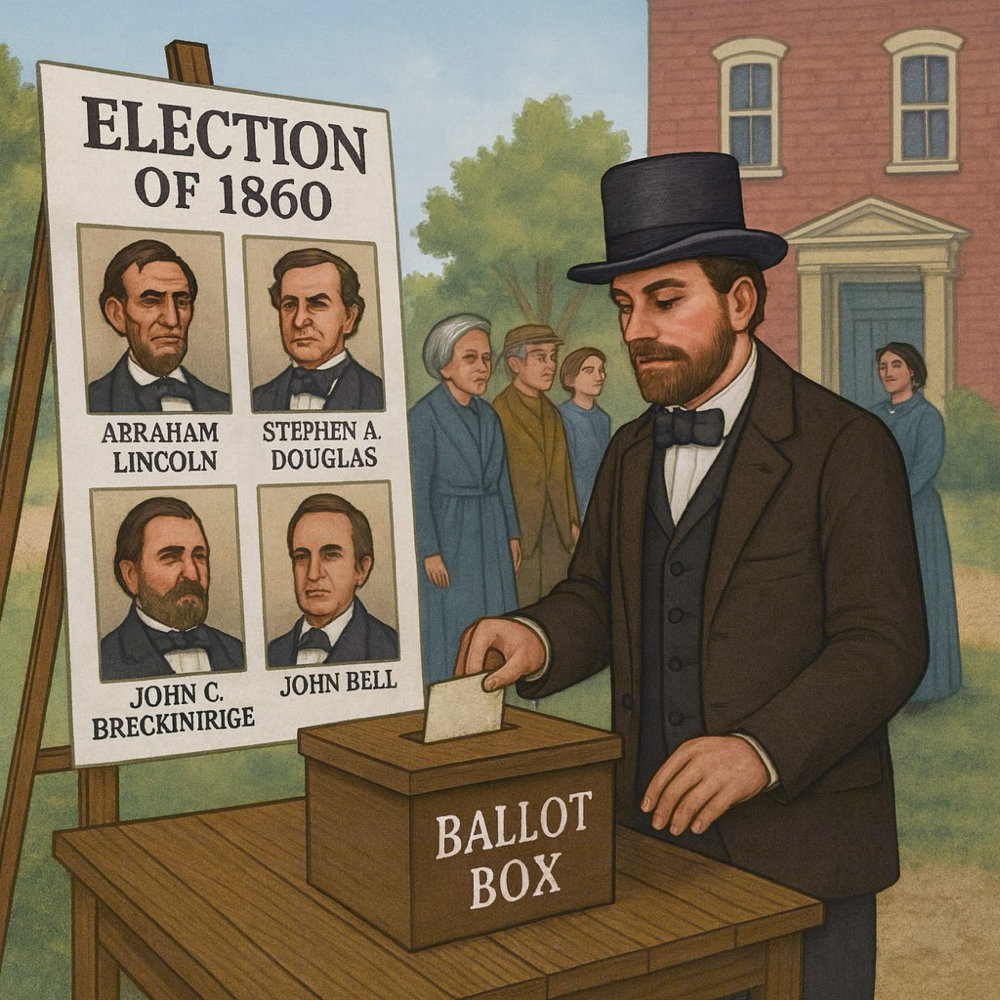
- Republican Party: a political party formed in the 1850s that opposed the spread of slavery into new territories
- secede: to formally withdraw from an organization or government, especially when a state leaves a larger political union
- secession: the act of formally withdrawing from a political union or government, usually to form an independent state or join another country
- stronghold: a place that is heavily defended or strongly controlled
- The Anaconda Plan: a Union strategy during the Civil War to defeat the Confederacy by blocking its ports and cutting off supplies
- The Compromise of 1850: a series of laws passed to ease sectional tensions by admitting California as a free state and strengthening the fugitive slave law
- The Confederate States of America: the group of Southern states that left the United States in 1861 to form a separate nation that supported slavery
- The Emancipation Proclamation: an order issued by President Abraham Lincoln that declared enslaved people in Confederate states to be free
- The Gettysburg Address: a famous speech given by President Abraham Lincoln in 1863 at the dedication of a cemetery to honor soldiers who died fighting in the Civil War
- The Grant-Lee Agreement: the surrender terms that ended major fighting in the Civil War and allowed Confederate soldiers to return home peacefully
Objectives:
- Reflect on and apply key vocabulary and content knowledge from the unit
- Demonstrate understanding of major unit concepts through collaborative and written review activities
In this experience, students are asked to engage in group work and discussions. The experience is intentionally designed around questions that will elicit discussion, thinking, and application of learning as a review of the unit.
Throughout this unit, you explored how deep disagreements over slavery and the balance of power led the nation into the Civil War. You examined the causes of the conflict, key events, and turning points during the war, and how the war transformed the United States and the lives of those who lived through it.
Objectives:
- Reflect on and apply key vocabulary and content knowledge from the unit
- Demonstrate understanding of major unit concepts through collaborative and written review activities
After students complete their individual reflections, consider facilitating a whole-class or small-group share-out. Ask several students to explain what they chose as most important and why. Encourage classmates to respond to each other’s ideas by making connections, asking follow-up questions, or offering alternative perspectives. This discussion helps deepen thinking and allows students to see how others interpreted the question: What do you think is the most important thing to understand about the significance of the Civil War for the nation?.