Add a Curriculum Bundle to Your Account!
Please select a bundle.




The Pack contains associated resources for the learning experience, typically in the form of articles and videos. There is a teacher Pack (with only teacher information) and a student Pack (which contains only student information). As a teacher, you can toggle between both to see everything.
Here are the teacher pack items for Impacts of the War in the South:

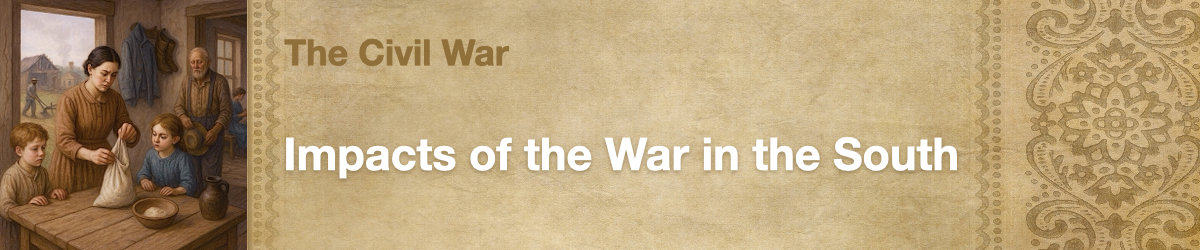
Overview In this experience, students examine how the Civil War reshaped daily life on the Southern home front. First, they discuss the amount of wealth lost in the South during the Civil War. Next, students learn how shortages, inflation, and government policies made it increasingly difficult for Southern civilians to meet basic needs. Then, they explore how these hardships changed attitudes toward the war, contributing to protests, food riots, and declining morale, especially among women responsible for feeding their families. Finally, the Elaborate scene invites students to use a firsthand account of a bread riot to understand why the causes of these events were significant to civilian life and to the Confederacy’s ability to sustain the war effort. Estimated Duration: 45–60 minutes Vocabulary Words and Definitions Objectives:
Before beginning, it is a good idea to briefly review the meaning of the term inflation. Ensuring students share a clear understanding of this term will support their analysis of economic hardship on the Southern home front.
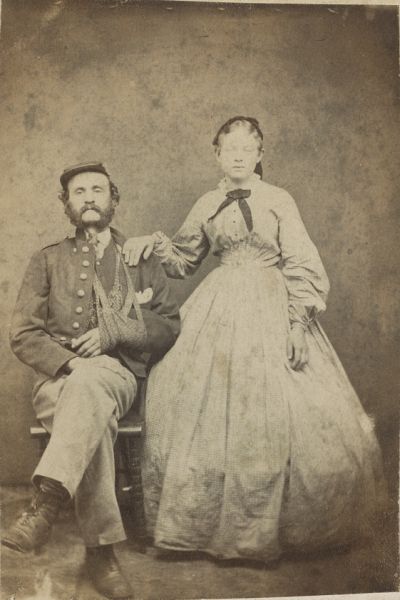
An unidentified Confederate soldier with his wife
Just as the Civil War affected the North in many ways, it also brought change to the South. These changes shaped life across the region in different ways.
Look at the graph and consider what you notice or wonder about wealth loss in the South between 1860 and 1870. Then, add your ideas to the class See–Think–Wonder chart to share thoughts.-origin.jpg)
Evaluate the graph by adding your ideas to the class chart.

When reviewing the class graph, focus on what stood out or felt surprising for students. Ask: What was the most surprising piece of information you took from this graph? Which changes surprised you the most? Use this moment to surface a range of initial observations across the class. Next, guide a discussion by highlighting ideas and questions students raised in the Wonder column that point toward broader impacts on the South. Ask: Which of the questions in the Wonder column help us think about how the war was affecting the South overall? What kinds of information would we need to answer those questions? This helps students recognize what the graph can show and what requires additional evidence.
In this experience, you will learn how the Civil War reshaped everyday life in the South by changing how civilians lived, worked, and responded as hardship grew and the war dragged on.
Objectives: