Add a Curriculum Bundle to Your Account!
Please select a bundle.




The Pack contains associated resources for the learning experience, typically in the form of articles and videos. There is a teacher Pack (with only teacher information) and a student Pack (which contains only student information). As a teacher, you can toggle between both to see everything.
Here are the teacher pack items for Increasing Conflict Over Slavery:

Overview In this experience, students investigate how debates over slavery shaped life in the West and transformed national politics in the years leading up to the Civil War. First, students review what they already know about major events, such as the Second Middle Passage, the Missouri Compromise, and the Fugitive Slave Act of 1850, to activate prior knowledge and surface early ideas about how slavery influenced the growing divide in the United States. Next, students read about the Gold Rush and analyze how migration, changing laws, and court decisions affected debates over slavery in California by working through two-part questions that require selecting supporting evidence. Then, students examine the Kansas-Nebraska Act by mapping how the national debate over slavery changed over time and evaluating a historian’s claim about the act’s importance. Finally, the Elaborate scene invites students to explore how political parties shifted during the 1800s by studying a timeline and creating a concept map that shows how conflicts over slavery reshaped political identities across the country. Then they discuss how these political shifts contributed to rising sectionalism and to explain how changing debates over slavery deepened divisions that pushed the nation toward the Civil War. Estimated Duration: 45–60 minutes Vocabulary Words and Definitions Objectives:
This experience relies heavily on students’ understanding of sectionalism. Take time to ensure students clearly understand that sectionalism refers to strong regional differences and loyalties within the United States. Throughout this experience, students will use this concept to make sense of why conflicts over slavery intensified and became harder to resolve.
The image in the Engage scene contains historically accurate but sensitive and offensive language. Prepare students for this language and provide space to process what they see, emphasizing that the wording reflects the realities of the time, not acceptable language today. The image is intentionally included to activate background knowledge about slavery, resistance, and fear surrounding the enforcement of the Fugitive Slave Act, grounding the experience in the lived tensions that intensified sectional conflict.
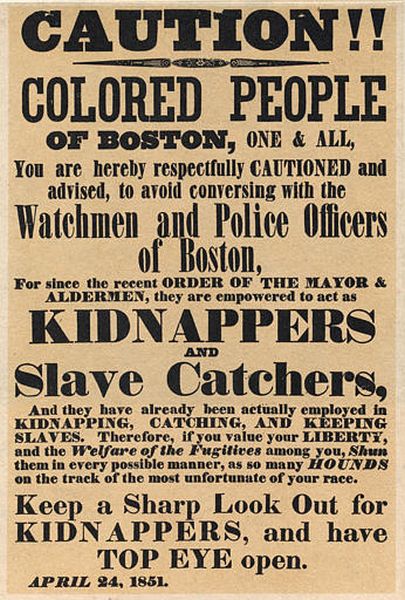
Boston poster warning of kidnappers targeting Free Blacks and freedom seekers
In the mid-1800s, slavery was a major source of division in the United States. This period included developments such as the Missouri Compromise, the Second Middle Passage, and the Fugitive Slave Act of 1850.
Consider what each of these developments involved and how people at the time might have experienced or reacted to them, then complete the graphic organizer to share your ideas.When students review what they already know about the Second Middle Passage, the Missouri Compromise, and the Fugitive Slave Act of 1850, guide the conversation toward how these remembered details reveal broader patterns in the national conflict over slavery. Listen for connections students make across the three developments, especially where similar tensions or power struggles emerge. Extend the conversation by asking: Which groups gained or lost power in each case, and how do those shifts help explain why these developments mattered at the time? This helps students move from recalling significance to recognizing how repeated conflicts over slavery continued to shape the nation.
In this experience, you will learn how Westward Expansion and new laws reopened arguments over slavery and deepened political, economic, and social tensions that pushed the nation closer to conflict.