Add a Curriculum Bundle to Your Account!
Please select a bundle.




The Pack contains associated resources for the learning experience, typically in the form of articles and videos. There is a teacher Pack (with only teacher information) and a student Pack (which contains only student information). As a teacher, you can toggle between both to see everything.
Here are the teacher pack items for The Election of 1860 and Secession:

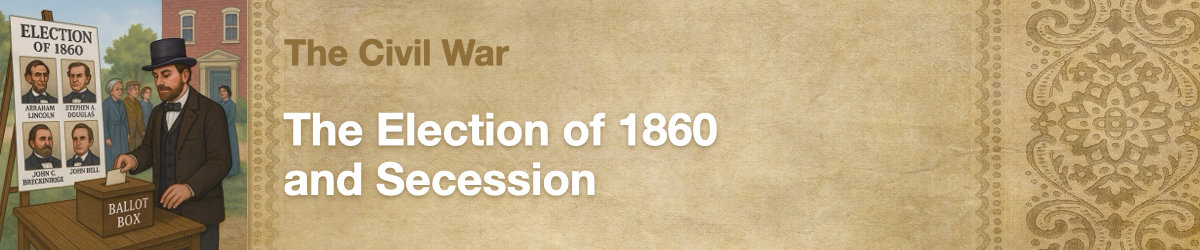
Overview In this experience, students examine how political change and growing sectional conflict led the United States toward the Civil War by analyzing election results, party platforms, and secession arguments. First, students study maps from the 1856 and 1860 elections to ask questions about changing voting patterns and regional divisions across the country. Next, they explore the collapse of the Whig Party and the rise of the Republican Party to understand how disagreements over slavery and westward expansion reshaped national politics. Then, students investigate the election of 1860 and the beginning of secession by analyzing party positions, Lincoln’s victory, and how South Carolina and other Southern states explained their decision to leave the Union. Finally, the Elaborate scene invites students to dive deeply into a political cartoon about secession to analyze details, perspective, and meaning as evidence of how Americans understood the crisis at the time. Estimated Duration: 55–70 minutes Vocabulary Words and Definitions: Objectives:
This experience introduces substantial historical context and centers on a critical turning point in the growing sectional conflict before the Civil War. Plan to allow for additional time so students can process the ideas, make connections, and engage thoughtfully with the material.
At the start of the experience, briefly remind students that political parties change over time. The Republican and Democratic parties of the 1800s are not the same as they are today. Their ideas, priorities, and supporters shifted gradually in response to major issues such as slavery, federal power, and civil rights. Emphasize that this was a long-term realignment, not a sudden switch, and that understanding this process helps avoid applying modern party labels too simply to historical events.
Before beginning this experience, review the terms secede and secession to ensure students understand their meaning and connection to one another. Students first encountered these words in the "States' Rights and the Nullification Crisis" experience when studying the Age of Jackson. Reminding students that to secede means to formally withdraw from a group or government, and that secession refers to the act of doing so, will help them understand how Southern states applied these same concepts when they left the Union in 1860 and 1861.
Students begin the Engage scene working in small groups. Having groups set up ahead of time helps the experience start smoothly and allows students to engage thoughtfully in discussion from the outset.
Thematic maps present information by focusing on a specific topic or pattern within a place. Historians use thematic maps to explore how ideas, beliefs, or conditions are distributed across space. Comparing thematic maps can raise questions about relationships, change over time, and how geography connects to historical developments.
With your group, examine the two thematic maps showing the results of the 1856 and 1860 elections and discuss any changes or patterns that stand out. Use those observations to develop questions about what might explain the shifts, then add your group’s ideas to the discussion wall.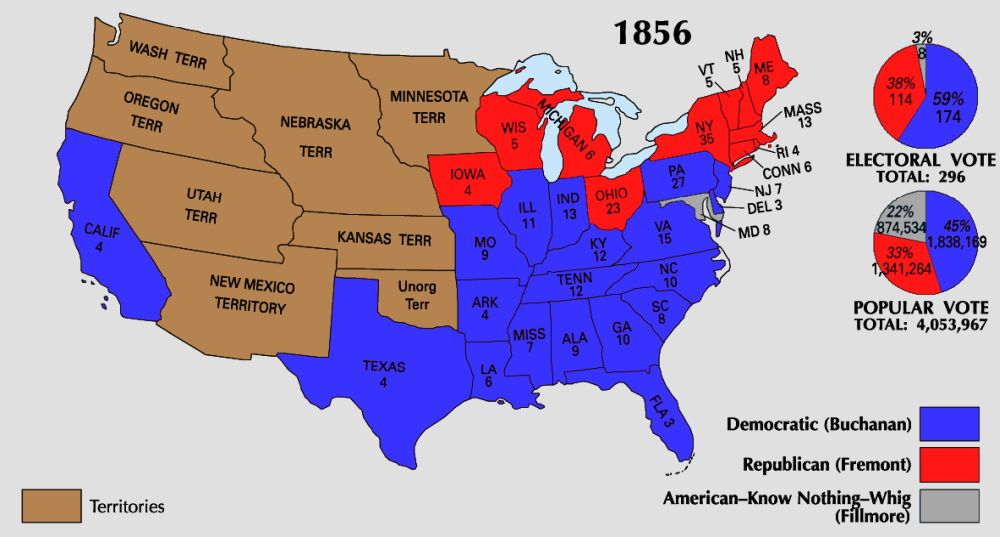
Election results for the 1856 presidential election
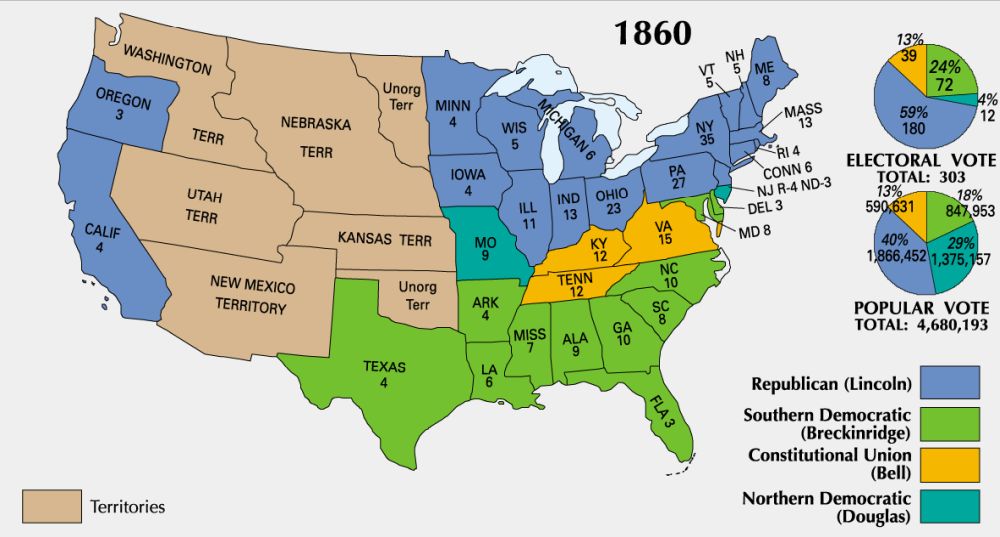
Election results for the 1860 presidential election
What questions could you ask that would help explain the changes shown on the maps between the election results in 1856 and 1860?
When reviewing students’ observations and questions about the two electoral maps, guide the discussion toward identifying clear regional patterns. Highlight student responses that notice differences between northern and southern voting or shifts between 1856 and 1860. Encourage students to point directly to states or regions on the maps as they explain what they see. Ask: What differences do you notice between how northern and southern states voted in each election? and Which states or regions show the biggest changes between the 1856 and 1860 maps? Support students in moving from general statements to more precise observations by prompting them to reference specific areas on the maps.
In this experience, you will learn how deep regional disagreements over slavery and political power shaped the Election of 1860 and why its outcome led many Southern leaders to choose secession over remaining in the Union.
Objectives: