Add a Curriculum Bundle to Your Account!
Please select a bundle.

The Pack contains associated resources for the learning experience, typically in the form of articles and videos. There is a teacher Pack (with only teacher information) and a student Pack (which contains only student information). As a teacher, you can toggle between both to see everything.
Here are the teacher pack items for Spanish Conquests and Colonization:

Overview In this experience, students identify the causes and impacts of Spanish exploration and colonization on the Americas by evaluating primary and secondary sources. First, students evaluate a map to recall or predict the challenges and benefits the Spanish encountered in their efforts to explore and colonize the Americas. Next, students evaluate a secondary source video about Spanish conquests during the Age of Exploration and Colonization to summarize the causes and effects of Spanish conquests. Then, compare the efforts and impacts of Spain’s conquests of the Central and South Americas to its conquests in the Southwest to understand the causes for continued exploration and its impacts on the region by evaluating secondary and primary sources. Finally, students are invited to explore the reasons for Spain’s Requerimiento and the impact it had on Indigenous populations in the areas they colonized. Estimated Duration: 45–60 minutes Vocabulary Words and Definitions: Objectives:
This experience centers on Spanish colonization in two key regions: Central and South America, and the southwestern part of North America, including Texas, New Mexico, Arizona, and California. You may also find it valuable to explore the Spanish presence in the Southeast using the additional resources provided.
This experience is designed to reinforce and deepen understanding of key concepts introduced in the European Colonization experience. If you teach this experience first, consider using it as a launch point for exploring European motivations and the impacts of colonization in North America. The intentional overlap allows students to revisit these big ideas in a new regional context, helping them make connections across time and place. By seeing how similar patterns such as Spain’s pursuit of wealth and power played out in different areas, students can build a more nuanced understanding of colonization and its consequences for Indigenous peoples and the development of the Americas.
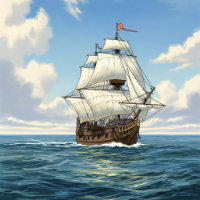
Spain created one of the most powerful colonial empires in the world. As Spanish ships crossed the Atlantic, explorers claimed land for Spain and made contact with many Indigenous peoples. They explored and established control in regions that are now known as Central and South America, as well as the southeastern and southwestern parts of North America. Over time, Spain began to do more than explore. It aimed to take lasting control of the land by building settlements and spreading Spanish rule.
Look at the map of Spanish exploration routes in Central and North America. Then, recall the reasons for Spanish exploration and think about why Spain would have wanted to establish permanent settlements in the lands they conquered.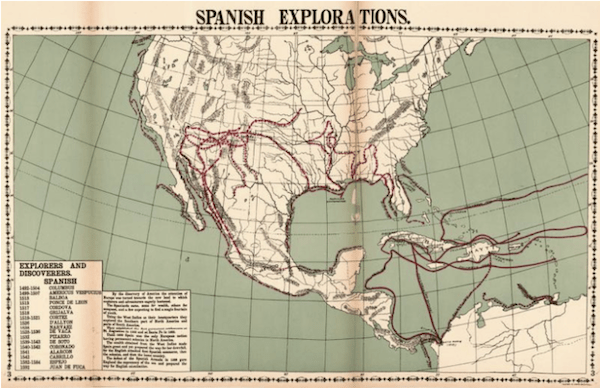
Map of Spanish Explorations in Central America and North America
What can you recall about the motivations for Spain’s exploration of the Americas?
After the discussion, check for student understanding of the reasons behind Spanish exploration. Ask: Why would Spain need to establish permanent settlements if its goals were to gain wealth, spread Christianity, and increase its power? Press students to consider how exploration alone could not accomplish Spain's long-term goals without colonization. Highlight answers that connect the motivations of gold, glory, and God to the decision to establish permanent settlements in the Americas.
Spain's explorers did more than map new lands. They claimed territory, established permanent settlements, and transformed the regions they conquered.
In this experience, you will learn how Spanish exploration led to colonization and examine its lasting effects on Indigenous peoples and the southwestern regions of North America.
Objectives: