Add a Curriculum Bundle to Your Account!
Please select a bundle.

The Pack contains associated resources for the learning experience, typically in the form of articles and videos. There is a teacher Pack (with only teacher information) and a student Pack (which contains only student information). As a teacher, you can toggle between both to see everything.
Here are the teacher pack items for Life in the Colonies:

Overview In this experience, students investigate daily life in the colonies through the eyes of a specific group, such as women, enslaved people, Indigenous communities, landowners, tradespeople, indentured servants, or children. First, they examine secondary sources to identify key aspects of that group's experiences. Next, they find and analyze an additional primary and secondary source to deepen their understanding. Then, students develop a summary of what life was like for their assigned group of people using the information they’ve gathered. Finally, students are invited to communicate their findings through a written and oral presentation that highlights the significance of this group’s experience in colonial society. Estimated Duration: 45–60 minutes Objectives:
Later in this experience, students will analyze both provided sources and sources they locate on their own. In the Explore scene, students work with curated secondary sources that provide foundational understanding. In the Explain scene, they extend that understanding by identifying and analyzing additional primary and secondary sources independently. To support this process:
By planning ahead, you can ensure all students are equipped to explore their group’s experiences in a thoughtful and meaningful way.
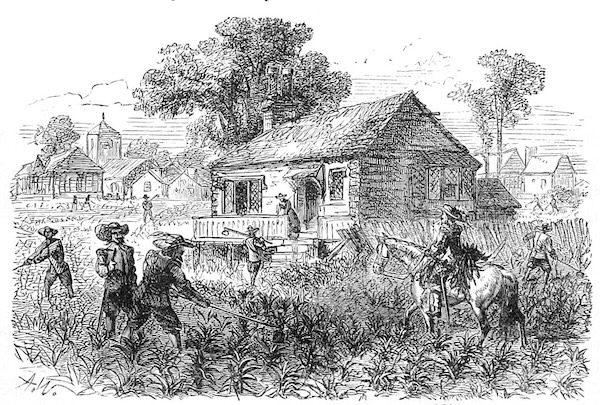
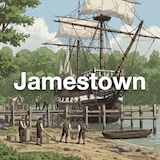
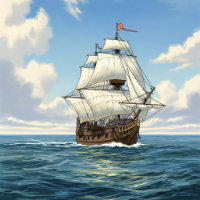
An 1878 depiction of tobacco cultivation at Jamestown (1615).
When we think about colonial America, we often hear about big events and famous leaders. But what was everyday life like for the people who actually lived there? The best way to understand history is through the experiences of real people, especially people whose stories are often overlooked.
Imagine you're a time traveler arriving in a colonial town. Whose experiences would help you understand what life was really like there? Whose voice would you want to hear and why?
Think about whose voices you have not heard much about yet, or whose perspective might offer the clearest window into colonial life.
What’s one question you’d like to answer about life in the colonies?
This might be something you are genuinely curious about or something that could help guide your investigation moving forward.
When sharing student responses to the discussion wall, guide a conversation about historical perspective by asking: How might learning about many different people's experiences expand your understanding of colonial life? Press students to consider that people experienced colonial society differently based on their roles, identities, and circumstances. Highlight responses that recognize that multiple perspectives can create a more complete understanding of the past.
In this experience, you’ll explore daily life in the colonies through the perspective of a specific group. You’ll learn about their work, struggles, relationships, and roles in colonial society. To begin, think about the many different kinds of people who lived in the colonies, like enslaved people, Indigenous communities, women, landowners, indentured servants, tradespeople, or children.
Objectives:
Before beginning the next scene, decide whether students will work individually or in small groups to research one of the following colonial groups: women, enslaved people, Indigenous communities, landowners, tradespeople, indentured servants, or children. You can assign these ahead of time to ensure balanced coverage, randomize to introduce unfamiliar perspectives, or allow student choice to increase engagement. Each option supports different goals: