Add a Curriculum Bundle to Your Account!
Please select a bundle.


The Pack contains associated resources for the learning experience, typically in the form of articles and videos. There is a teacher Pack (with only teacher information) and a student Pack (which contains only student information). As a teacher, you can toggle between both to see everything.
Here are the teacher pack items for The Columbian Exchange:

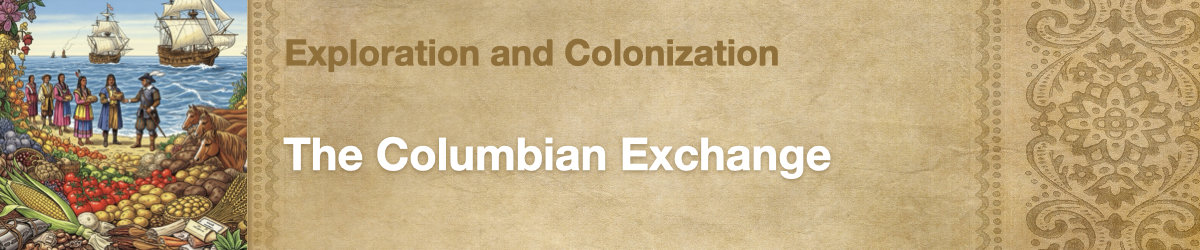
Overview: In this experience, students examine the origins and the impacts of the Columbian Exchange. First, students evaluate secondary sources to investigate how the Columbian Exchange originated and categorize what was exchanged between Europe and the Americas. Next, students discuss how the Columbian Exchange is an example of cultural diffusion. Then, they explain the positive and negative impacts the exchange had on the world. Finally, students are invited to explore the reasons why many Indigenous people died from diseases brought on by the Columbian Exchange, but the Europeans did not, leading to deeper discussions about the overall impact of the Columbian Exchange. Estimated Duration: 45 - 60 minutes Vocabulary Words and Definitions: Objectives:
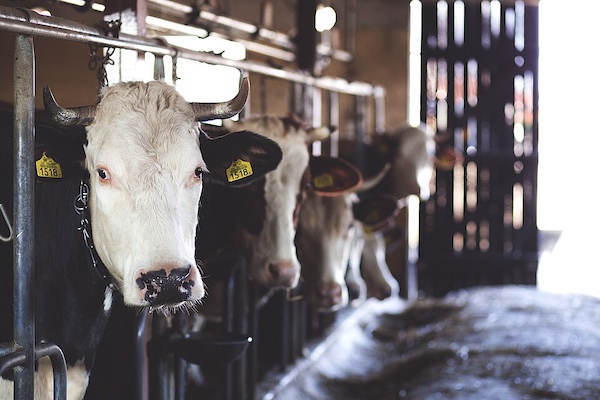
Did you know that there once was a time when cows did not exist in the Americas?
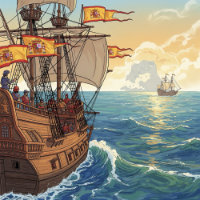
As you learned in the prior experience, in the 1400s and 1500s, European explorers began crossing the Atlantic Ocean in search of new trade routes, land, and opportunities. These voyages brought distant continents into contact with each other, setting off a chain of events that transformed cultures, economies, and environments around the world. In this experience, you’ll explore how exploration linked people across Europe, Africa, and the Americas and how those connections reshaped life in lasting and sometimes unexpected ways.
How would your life be different if people in the United States did not know that cows existed?
How might the introduction of new plants, animals, and ideas through European Exploration have affected the people in both the Americas and Europe?
When reviewing students' responses, guide a discussion that explores how the movement of plants, animals, and ideas can reshape daily life in ways people may not immediately recognize. Encourage students to think beyond individual examples by asking: How can the introduction of a single plant or animal create changes throughout an entire society? Invite students to consider how changes in food, transportation, work, and trade can influence communities over time.
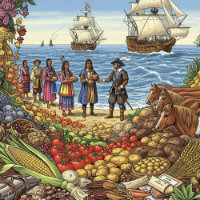
The meeting of Europe and the Americas reshaped societies across the world in lasting ways.
In this experience, you will learn how the Columbian Exchange began, what people, plants, animals, and diseases moved between continents, and how these exchanges created both opportunities and challenges that continue to influence the world today.