The Republic of Texas years including leaders and issues such as annexation into the United States, and early statehood years including the Constitution of 1845, early statehood leaders, U.S.-Mexican War, Tejanos and American Indians, immigrants and slaves in Texas.
Republic of Texas and Early Statehood unit contains 16 learning experiences.
Learning Experiences (Lessons) in Republic of Texas and Early Statehood Each learning experience takes about 45 minutes to teach in the device-enabled classroom.
Sam Houston: Republic of Texas President
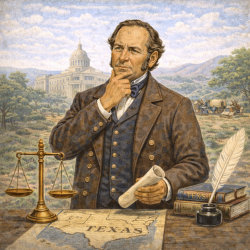
Students examine Sam Houston’s two terms as president of the Republic of Texas. They analyze major challenges he faced and evaluate his responses as successful, unsuccessful, or mixed. Then they write an essay evaluating how Houston responded to one major challenge, using evidence from the lesson to support their conclusion.
Mirabeau Lamar: Political Changes
Students describe President Lamar’s major policies, including his approach to relations with Indigenous nations and Mexico. Then they analyze his vision for a stronger and more expansive Texas and how his actions involving the Texas Rangers, the Texas Navy, and the Santa Fe Expedition supported that vision. Finally, they evaluate Lamar’s efforts to support public education and their longer-term importance for Texas.
Continuing Texas-Mexico Conflict
Students learn about the relationship between Texas and Mexico after the Texas Revolution. They analyze the policies of Presidents Houston and Lamar toward the Mexican government and the Treaties of Velasco. Then they examine how other countries viewed the Republic of Texas and its relationship with Mexico.
Native American Relations in the Republic of Texas
Students examine relations between the Republic of Texas and Indigenous nations living in and around Texas. They explore the role of Cherokee leader Chief Bowles and compare Presidents Sam Houston’s and Mirabeau Lamar’s different approaches to Indigenous relations. Next, students examine the causes and consequences of the Council House Fight between Texas officials and the Comanche. Finally, they analyze a speech by President Houston to determine how he believed the actions of Anglo Texan settlers contributed to conflict with Indigenous nations.
Anson Jones and Annexation
Students learn about the final president of the Republic of Texas, Anson Jones. They describe his tenure as Secretary of State under Sam Houston. Then they explain how Jones wrestled between the options for Texas to be annexed to the United States or to gain Mexican recognition as an independent country. Finally, students write a recommendation to President Jones about the preferred option.
The United States Annexes the Republic of Texas
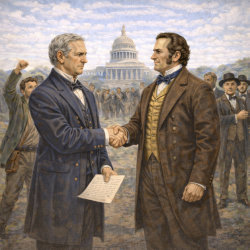
Students learn about the question of Texas annexation from the point of view of the United States. They examine a political cartoon showing the two sides to the issue. Then they describe the issues leading up to annexation and why some people from the United States and other countries were against it. Finally they write a speech for or against the annexation.
Notable Texans in the Republic
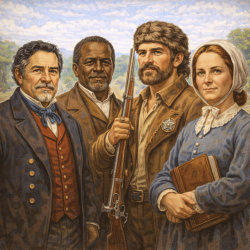
Students examine the lives and contributions of four notable Texans from the Republic period: José Antonio Navarro, a Tejano political leader; William Goyens, a free Black businessman and community leader; John Coffee Hays, a Texas Ranger officer; and Mary Maverick, a writer who recorded life in San Antonio. Students examine the roles these individuals played in the Republic and some of the challenges they faced. They also analyze historical evidence to better understand life in Texas during the Republic period.
Life in the Republic of Texas
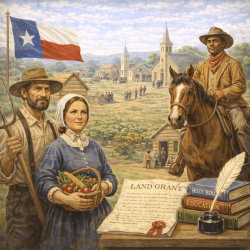
Students learn about daily life in the Republic of Texas. They compare life on farms, ranches, and in towns and examine how agriculture, trade, and transportation shaped everyday life. They explore changes in education and religion during the Republic period and examine how access to these opportunities varied. Students also analyze the status of free Black Texans, including the Ashworth Act and the restrictions placed on free Black people. Finally, they write a letter from the perspective of a teenager newly arrived in Texas describing daily life in the Republic.
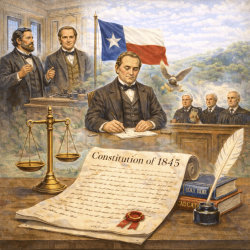
The Constitution of 1845
Students learn about the Constitution of 1845 and the three branches of government it defines: legislative, executive, and judicial. Then they explore some unusual additions to the constitution that are not included in today’s version, including the ban on banks and limits on public debt.
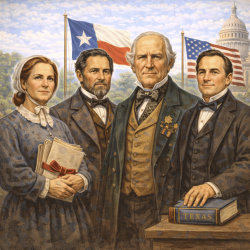
Early Statehood Leaders
Students learn about important people in Texas during its early statehood. They learn about the first governors, when they served, and how they helped Texas. They examine the biographies of Senators Rusk and Houston and identify important things they did for Texas. Finally, they learn about Jane McManus Cazneau and how she made an impact on Texas.
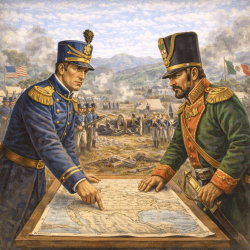
The U.S.-Mexican War
Students learn about the U.S.-Mexican War. They explore issues that caused the war. Next, they identify important people involved in the war. Then, they analyze the different battles of the war.
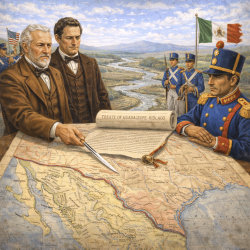
Texan Response to the U.S.-Mexican War
Students identify the terms of the Treaty of Guadalupe-Hidalgo. Then, they analyze issues that plagued Texas after the war, including slavery and the Texas border. Finally, they evaluate the impacts of the Compromise of 1850.
Tejanos and American Indians in the State of Texas
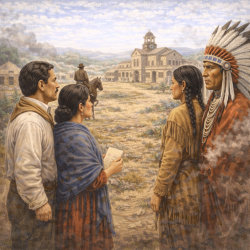
Students examine challenges faced by Tejanos and American Indian nations during Texas’s early statehood period. They learn how some Tejanos experienced discrimination, threats, land loss, and declining political influence after annexation and the U.S.-Mexican War. They also analyze conflicts over land, the division of authority between the federal and state governments, the reservation system, and the removal of Indigenous communities from Texas. Finally, students examine a letter from Texas Ranger E. D. Burleson to Governor Elisha Pease to analyze how the Rangers responded to conflict and what the letter reveals about Burleson’s point of view.
The Attraction of Texas for Immigrants
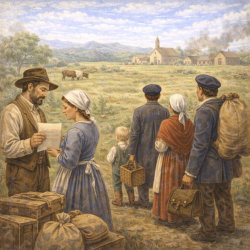
Students learn about nineteenth-century European immigration to Texas. They learn that Texas had a lot to offer the immigrants, including land, low taxes, and political and religious freedom. They examine what the German, French, and Polish immigrants brought to Texas and how various immigrant groups impacted Texas. They analyze primary sources from German immigrants to learn first-hand about their lives.
Slavery and African Americans in Texas
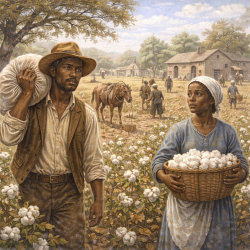
Students examine the growth and impact of slavery in Texas during the Republic and early statehood periods. They learn about the forced labor, family life, restrictions, resistance, and community experiences of enslaved African Americans. Students research why slavery expanded rapidly in Texas and how enslaved labor shaped the state’s economy and society. Finally, they analyze primary-source newspaper advertisements to determine what the ads reveal about how slaveholders viewed and treated enslaved people.