Add a Curriculum Bundle to Your Account!
Please select a bundle.



The Pack contains associated resources for the learning experience, typically in the form of articles and videos. There is a teacher Pack (with only teacher information) and a student Pack (which contains only student information). As a teacher, you can toggle between both to see everything.
Here are the teacher pack items for Native American Relations in the Republic of Texas:

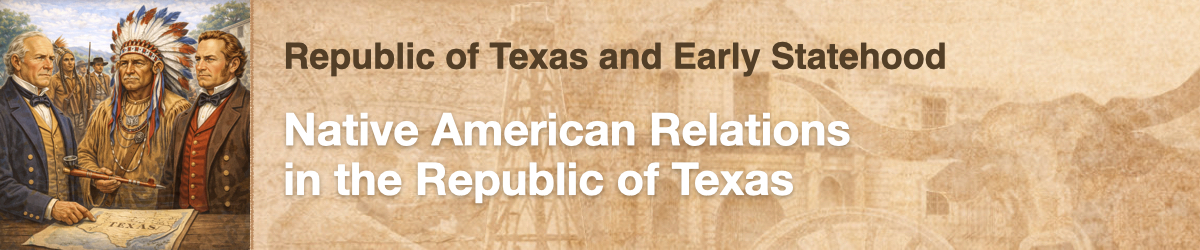
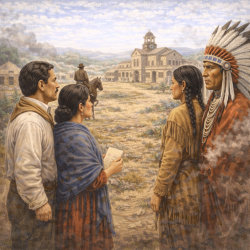
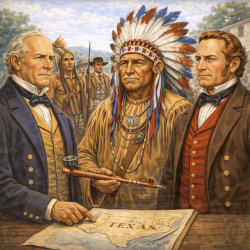
Overview In this experience, students examine relations between the Republic of Texas and Indigenous nations living in and around Texas. They explore the role of Cherokee leader Chief Bowles and compare Presidents Sam Houston’s and Mirabeau Lamar’s different approaches to Indigenous relations. Next, students examine the causes and consequences of the Council House Fight between Texas officials and the Comanche. Finally, they analyze a speech by President Houston to determine how he believed the actions of Anglo Texan settlers contributed to conflict with Indigenous nations. Objectives:
After the Texas Revolution, relations between the Republic of Texas and Indigenous nations remained complex. Different Native nations had their own lands, leaders, goals, and relationships with Texas settlers and government officials.
As settlement expanded, conflicts increased over land, resources, and political control. Some Texas leaders favored negotiation and treaties, while others supported military campaigns and the removal of Indigenous communities from lands claimed by the Republic.
In this lesson, you will examine how the Republic of Texas dealt with different Indigenous nations and how those policies affected Native communities during the Republic period.
Objectives:
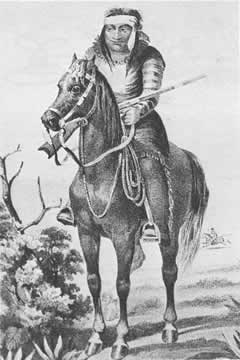
A Native American in Texas
Name at least one Native nation that lived in Texas before European colonization and during the Republic of Texas period. To list more than one, separate the names with commas like this: red, blue.
Answers may vary. Native nations and peoples who lived in or regularly used areas of present-day Texas include the Lipan Apache, Mescalero Apache, Comanche, Kiowa, Caddo, Wichita, Tonkawa, Karankawa, and Jumano. Numerous smaller Indigenous groups also lived in South Texas and northeastern Mexico, some of whom have historically been grouped under the term Coahuiltecan. Accept other historically accurate responses. The image above shows a Lipan Apache person.
When everyone is ready to continue, unlock the next scene.