Add a Curriculum Bundle to Your Account!
Please select a bundle.




The Pack contains associated resources for the learning experience, typically in the form of articles and videos. There is a teacher Pack (with only teacher information) and a student Pack (which contains only student information). As a teacher, you can toggle between both to see everything.
Here are the teacher pack items for Slavery and African Americans in Texas:

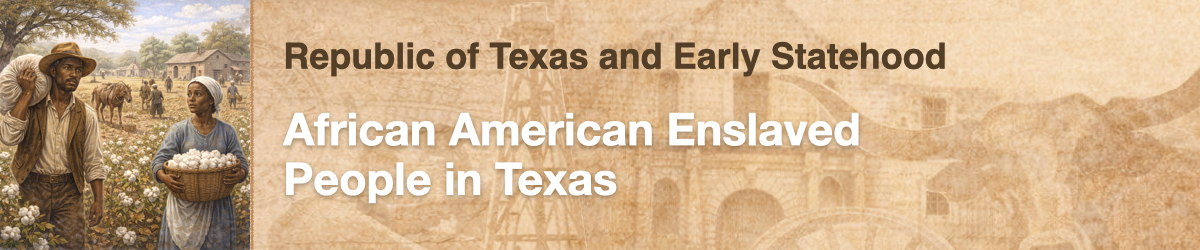
Overview In this experience, students examine the growth and impact of slavery in Texas during the Republic and early statehood periods. They learn about the forced labor, family life, restrictions, resistance, and community experiences of enslaved African Americans. Students research why slavery expanded rapidly in Texas and how enslaved labor shaped the state’s economy and society. Finally, they analyze primary-source newspaper advertisements to determine what the ads reveal about how slaveholders viewed and treated enslaved people. Objectives:
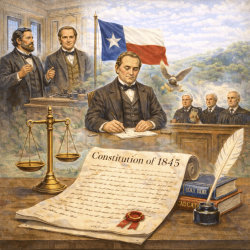
Mexico increasingly restricted slavery during the years Texas was part of Mexico, but some Anglo-American settlers brought enslaved people with them. After the Texas Revolution, the Constitution of the Republic of Texas protected slavery. When Texas joined the United States in 1845, it entered as a state where slavery was legal.
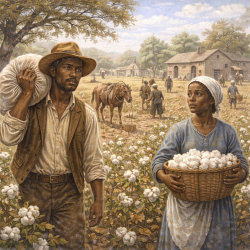
As Texas’s population and cotton economy grew, the number of enslaved people increased rapidly. Slaveholders forced enslaved people to work on farms and plantations, especially producing cotton, corn, and sugar. By 1850, more than 58,000 enslaved people lived in Texas. By 1860, that number had grown to more than 180,000, and nearly one-fourth of Texas households enslaved at least one person.
In this experience, you will examine the growth of slavery in Texas and the lives of enslaved African Americans during the Republic and early statehood periods.
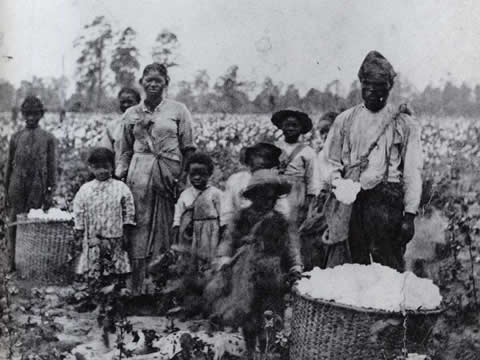
Family of Slaves, 1850
Objectives:
How can a system like slavery affect more than just the people who are enslaved? Think about its effects on families, communities, laws, the economy, and political power. Share one or two ideas on the discussion wall.
Encourage students to begin thinking about how slavery might affect the society in which it exists.
When everyone is ready to continue, unlock the next scene.