Add a Curriculum Bundle to Your Account!
Please select a bundle.




The Pack contains associated resources for the learning experience, typically in the form of articles and videos. There is a teacher Pack (with only teacher information) and a student Pack (which contains only student information). As a teacher, you can toggle between both to see everything.
Here are the teacher pack items for Early Statehood Leaders:

Overview In this experience, students learn about important people in Texas during its early statehood. They learn about the first governors, when they served, and how they helped Texas. They examine the biographies of Senators Rusk and Houston and identify important things they did for Texas. Finally, they learn about Jane McManus Cazneau and how she made an impact on Texas. Students will collaborate in small groups for scene 2 through scene 4. Objectives:
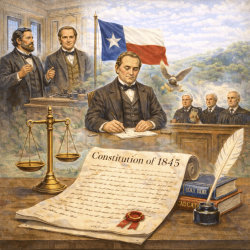
Many Texans had supported joining the United States since the end of the Texas Revolution. As Texas prepared for statehood in 1845, delegates wrote a new state constitution and voters approved it. On December 29, 1845, Texas officially became the 28th state in the United States.
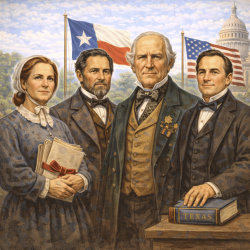
Statehood also brought new political leaders and responsibilities. In this lesson, you will learn about some of the leaders who helped guide Texas during its early years as a state.
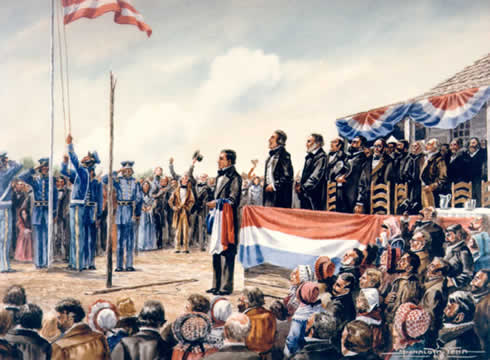
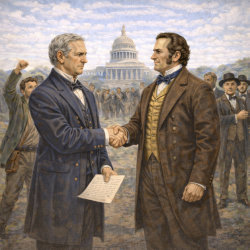
The Annexation of Texas to the Union, by Donald M. Yena
Objectives:
Texas’s transition from an independent republic to a U.S. state brought new leaders and new political challenges. Some of the people who influenced early Texas statehood served in Texas government, while others shaped events from the national level.
One important national leader was U.S. President James K. Polk. Polk supported the annexation of Texas, and expansion was an important issue during his successful presidential campaign in 1844. On December 29, 1845, Polk signed the legislation that formally admitted Texas as the 28th state.
What qualities do you think an effective leader would need during Texas’s first years as a state? To list more than one, separate them with a comma, like this: George Washington, Thomas Jefferson.
Answers will vary. Possible responses may include: Tell students to keep these qualities in mind as they learn about early statehood leaders. As they examine each person, encourage them to consider which qualities the leader demonstrated and whether the leader’s actions were effective.
Divide students into their small groups for the next three scenes. When everyone is ready to continue, unlock the next scene.