Add a Curriculum Bundle to Your Account!
Please select a bundle.


The Pack contains associated resources for the learning experience, typically in the form of articles and videos. There is a teacher Pack (with only teacher information) and a student Pack (which contains only student information). As a teacher, you can toggle between both to see everything.
Here are the teacher pack items for Northern and Central South America: History and Its Influence:


Overview: In this experience, students learn about early agricultural engineering in Bolivia. Then, they explore the Spanish conquest of South America. Next, they learn about Simón Bolívar and the role he played in driving the Spanish out of South America. Finally, students research and create a history timeline for one of the countries in the region. Objectives:
Northern and Central South America have histories that reach back thousands of years. Long before Europeans arrived, Indigenous peoples built communities, trade networks, governments, and complex societies throughout the region.
Beginning in the late 1400s and 1500s, European conquest and colonization brought major political, economic, and cultural changes. Indigenous peoples resisted colonial rule in many ways, and later independence movements challenged European control across much of the region.
In this experience, you will explore Indigenous societies, European conquest and colonization, resistance, and the movements that helped shape the countries of Northern and Central South America.
Objectives:
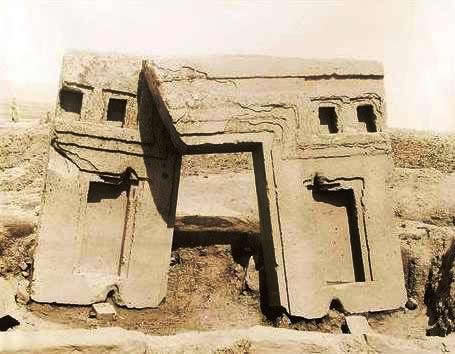
Remains at Tiwanaku, Bolivia
Long before European conquest, complex societies developed in the highlands of what is now Bolivia. One of these was the Tiwanaku civilization, which flourished near Lake Titicaca. Farming at such a high elevation presented challenges, including cold temperatures and changing amounts of water.
Watch Mystery of the Akapana Pyramid to learn how the Tiwanaku responded to these conditions. Pay particular attention to the raised fields, canals, and other systems they developed to grow crops. As you watch, think about what these technologies reveal about the people who built and maintained them.
What do the Tiwanaku raised fields and irrigation systems reveal about their society? Use evidence from the video to explain your answer.
Discuss your observations with a partner or the whole class.
Student responses will vary, but they should recognize that the Tiwanaku developed sophisticated ways to adapt farming to a high-altitude environment. Their raised fields and canals show knowledge of water management, temperature, agriculture, and large-scale planning. Explain that the Tiwanaku are one example of the complex Indigenous societies that developed in Northern and Central South America before European conquest. Across the region, Indigenous peoples created governments, trade networks, technologies, farming systems, and cultural traditions suited to different environments. This experience will not examine the ancient history of every society in the region in depth. If time allows, students may explore additional Indigenous civilizations and communities. More information about early South American civilizations is included in the experience Southern Coastal Countries: History and Its Influence.
When everyone is ready to continue, unlock the next scene.


