Add a Curriculum Bundle to Your Account!
Please select a bundle.




The Pack contains associated resources for the learning experience, typically in the form of articles and videos. There is a teacher Pack (with only teacher information) and a student Pack (which contains only student information). As a teacher, you can toggle between both to see everything.
Here are the teacher pack items for Urbanization and the Social Impacts of Industrialization:

Overview In this experience, students explore how industrialization transformed American cities and the people who lived in them. First, they compare city and rural life to understand how location shaped daily routines, housing, and work. Next, students investigate how industrialization led to rapid urbanization, examining the economic factors that drew people to cities and the effects of this population growth. Then, they analyze how urbanization changed life in American cities, identifying new opportunities and challenges created by industrial growth and immigration. Finally, the Elaborate scene invites students to study the arrival of Irish immigrants during the Potato Famine and explain how their labor and culture supported urban growth and helped shape the social and cultural identity of American cities. Estimated Duration: 45–60 minutes Vocabulary: Objectives:
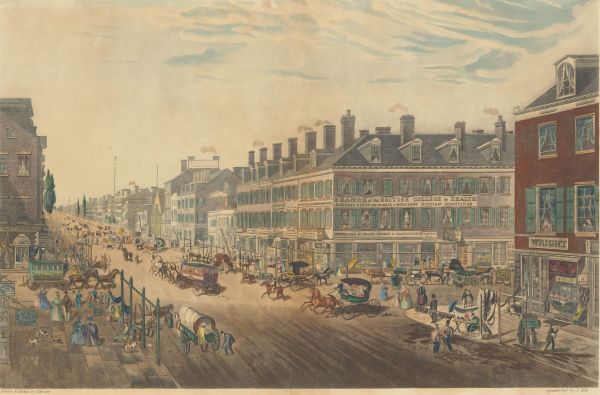
Broadway, New York, New York (1836)
During the Industrial Revolution, people’s surroundings and the types of work they did began to change. Some communities developed new ways of organizing daily life, while others experienced fewer changes. These differences shaped how and where people lived and worked during this period.
Think about what daily life might be like in a city and in the countryside. Consider the kinds of jobs people do, the homes they live in, and the challenges they might face. As you think about where and how people lived, consider how their surroundings and the types of work they did shaped their experiences. Then, contribute to the class table by adding words that show how city life and rural life could be different.Add words or phrases that describe rural and city life.

After students contribute their ideas to the class table, guide a discussion to help them notice the main differences between city and rural life. Ask students what stands out about the kinds of work, housing, and daily routines in each setting. Ask: What do these differences show about how people’s lives depend on where they live? Encourage students to think about how the needs and opportunities in each place might shape the way people live and work. Follow up by asking: How might life in cities have started to change during the first phase of the American Industrial Revolution? This question helps students begin to connect location, work, and change.
In this experience, you will learn how industrialization transformed American cities and the lives of the people who lived and worked in them, bringing both new opportunities and new challenges to urban life.
Objectives: