Industrialization and the South


Industrialization and the South
Students learn how industrialization and agriculture shaped the Southern economy, examining how new technology increased production, expanded cotton’s importance, and deepened the connection between economic growth and slavery during the early Industrial Revolution.

This learning experience is designed for device-enabled classrooms. The teacher guides the lesson, and students use embedded resources, social media skills, and critical thinking skills to actively participate. To get access to a free version of the complete lesson, sign up for an exploros account.

1:1 Devices
Teacher Pack

The Pack contains associated resources for the learning experience, typically in the form of articles and videos. There is a teacher Pack (with only teacher information) and a student Pack (which contains only student information). As a teacher, you can toggle between both to see everything.

Here are the teacher pack items for Industrialization and the South:

Preview - Scene 1
Exploros Learnign Experience Scene Navigation


Engage


Overview

In this experience, students examine how industrialization and agriculture shaped the Southern economy during the early Industrial Revolution. First, they reflect on how cotton is part of everyday life today and recall what they already know about inventions that increased cotton production. Next, students explore how new industries and technologies changed how goods were made and produced in the South, identifying both the growth of manufacturing and the continued importance of cash crops. Then, students investigate how cotton production and slavery expanded together, considering how the cotton gin enabled this growth. Finally, the Elaborate scene invites students to compare the Middle Passage and the Second Middle Passage to understand continuity and change in the movement and experiences of enslaved people.

Estimated Duration: 45–60 minutes

Vocabulary:

  • Deep South: the region of the Southern United States below the Upper South, including Louisiana, Mississippi, Alabama, Georgia, and South Carolina, where cotton farming and slavery were most common before the Civil War
  • ironworks: a place where iron is heated and shaped to make tools, machinery, or other metal products
  • Upper South: the region of the Southern United States north of the Deep South, including Virginia, West Virginia, Kentucky, North Carolina, Tennessee, Arkansas, and Oklahoma
 

Objectives:

  • Identify how new industries and technologies changed production and trade in the Southern economy
  • Explain how cotton production shaped economic growth and dependence on enslaved labor in the South


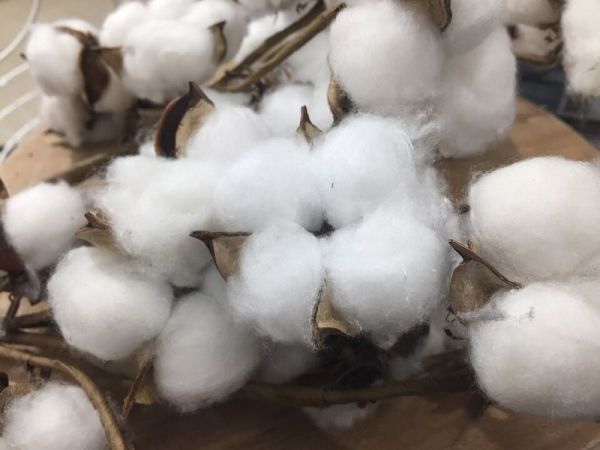
A close-up photograph shows several clusters of fluffy, white cotton balls still attached to their dried, brown branches and carpels. The soft fibers spill from the opened husks and rest on a light-brown wooden surface.

Raw cotton that has not been processed


Cotton is a plant that produces soft, white fibers that can be spun into thread and woven into fabric. It has been grown for thousands of years in many parts of the world.


Think of one thing that you use every day that is made of cotton or contains cotton. Explain what it is, and how your life would be different without having access to that item.

Post your answer

After students finish writing the explanations, guide a conversation that helps them connect familiar items to the role of cotton in everyday life. Ask: What do you notice about how many things you use each day are made with cotton? What does that tell you about how important cotton has been over time? Encourage students to share examples and reflect on why this material became so widely used.

Then, prompt students to recall earlier learning about industrialization. Ask: What have you already learned about inventions or machines that are connected to cotton production? Use their responses to surface prior knowledge about the cotton gin and how it changed the way cotton was processed, setting up the shift toward thinking about economic change in later scenes.


In this experience, you will learn how new industries and inventions transformed the Southern economy by exploring how industrial growth influenced both cotton production and the system of slavery that shaped life in the South.

Objectives:

  • Identify how new industries and technologies changed production and trade in the Southern economy
  • Explain how cotton production shaped economic growth and dependence on enslaved labor in the South


When everyone is ready to continue, unlock the next scene.

End of Preview
The Complete List of Learning Experiences in Industrialization Unit.
Would you like to preview the rest of this learning experience, and get access to the entire functioning US History Through 1877 course for your classroom? Sign up using your school email address below.
Back to top