Add a Curriculum Bundle to Your Account!
Please select a bundle.

The Pack contains associated resources for the learning experience, typically in the form of articles and videos. There is a teacher Pack (with only teacher information) and a student Pack (which contains only student information). As a teacher, you can toggle between both to see everything.
Here are the teacher pack items for The Industrial Revolution:

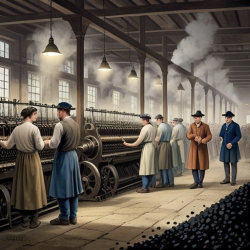
Overview In this experience, students explore how the first phase of the American Industrial Revolution transformed the way goods were made, the kinds of work people did, and how they lived. First, students reflect on the meaning of the word revolution and how it can describe different types of change in society. Next, they learn about the beginnings of industrialization in Great Britain and how it spread to the United States, focusing on how new machines, factories, and energy sources reshaped production. Then, students analyze the early effects of industrialization by examining manufacturing, labor, and living conditions to identify what changed and what remained the same in the United States. Finally, the Elaborate scene invites students to investigate how improved transportation fueled the growth of industry and connected the parts of the early American economy. Estimated Duration: 45–60 minutes Vocabulary: Objectives:
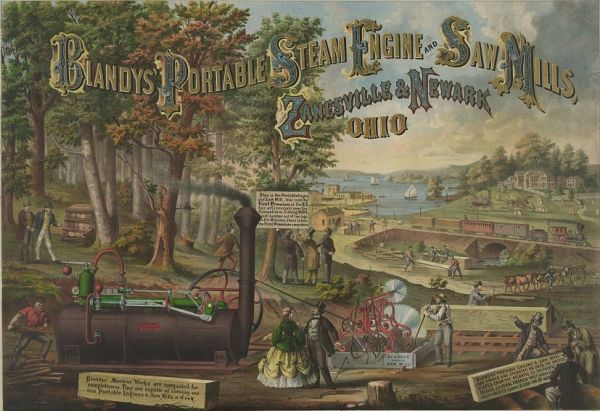
Advertisement for Blandy’s steam engine
Throughout history, revolutions have changed the way people live, work, and interact with the world around them. Think about what words come to mind when you hear the word revolution. Then contribute to the word wall to share your ideas.
When you hear the word revolution, what comes to mind? Answer in one word or two-word phrases.
After students share their word wall responses, guide a discussion to help them recognize the common ideas that come to mind when they think of a revolution. Ask students what patterns they notice in their answers. Ask: What do most of your ideas about revolution have in common? Encourage them to think about whether most of their examples involve conflict, struggle, or significant change. Prompt students to explain why they think the word revolution often makes people think of wars or fighting. Follow up by asking how a revolution might look if it did not involve fighting. This question helps students begin to broaden their ideas about what kinds of change a revolution can represent.
After students finish discussing the word wall, consider having them work together to create a class definition of the word revolution and record it on the whiteboard or a piece of chart paper. After each scene, invite students to revisit and add to the definition based on new ideas and evidence they discover.
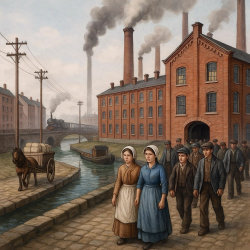
In this experience, you will learn how the Industrial Revolution began in Great Britain and spread to the United States, transforming how people worked, produced goods, and lived during a major turning point in history.
Objectives: