Add a Curriculum Bundle to Your Account!
Please select a bundle.




The Pack contains associated resources for the learning experience, typically in the form of articles and videos. There is a teacher Pack (with only teacher information) and a student Pack (which contains only student information). As a teacher, you can toggle between both to see everything.
Here are the teacher pack items for Industrialization and the North:

Overview In this experience, students analyze how industrialization changed life in the Northern United States. First, they imagine what daily work might have been like in one of the first mills or factories and discuss what challenges workers may have faced. Next, students explore how labor, production, and distribution changed during early industrialization to understand how new technologies reshaped work and trade. Then, they examine how these changes affected Northern communities by identifying shifts in urban growth, living conditions, and public services. Finally, the Elaborate scene invites students to investigate how industrialization in the North reshaped women’s lives by examining the opportunities and challenges faced by the Lowell girls. Estimated Duration: 45–60 minutes Vocabulary: Objectives:
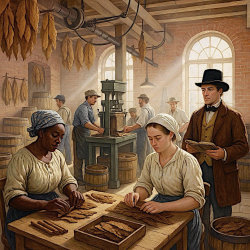
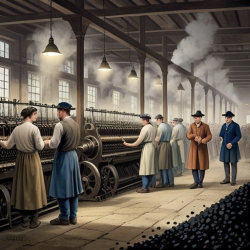
During the Industrial Revolution, new factories and mills appeared across the United States. Machines powered by water or steam made it possible to produce goods faster and in larger quantities than ever before. As industrial work expanded, many people, including men, women, and children, took jobs in these growing industries, changing where and how Americans lived and worked.
Think about what you have already learned about industrialization and how it changed daily life and work. Then, look closely at the photos of people working in these settings. Consider what it might have been like to work in a mill or factory during this time, and share one word on the word wall that describes what this experience may have been like.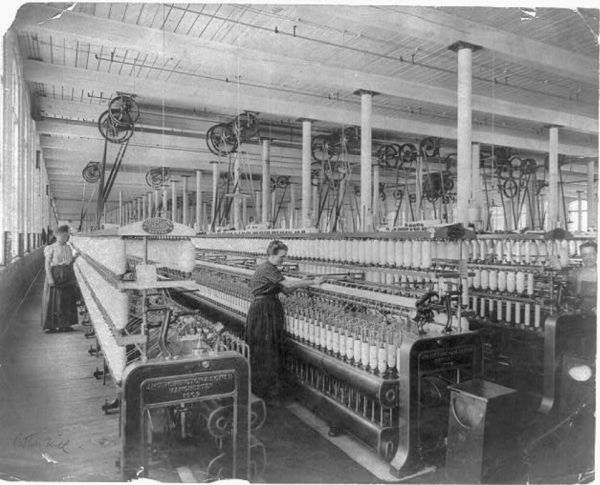
Women working in a New England cotton mill
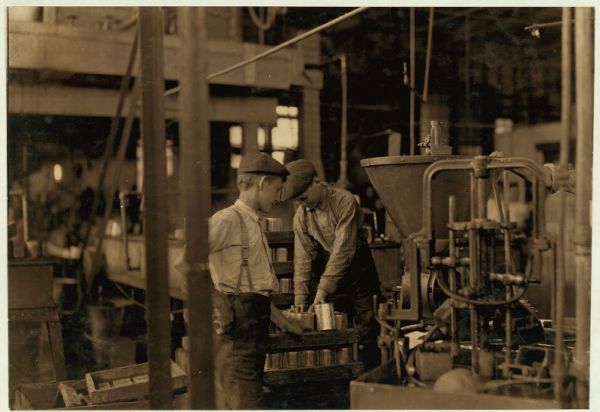
Two young boys work in a canning factory in Maryland
Use one word to describe what it would have been like to work in early mills and factories.
After students respond using the word wall, guide a brief discussion about their ideas. Ask students to share what they notice about their collective words. Ask them to share their reasoning for choosing a word. Ask: What kinds of work do you think people did inside early factories, and what might have made that work difficult? Also ask: What new opportunities might factory work have created for some people? Encourage students to consider what daily life might have been like before seeing how industrialization actually changed work in the North.
In this experience, you will learn how industrialization transformed life in the North by changing how people worked, how goods were made and moved, and how communities grew and adapted to a new economy.
Objectives: