Add a Curriculum Bundle to Your Account!
Please select a bundle.





The Pack contains associated resources for the learning experience, typically in the form of articles and videos. There is a teacher Pack (with only teacher information) and a student Pack (which contains only student information). As a teacher, you can toggle between both to see everything.
Here are the teacher pack items for Southern Society:


Overview In this experience, students explore how industrialization shaped social life and class in the early 19th Century South. First, they analyze two images to identify how different groups experienced community and labor, comparing the lives of enslaved people and wealthy Southerners. Next, students read about Southern society to understand how land, status, and traditions defined class and gender roles. Then, students examine the lives of poor whites, yeoman farmers, and enslaved people to determine how industrialization deepened divisions between social groups and limited opportunity. Finally, the Elaborate scene invites students to analyze excerpts from letters by Hannah Valentine and Virginia Campbell Shelton to learn how personal relationships reflected both the inequality and interdependence that characterized Southern society. Estimated Duration: 45–60 minutes Vocabulary Words and Definitions Objectives:
Southern society in the mid-19th century reflected a region shaped by strong traditions and social divisions. The way people lived, worked, and interacted often depended on their place within that society. Look closely at the images in comparison with each other. Notice what they might reveal about daily life and relationships in the South at this time. Then share your ideas on the discussion wall.
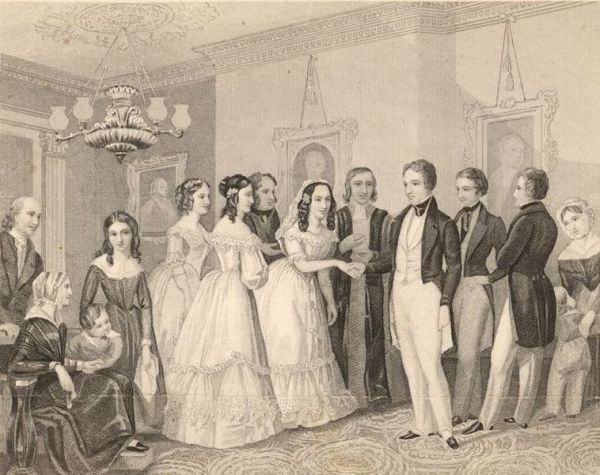
The Wedding by J. B. Forest (ca. 1860)
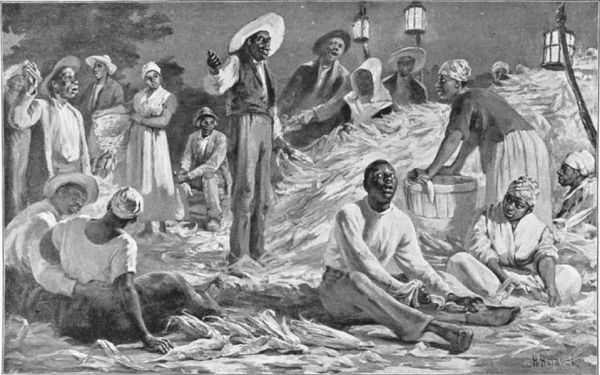
A plantation "corn-shucking"-social meetings of slaves by Mary A. Livermore (1899)
What do these two images reveal about life and society in the South during early Industrialization?
When reviewing student responses, highlight examples that use similarities and differences to explain what the images reveal about Southern society. If students focus only on the differences, ask: What do you notice about how people are gathered or interacting in each image? This will help them see that both scenes show people socializing in different ways. Then guide the discussion further by asking: How do these differences in social gatherings reflect the unequal experiences of people living in the South at this time?
In this experience, you will learn how life in the South reflected both change and continuity as the rest of the nation industrialized, exploring how class, race, and gender shaped people’s roles, opportunities, and traditions in the South during the early period of industrialization.
Objectives: