Add a Curriculum Bundle to Your Account!
Please select a bundle.



The Pack contains associated resources for the learning experience, typically in the form of articles and videos. There is a teacher Pack (with only teacher information) and a student Pack (which contains only student information). As a teacher, you can toggle between both to see everything.
Here are the teacher pack items for Israel and Its Neighbors: History and Its Influence:

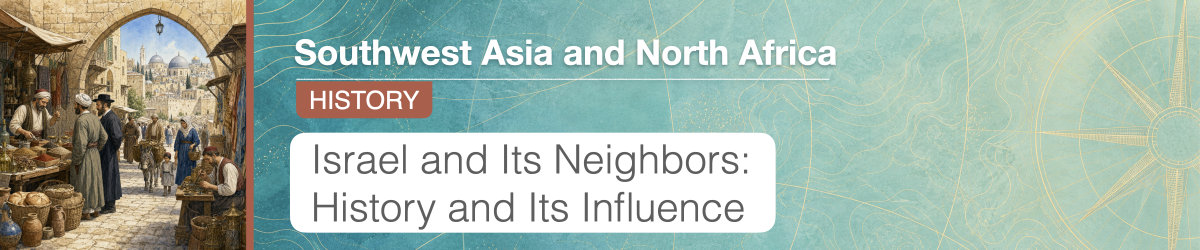
Overview In this experience, students examine Jerusalem as a place shaped by thousands of years of changing peoples, governments, religions, and cultural influences. They then investigate the histories of Jordan, Lebanon, and Syria, identifying major developments and lasting influences. Finally, students trace key turning points in the Israeli-Palestinian conflict and explain why unresolved issues from the past continue to shape the region today. In scene 2 and scene 3, students will work in small groups. Objectives:
Places change over time, but parts of their past often remain visible. Cities may contain buildings, walls, religious sites, languages, traditions, and neighborhoods shaped by people who lived there centuries or even thousands of years ago.
The lands that are now Israel, the Palestinian territories, Jordan, Lebanon, and Syria have been home to many peoples and have been governed by different kingdoms, empires, and states. Trade, migration, religion, conquest, and cultural exchange have all helped shape the region.
In this experience, you will examine major events and developments in the history of Israel and its neighbors and consider how earlier peoples, ideas, and events continue to influence the region today.
Objectives:
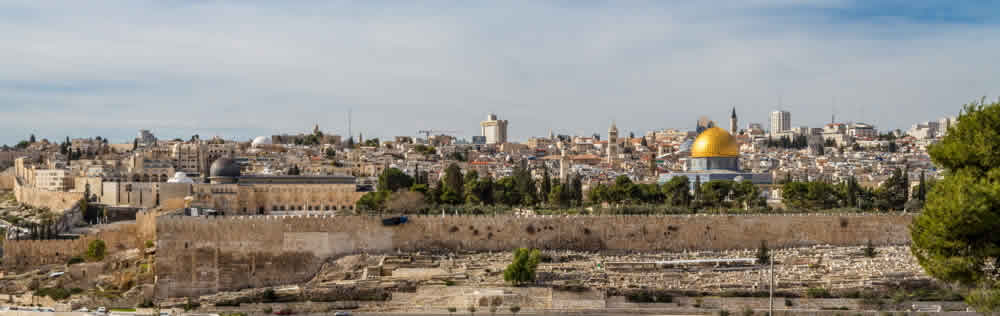
Look closely at the image. This is a view of a historic city in the region. You do not need to know its name yet. What evidence in the image suggests that this place has a long history?
After students respond, invite several students to share the evidence they noticed in the image and what they think the wall may have been built to do. Record a few ideas, but do not confirm or correct them yet. Use the discussion to surface possible clues about the city’s history, such as defensive walls, older stone structures, religious buildings, densely built areas, and newer development in the distance. Tell students that the image shows Jerusalem and that they will return to this city as they learn how different peoples, governments, religions, and historical events shaped the region over time. Possible follow-up questions include:
Divide students into their small groups. Assign a reporter to upload the work of each group, or tell the students to choose their own reporter.
When everyone is ready to continue, unlock the next scene.


