Add a Curriculum Bundle to Your Account!
Please select a bundle.



The Pack contains associated resources for the learning experience, typically in the form of articles and videos. There is a teacher Pack (with only teacher information) and a student Pack (which contains only student information). As a teacher, you can toggle between both to see everything.
Here are the teacher pack items for Arabia and Iraq: History and Its Influence:

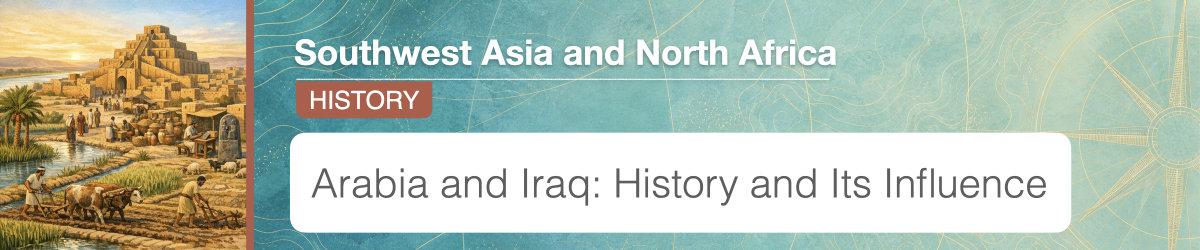
Overview In this experience, students examine the civilizations of ancient Mesopotamia and the features that helped shape life in the region, including cities, government, religion, law, and writing. They then trace major changes from ancient Mesopotamia to modern Iraq, focusing on how different peoples and governments influenced the region over time. Finally, students research one Mesopotamian achievement and explain why it was significant in the past and how its influence can still be recognized today. Objectives:
The lands of Arabia and Iraq have been home to societies, cities, trade networks, and empires for thousands of years. Some of the earliest large cities developed in Mesopotamia, a region centered between the Tigris and Euphrates Rivers in what is now mostly Iraq.
Over time, different peoples and empires controlled parts of this region, but ideas and achievements from earlier civilizations did not simply disappear. Systems of writing, laws, mathematics, farming, trade, and city government influenced later societies and became part of a much longer history.
In this experience, you will examine the civilizations of ancient Mesopotamia, trace major changes in the region over time, and consider how achievements from the past continue to influence societies today
Objectives:
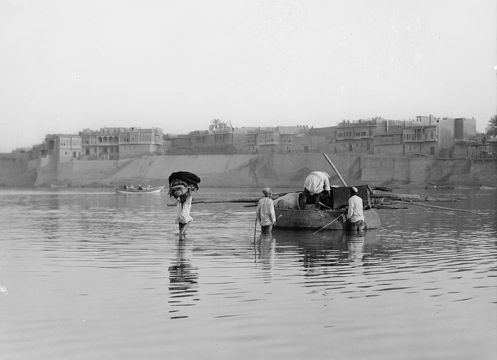
The Tigris River
Mesopotamia means “between two rivers,” referring to the Tigris and Euphrates Rivers. Historians often describe Mesopotamia as one of the world’s early centers of civilization because some of the earliest cities and complex societies developed there.
How might living between two major rivers help a society grow and develop? What features would you expect to find in a place where early cities emerged?
After students respond, invite several students to share their predictions about how rivers could support the growth of early societies. Record their ideas and group similar responses, such as water, farming, transportation, trade, food, and settlement. Do not confirm every prediction yet. Explain that students will test these ideas as they learn more about Mesopotamia. Possible follow-up questions include:
When everyone is ready to continue, unlock the next scene.


