Add a Curriculum Bundle to Your Account!
Please select a bundle.




The Pack contains associated resources for the learning experience, typically in the form of articles and videos. There is a teacher Pack (with only teacher information) and a student Pack (which contains only student information). As a teacher, you can toggle between both to see everything.
Here are the teacher pack items for Northern Europe: Society and Culture:

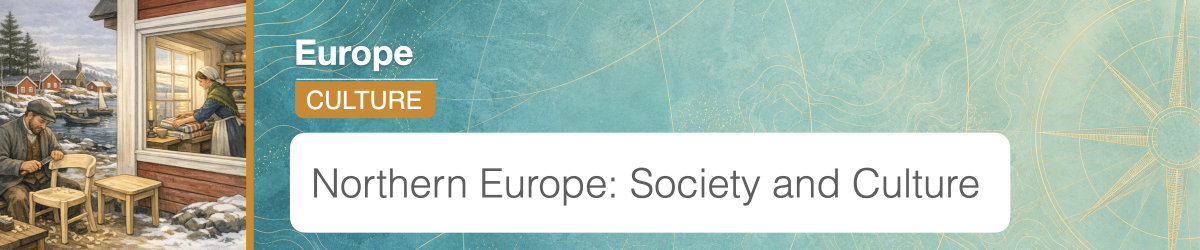
Overview In this experience, students explore how geography has influenced society and culture in Northern Europe, including language, religion, traditions, sports, and cuisine. They examine both shared regional patterns and differences among individual countries and communities. Students then investigate Scandinavian design as an example of how climate, natural resources, urbanization, and manufacturing can shape cultural expression. Finally, they apply the same geographic reasoning to their own surroundings by designing a piece of furniture that reflects the place where they live. Objectives:
Northern Europe includes countries with different languages, histories, religions, and cultural traditions. People across the region have also been influenced by geography, migration, trade, political change, and long histories of interaction with neighboring societies.
Society and culture can be seen in many parts of life, including language, traditions, beliefs, education, family life, celebrations, and community institutions. These patterns are not the same everywhere in Northern Europe, and they can vary within individual countries as well.
In this experience, you will explore examples of society and culture in Northern Europe and examine how geography and history have influenced daily life, traditions, and social institutions.
Objectives:
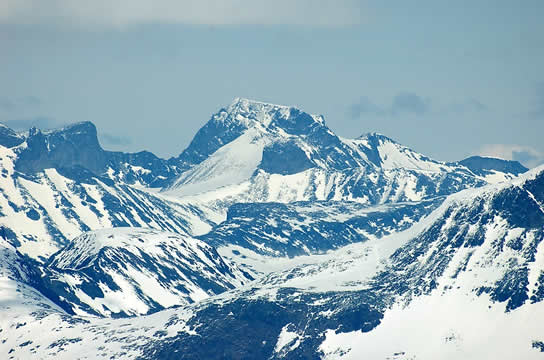
Galdhøpiggen Mountain, Norway
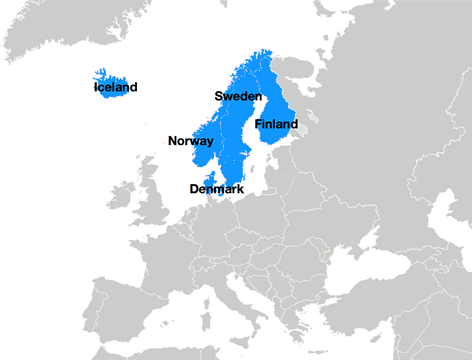
Based on Northern Europe’s geographic location, what can you infer about daily life in the region?
Discuss student responses as a group and ask students to identify the specific geographic evidence that supports each inference. Guide students to notice that much of Northern Europe has a cool climate, with long winter nights and short summer nights in the far north. Also draw attention to the region’s extensive coastlines, seas, islands, and waterways. Help students connect these physical features to possible effects on daily life. Climate and daylight patterns can influence seasonal activities, clothing, transportation, and how people use indoor and outdoor spaces. Access to the sea can influence fishing, food, trade, travel, and recreation. Emphasize that geography can influence daily life, but it does not determine how everyone in a region lives. Experiences vary by country, community, season, and individual. Possible follow-up questions include:
When everyone is ready to continue, unlock the next scene.


