Add a Curriculum Bundle to Your Account!
Please select a bundle.




The Pack contains associated resources for the learning experience, typically in the form of articles and videos. There is a teacher Pack (with only teacher information) and a student Pack (which contains only student information). As a teacher, you can toggle between both to see everything.
Here are the teacher pack items for The Great Depression:

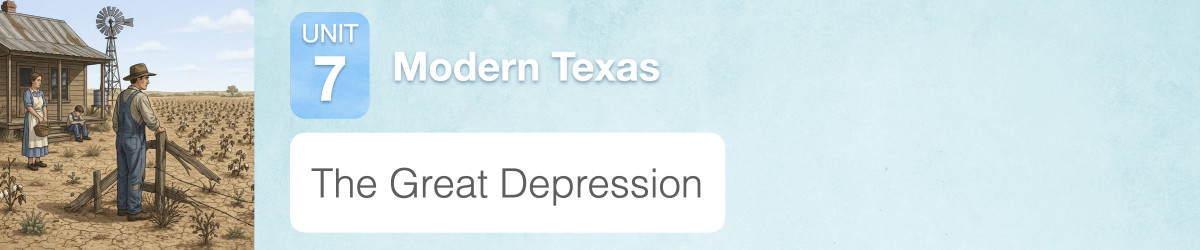
Overview In this experience, students view a photo of a family during the Great Depression and pose questions about it. Then they read a brief overview of the Great Depression. Next they examine how the Great Depression affected Texas, and they evaluate the photo from scene 1 in light of what they learned. Finally they examine WPA projects in Texas. If you have access to leveled readers about the Great Depression, assign them to the students in parallel to this experience. Estimated duration: 35-45 minutes Discovery Reading A printable Discovery Reading is included in the student pack as a support for understanding the experience’s core content and concepts. This Discovery Reading is not necessary to complete the experience and serves as an optional support resource. Vocabulary Words: These vocabulary words are used in the experience or connect closely to the standards and content students examine. Students should understand these terms as they work through the experience. Objectives
In the early 1900s, the United States, including Texas, went through many changes. During the 1920s, new inventions like cars, movies, and radios changed daily life and entertainment. Jazz music and dancing also became popular. But these good times did not last. In this experience, you will learn about the Great Depression of the 1930s.
Objectives
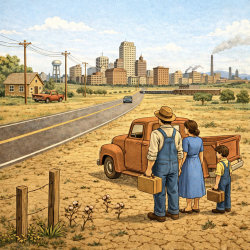
Look at the photograph, taken in 1939.
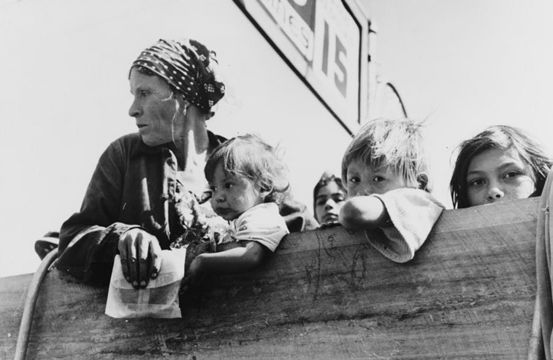
Mexican family in Neches, Texas in 1939
In a single word, say how the photograph makes you feel.
Post a question that you have about the photograph.

After students respond to both prompts, have several students share the word they chose and explain what details in the photograph influenced that response. Then review the questions students posted and group similar questions together, such as questions about who the people are, where they are going, what conditions they are facing, and what the photograph suggests about life during the Great Depression. Use the discussion to reinforce the difference between observation and inference. Students can directly observe details such as the people, their clothing, the vehicle, and their expressions, but they should be careful when assuming facts that the photograph alone does not prove, which is why asking follow up questions and considering what information is still needed is important. Explain that the image is a primary source and is historical evidence that can help us ask questions about how families experienced economic hardship during the Great Depression. If necessary, review why this is a primary source or prompt students to explain why it is. Possible follow-up questions include: