
Civil discourse matters because democracy depends on people being able to discuss, disagree, listen, deliberate, compromise, and make decisions together. In a democracy, people will not always have the same interests, values, experiences, or ideas about what government should do. Disagreement is not a failure of democracy. It is part of how self-government works.
Still, knowing that civil discourse matters does not make it easy to practice. People may enter public disagreement with good intentions and still find it difficult to listen carefully, ask honest questions, check evidence, or stay open to another point of view. That difficulty is not only about individual rudeness or bad character. It is also shaped by the environments where public disagreement happens.
Civil discourse is easier to describe than to practice because public disagreement often happens in environments shaped by speed, attention, identity, and divided information. Attention-based media incentives, rapid reaction, political identity, and fragmented information environments can all make disagreement harder to use well. These conditions do not make productive discourse impossible, but they can make shallow, hostile, or performative disagreement more visible and more tempting.
Attention-Based Media Can Reward Conflict
Many people encounter news, politics, and public argument through digital and social media. These platforms are not side spaces separate from civic life. For many people, they are regular pathways into public issues.
Pew Research Center’s social media and news research shows that about a fifth or more of U.S. adults regularly get news on Facebook, YouTube, Instagram, and TikTok. That means social media is not a side issue in public discourse. If many people encounter public issues through platforms built around attention and engagement, then the way information is presented and shared can shape the quality of disagreement.
Digital spaces often compete for attention. Posts, headlines, clips, and comments that are emotional, surprising, angry, or conflict-centered can be easier to notice and share than careful explanation. A thoughtful argument may take time to read. A short insult, shocking claim, or dramatic clip can produce an immediate reaction.
Algorithms can make this challenge stronger. Many digital platforms use online activity, such as what people click, watch, like, share, search for, or spend time viewing, to decide what to show next. These systems are often designed to keep people engaged. That can help people find information they care about, but it can also make attention-grabbing content more visible. When a system learns that a person reacts to conflict, outrage, or emotionally charged claims, it may show more content like that.
This does not mean every media source, platform, or algorithm is trying to damage discourse. It also does not mean conflict is always fake or unimportant. Public life includes real disagreements over serious issues. The problem is that attention-based systems can reward the kinds of communication that escalate conflict instead of deepening understanding.
Civil discourse becomes harder when public arguments are shaped by systems that reward attention more than understanding.
Speed Can Outrun Accuracy and ReflectionCivil discourse requires time. People need time to listen, ask questions, check evidence, consider context, and think before responding. Modern communication often pushes in the opposite direction. A claim can be posted, shared, mocked, defended, or condemned before many people understand where it came from or whether it is accurate.
Fast sharing can intensify disagreement because people may begin reacting before they have enough information. They may defend a claim because it supports their side, reject a claim because it comes from someone they distrust, or repeat a claim because it feels urgent. Once people have publicly reacted, it can be harder to slow down, reconsider, or admit uncertainty.
MIT News reported findings from a study of Twitter showing that “falsehoods are 70 percent more likely to be retweeted on Twitter than the truth.” The same report stated that “false news reached 1,500 people about six times faster than the truth.”
Those findings focused on Twitter and false news, so they should not be treated as proof that every platform or every online conversation works the same way. The civic lesson is more careful: in some online environments, false or misleading claims can move quickly enough to shape disagreement before careful checking happens.
When false or misleading claims spread quickly, people may begin arguing from different assumptions. One person may be responding to a claim that has already been corrected. Another may be reacting to a headline without knowing the full story. Another may be defending a conclusion before the evidence has been examined. Civil discourse becomes harder when the first reaction travels faster than verification.
Divided Information Environments Make Shared Understanding HarderCivil discourse is difficult when people do not share the same basic information or do not trust the same sources. People may see different stories, headlines, examples, explanations, and frames depending on their platforms, news habits, social networks, and trusted voices.
This does not mean everyone needs to read the same news source or agree with the same interpretation. A democracy can benefit from different perspectives and competing explanations. The problem appears when people cannot agree on what information is credible enough to discuss. In that situation, people may talk past one another before they even reach the policy disagreement.
Pew Research Center describes the current news landscape as a quickly changing environment with many news sources across different platforms and channels. That broad information environment gives people more access to information, but it can also make shared understanding harder. People may not only disagree about what should be done. They may disagree about what happened, which evidence matters, and which sources can be trusted.
Trust in news sources also differs across political groups. Pew’s News Media Tracker and related research show that Democrats and Democratic-leaning independents are much more likely than Republicans and Republican-leaning independents to use and trust many major news sources. This fact should not be used to claim that one group has the right sources and another group has the wrong sources. The civic point is that discourse becomes harder when people are not only disagreeing about policy, but also about which information deserves trust.
When people enter disagreement from different information environments, they may bring different facts, different examples, and different assumptions about credibility. Civil discourse becomes harder when the starting point is not shared enough for people to reason together.
Less Shared Local News Can Weaken Common Civic GroundLocal news can give people shared information about community problems, local government, schools, public safety, infrastructure, budgets, and civic decisions. It can help people discuss problems that affect their own communities in practical terms.
Pew Research Center’s local news research shows that attention to local news has declined since 2016, similar to broader declines in attention to national news and news overall. This does not mean local news has disappeared or that every community experiences the same pattern. It does suggest that shared local civic information may be less central for many people than it once was.
When people pay less attention to local news, public issues may feel more nationalized, distant, or filtered through broader partisan conflict. People may have fewer shared reference points for discussing problems in their own communities. National conflict can fill the space where local, practical civic discussion might otherwise happen. Civil discourse can be harder when communities have fewer shared sources of local civic information.
Polarization Can Turn Disagreement Into Identity Conflict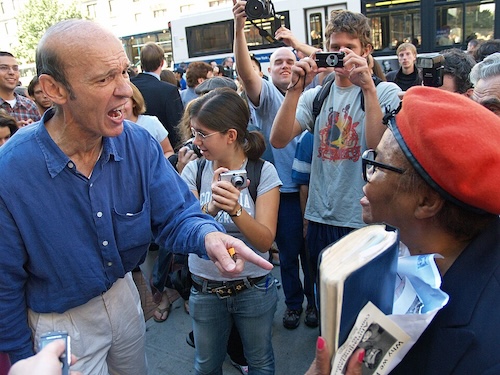
In a democracy, people can disagree about problems, policies, values, and government action. That kind of disagreement can help people test ideas and hold leaders accountable. Disagreement becomes harder when it feels like a conflict between groups rather than a discussion about a public issue.
Polarization can make people judge the other side’s motives, loyalty, intelligence, or character before engaging the actual claim. A person may hear an argument and immediately sort it into “my side” or “their side.” Once that happens, the disagreement may no longer feel like a shared effort to understand a public problem. It may feel like a test of group loyalty.
The patterns of news trust described earlier can contribute to this challenge. When political identity is connected to different trusted information sources, disagreement can become more than a debate over policy. It can feel like a conflict over whose side, sources, or worldview is legitimate.
This does not mean political identity always leads to bad discourse. People can have strong political commitments and still listen, reason, and use evidence. The problem is that identity-based conflict can make civil discourse harder because people may feel that changing their mind, asking a question, or acknowledging a fair point gives something away to the other side.
Civil discourse becomes harder when disagreement feels like a threat to identity or group loyalty instead of a shared effort to understand a public problem.
Civility Should Not Mean SilenceCivil discourse can be misunderstood as a demand to be quiet, calm, or comfortable. That is not enough. Civil discourse does not mean people must ignore injustice, hide strong emotions, avoid criticism, or stay away from difficult issues. Democratic discourse can include criticism, protest, debate, and urgent claims about harm.
The Bill of Rights Institute video What is Civil Discourse? identifies peaceful protests, conversation, speeches, and debates as forms of civil discourse. That range matters. Civil discourse is not only a quiet conversation between people who already trust each other. It can include public disagreement, organized action, and strong claims about what should change.
The key difference is not whether disagreement is calm or uncomfortable. The key difference is whether people are still using listening, evidence, questions, and reasoning to engage the issue. Protest and debate can be part of civil discourse when they are connected to public reasoning and democratic participation.
Civil discourse is not silence. Civil discourse is not comfort. Civil discourse is not avoiding disagreement. Civil discourse is disagreement practiced in ways that help people understand, deliberate, and decide.
What Democracy Loses When Discourse Breaks DownWhen discourse breaks down, disagreement may stop helping democracy do its work. Instead of supporting inquiry, disagreement can become a way to repeat what one side already believes. Instead of strengthening deliberation, it can reward quick reactions and public performance. Instead of helping people understand different interests and perspectives, it can deepen distrust.
A democracy loses something important when people cannot argue in ways that clarify problems, test ideas, and make decisions. It becomes harder to reach workable decisions. It becomes harder to hold leaders accountable. It becomes harder to understand why different people see a public problem differently. People may feel more pressure to perform for their side than to reason across difference.
The challenges are partly structural, so better discourse requires intentional habits and strategies. People need ways to slow down, ask clarifying questions, use evidence, listen for understanding, and respond with reasoning instead of only reaction.
If democracy needs disagreement, then the goal is not to eliminate argument. The goal is to build habits that help disagreement produce understanding, accountability, and better decision-making.

