
Texas has both country areas and big cities. Some parts of Texas are rural. That means they have farms, ranches, and small communities. Other parts are urban. In those places, many people live and work close together in cities and towns.
Over time, more Texans moved from rural places to cities. This change is called urbanization. It happened because cities offered many jobs, stores, schools, and services.
Why Cities GrewTexas cities grew for different reasons. Some grew because of railroads and trade. Others grew because of oil, factories, and shipping. As more jobs appeared, more families moved in.
Oil was one big reason for growth. Crude oil had to be changed into useful products like gasoline. A refinery is a factory that does that job. When refineries opened, they brought many workers and helped cities expand.
Houston is one example. It grew into a very large city with shipping, business, and oil jobs. Dallas also grew as a center for business and transportation. San Antonio and Austin grew too, but for different reasons, including government, military, and other kinds of work.
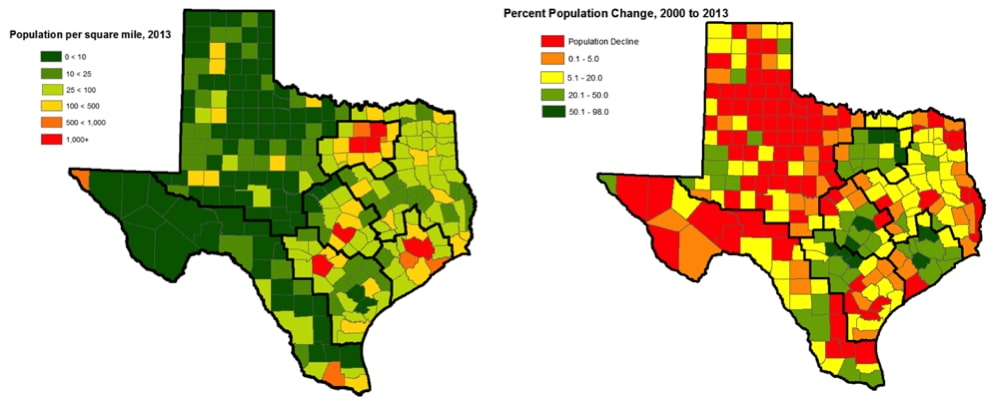
As cities became larger, they spread into nearby communities. A suburb is a smaller community near a large city where many people live. Many people worked in the city but lived in suburbs.
A large city and the nearby towns and suburbs connected to it form a metropolitan area. For example, a big city may share roads, jobs, and businesses with nearby places. Even though these places are separate communities, they are closely linked.
Changes in Daily LifeAs more people moved into cities, daily life changed. More roads, homes, schools, and stores had to be built. Public services had to grow too.
Local communities pay for many services with taxes. One example is property tax. This is money paid on land or buildings. It helps support local services such as public schools.
Urban growth brought both benefits and challenges. Cities had more job choices and more services. But crowded areas also needed better roads, more housing, and careful planning.
Today, Texas has both rural and urban places. Each one is important to the state. Learning about urbanization helps us understand how Texas changed from a state with many small communities into one with large cities and busy metropolitan areas.