
The Virginia Company hoped Jamestown would become profitable by finding gold. When only small amounts of gold were discovered, company leaders began looking for other ways to make money. By 1618, settlers were experimenting with products that might bring profits to the colony.
Jamestown settlers tried to make glass, grow grapes for vineyards, and raise silkworms for silk production. Although they tested several ideas, by the end of the 1620s only one crop grown in Virginia was selling well in England: tobacco.
The Spanish introduced tobacco to Europe after learning about it from Indigenous people in the Americas. It soon became popular with many people in England. At the time, most of the tobacco smoked there came from the West Indies.
John Rolfe believed Virginia had the right conditions for growing tobacco. Early Virginia crops were less popular because many smokers preferred the milder tobacco grown in the Caribbean. To meet consumer demand, Rolfe imported tobacco seeds from the West Indies and began growing them in the Jamestown colony. Those imported seeds helped lay the foundation for Virginia’s growing tobacco economy. By 1630, Jamestown was exporting more than one and a half million pounds of tobacco each year.
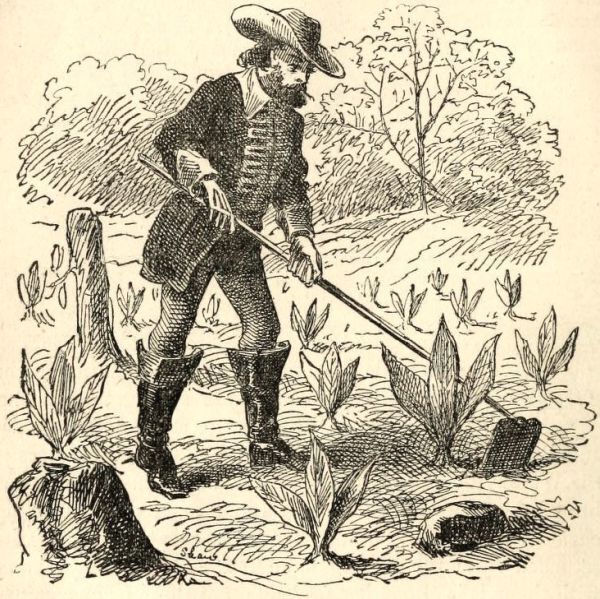
As tobacco production increased, it began changing the colony in many ways. Growing tobacco quickly drained nutrients from the soil, so fields could produce successful crops for only a few growing seasons before they needed to lie fallow and recover. As a result, settlers constantly searched for new farmland. Tobacco was planted almost everywhere in Jamestown, including along streets and even in cemeteries.
Raising tobacco also created a growing need for workers. Indentured servants became the colony’s main source of labor. In exchange for passage to Virginia, many agreed to work for four to five years before gaining their freedom. The Crown also encouraged settlement by granting 50 acres of land to planters for each person they brought to the colony.
As tobacco farming spread, Jamestown faced new challenges. Settlers needed more farmland to grow tobacco, more workers to cultivate the crop, and increasing expansion brought them into conflict with an Indigenous group, the Powhatans. Even with these challenges, the colony continued to expand as tobacco became the foundation of Virginia’s economy.
