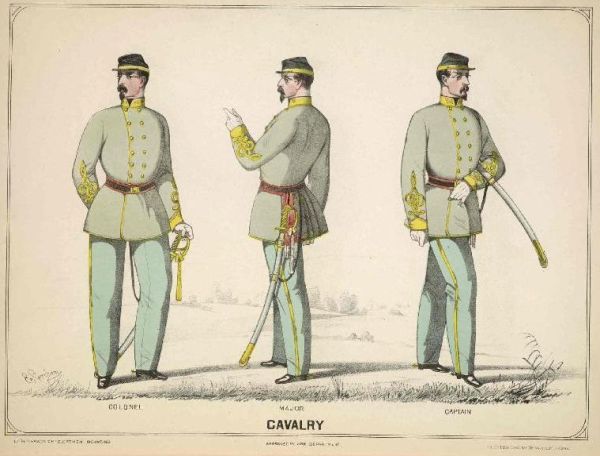
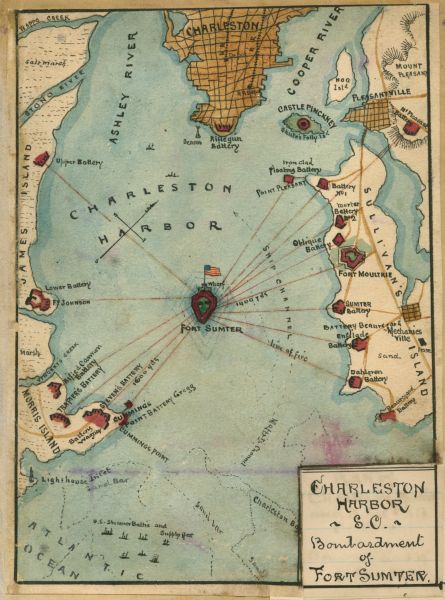
At the start of the Civil War, the United States was split into two regions that faced very different situations as fighting began. When shots were fired at Fort Sumter in April 1861, the war officially started, but neither side was fully prepared for what lay ahead.
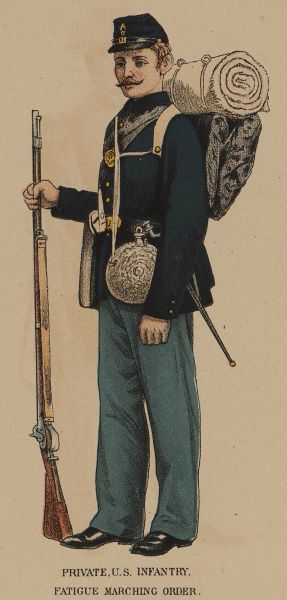
In the North, many people believed the war would be short. The Union had a much larger population, with more than twenty million people living in its states. This gave the North a strong supply of soldiers. The Union also had many cities, factories, and railroads. Northern factories produced most of the nation’s weapons, clothing, and equipment. Railroads helped move troops and supplies more quickly, and the Union Navy was large and powerful. Because of this, Northern leaders believed they could use their resources to wear down the South over time.
However, the North also faced challenges. The Union army was small at the beginning of the war, and many soldiers had little training. Northern forces would need to invade and control a large area of Southern land, which was difficult and dangerous. Many Northerners were fighting mainly to preserve the Union, not yet to end slavery, which made it harder to unite everyone behind the war effort.
The South entered the war with fewer people and far less industry. Most Southerners lived in rural areas and worked in agriculture. There were fewer factories, railroads, and weapons. Supplying armies was often difficult, even though the South could grow enough food. The Confederate Navy was also much smaller, leaving Southern ports vulnerable to attack.
At the same time, the South had advantages of its own. Many Confederate leaders had military training and experience. Southern armies were defending their own land, and soldiers were familiar with the terrain. Morale was high at the start, as many Southerners believed they were fighting to protect their way of life and their new nation.