
When the Emancipation Proclamation took effect on January 1, 1863, the Civil War was still undecided. Although the Union had added a new goal and new soldiers, many Americans believed the Confederacy had the advantage. For almost two years, neither side had won a clear victory, and the war seemed stuck.
One reason the Confederacy appeared stronger was the type of war being fought. The Confederacy did not need to conquer the North to succeed. It only needed to defend its own land and avoid defeat. Most fighting took place in the South, where Confederate soldiers knew the land well and often had support from nearby civilians. Rivers, forests, swamps, and mountains made it hard for Union armies to move and supply their troops. This made the Union’s task much harder.
Confederate confidence also came from success on the battlefield, especially in the East. Union armies suffered major defeats at Fredericksburg in December 1862 and again at Chancellorsville in May 1863. At Chancellorsville, Confederate General Robert E. Lee defeated a much larger Union army. Although the Confederates suffered heavy losses, the victory strengthened their confidence. One major loss was Stonewall Jackson, one of the Confederacy’s most trusted and skilled generals, who was mortally wounded during the battle.
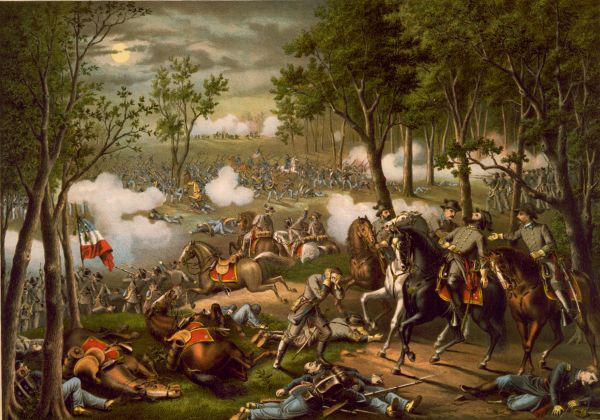
Leadership mattered as well. Many Confederate officers were experienced and well-trained, often educated at military schools or shaped by earlier wars. The Union, however, struggled to find generals who could turn their advantages into success. Frequent changes in Union leadership made it harder for the North to gain control of the war.
At the same time, the Union was beginning to build pressure. The North had more people, more factories, and more railroads. Railroads moved soldiers and supplies quickly. The telegraph made communication faster. The Union Navy also blockaded Southern ports, and by 1863, the blockade was limiting trade and supplies. New technology, including ironclad ships and improved weapons, was changing how wars were fought.
By early 1863, the Confederacy appeared strong because it was defending its land and winning key battles. Still, the Union was preparing in other ways. The war’s outcome was still uncertain, setting the stage for what came next.
