
In the early 1850s, American politics was dominated by two major parties, the Democrats and the Whigs. For years, these parties competed for power while trying to balance the interests of free states and states that allowed slavery. As the nation expanded westward, disagreements over slavery made maintaining balance harder.
The Whig Party struggled to respond to these changes. Many Whigs disagreed about slavery. Party leaders often avoided taking clear positions in order to keep supporters from different regions. Debates over new territories grew stronger, which weakened the party. By the mid-1850s, the Whigs were losing elections and support across the country.
The Kansas-Nebraska Act increased political tension. Once the act passed, opponents of slavery began to form groups outside the traditional party system. Meetings were held in towns across the North, including a gathering in Ripon, Wisconsin, in March 1854. Other key meetings and conventions took place later that year. These efforts led to the creation of a new political party called the Republican Party.
The new party included former Whigs, Free-Soilers, and Democrats who opposed the Kansas-Nebraska Act. Many members had prior political experience, and they quickly built party organizations in the northern states. By 1856, the Republicans were strong enough to nominate their first presidential candidate, John C. Frémont. Although Frémont lost the election, he won many votes in the North.
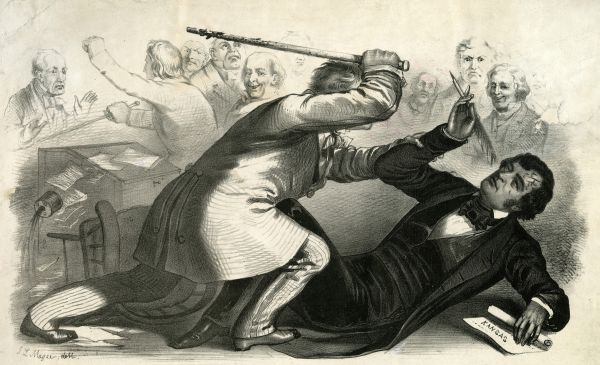
Events in the mid-1850s continued to draw attention to slavery and politics. Violence erupted in Kansas. Clashes also happened in Congress, including the attack on Senator Charles Sumner. During this time, many politicians from the Whig Party joined the Republican Party. One of them was Abraham Lincoln, a former Whig from Illinois who returned to public life during these years.
By the end of the decade, the Republican Party had become a major force in national politics. In 1860, the party nominated Lincoln for president, and divisions between political parties and regions were becoming more visible across the country.
