
Between 1863 and 1866, the United States government forced the Navajo people to leave their homes. They lived in canyons and mesas for hundreds of years before settlers arrived. After the Mexican War, homesteaders moved onto Navajo lands to farm and raise animals. The soldiers at Fort Defiance took over pastures, and they killed many of the leader Manuelito's horses. After years of raids and conflict, the army began a large war to remove the tribe. Colonel Kit Carson led the troops to destroy Navajo homes, crops, and livestock. Many families began to surrender because they were starving during the cold winter.
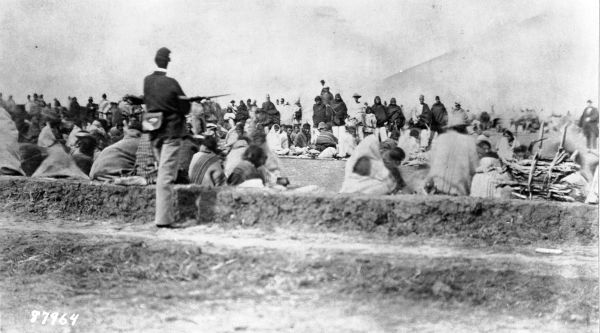
About 9,000 men, women, and children were forced to walk up to 450 miles to a reservation. This journey is known as the Long Walk, and it was a tragedy. People died from hunger, cold, and exhaustion on the trail. Others drowned in the Rio Grande, or they were shot by the soldiers. Once they reached the Bosque Redondo Reservation, the Navajo faced horrible conditions. The water was bitter, the land was poor, and food was very scarce. Disease and starvation killed about one-fourth of the population during those four years.
Leaders like Barboncito and Manuelito worked hard to get their lands back. Because they would not go to Oklahoma, they finally signed a treaty in 1868. This land, called the Navajo Nation, is the largest reservation in the entire country. They had lost many people, but they began to rebuild their lives in their native home country. They wanted to live in peace in their own territory.
