
Winning independence did not automatically create a functioning nation. After the Revolutionary War, the United States faced the difficult task of governing itself for the first time. The leaders who had argued so forcefully against British power now had to decide how much power a national government should have—and how much should remain with the states.
The result was the Articles of Confederation, adopted in 1781. The Articles reflected deep fears shaped by colonial experience. Many Americans believed that strong central authority was dangerous and that liberty could only survive if power remained close to the people. As a result, the Articles created a national government that was intentionally limited.
Under the Articles, most power rested with the states. The national government consisted of a single legislative body—Congress—in which each state had one vote, regardless of size or population. There was no separate executive branch to enforce laws and no national court system to interpret them. Congress could make decisions, but it had few tools to ensure those decisions were carried out.
These limits were not accidental. The Articles were designed to prevent the rise of another distant, powerful authority like the British government the colonies had just rejected. States guarded their sovereignty closely, and many leaders believed that cooperation, rather than enforcement, would be enough to hold the union together.
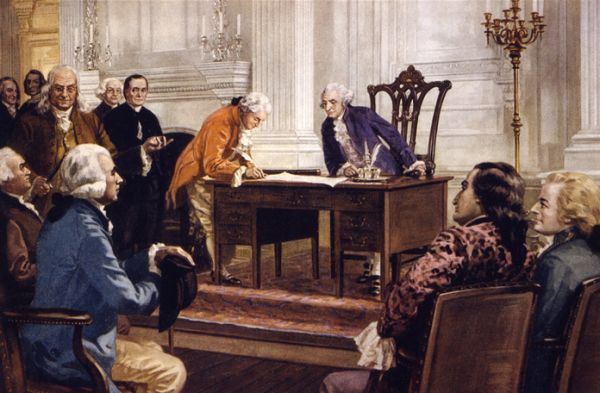
However, the realities of governing soon tested those assumptions.
One of the most serious challenges involved money. The war had left the country deeply in debt. Congress needed funds to pay soldiers, repay foreign loans, and keep the government running. But under the Articles, Congress could not tax individuals. Instead, it had to request money from the states. Some states paid what was asked; others did not. As a result, soldiers went unpaid, national debts piled up, and the government struggled to meet its basic obligations.
Economic problems extended beyond war debt. States began setting their own trade policies, often placing tariffs on goods from neighboring states. Without a national authority to regulate trade, disputes between states became common, and economic cooperation was difficult. Foreign nations also took advantage of the situation, imposing trade restrictions on American goods while the United States lacked the unified power to respond effectively.
Security and order presented another challenge. The Articles allowed Congress to raise an army, but it depended heavily on state militias and voluntary cooperation. When unrest broke out, the national government often lacked the authority or resources to respond quickly.
These weaknesses became especially clear during moments of internal instability. Farmers struggling with debt and taxes sometimes protested state governments, and the national government had little capacity to intervene or maintain order. Such events raised difficult questions about how a republic could protect both liberty and stability.
The relationship between the national government and the people was also shaped by the structure of the Articles. Because Congress acted mainly through the states, citizens often felt little direct connection to the national government. While this arrangement protected local control, it also made it harder to build a shared sense of national responsibility or loyalty.
By the mid-1780s, many leaders began to worry that the system was not strong enough to meet the country’s needs. The very features designed to protect liberty—limited power, state sovereignty, and weak enforcement—were making it difficult for the government to function effectively.
These concerns did not mean that the ideals of the Revolution had been abandoned. Instead, Americans faced a new challenge: how to preserve freedom while creating a government capable of acting decisively. The experience under the Articles of Confederation revealed tensions that would soon force the nation to reconsider how it answered the fundamental questions of government—and how a constitutional republic could create effective national authority while still limiting government power.
