
The story of Texas begins with Spanish missions and ranches. In the late 1600s and early 1700s, Spain built missions in Texas. They aimed to spread Christianity and claim land. Missions were not only churches but also villages with farms and animals. Indigenous people built the missions, worked the fields, cared for cattle and sheep, and made goods for daily life. Some came for food and protection, while others were forced to live there.
Life in the missions was difficult. Many Indigenous people resisted Spanish control and did not want to give up their own traditions. Others faced pressure to change their religion and way of life. Missions also exposed them to European diseases that spread quickly and killed many.
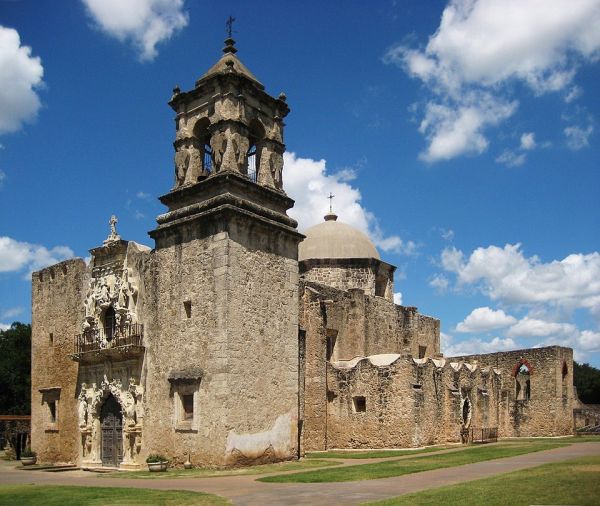 Mission San José at San Antonio
At the same time, missions became the first places in Texas where cattle and sheep were raised in large numbers. The Spanish brought these animals, and Indigenous labor made it possible for herds to grow. Ranching in Texas began here and would later spread across the region.
Missions slowly declined as disease weakened communities and the Spanish failed to provide enough food or protection. Fewer Indigenous people stayed at the missions. Many chose to return to their traditional ways of life. By the early 1800s, ranches had replaced missions as the main centers of life and work in Texas.
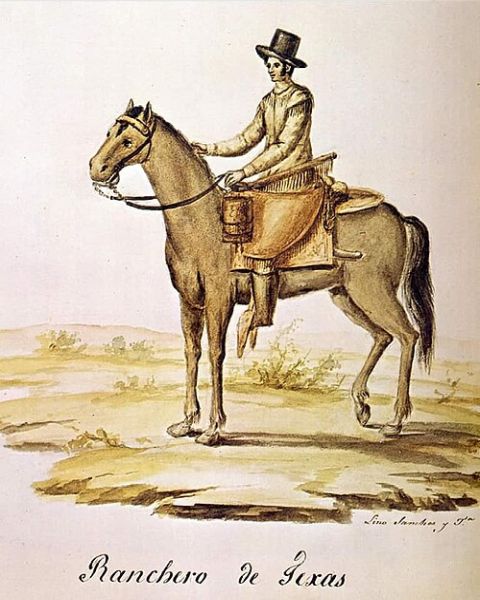 A ranch owner in Texas in the early 1800s
Ranching continued to spread in Texas as the United States moved west. The Texas longhorn, a mix of Spanish and Anglo cattle, was tough and could live on the open grasslands. Indigenous people worked on ranches and shared knowledge about the land and animals. Vaqueros were the first cowhands on these ranches. They showed how to care for cattle and how to move large herds across long distances. They also used strong horseback riding skills to rope, brand, and guide animals. These ranching methods shaped life in Texas and became the basis of many cowboy traditions in the area.
Ranches also linked Texas to trade. Cattle were herded along trails such as the Shawnee and Chisholm Trails. They moved to markets in Louisiana, Missouri, and Kansas. From there, beef was shipped to northern cities. Ranching drew more people to Texas. It offered land and jobs, making it appealing for settlers. Towns formed along trails, rivers, and railroads.
This growth had serious effects on Indigenous people. As settlers spread across Texas, many tribes lost their land. Some fought back in raids and wars. Others worked on ranches or traded with settlers. Many were forced onto reservations outside of Texas, while some were expected to give up their traditions. By the late 1800s, only a few groups, such as the Alabama-Coushatta, remained in the state. Still, Indigenous knowledge of horses, land, and cattle left a lasting mark on ranching and culture.
Missions and ranches changed Texas in lasting ways. Missions introduced farming and livestock. Ranches spread cattle and grew into a powerful industry. Ranching encouraged settlement and connected Texas to trade. Vaqueros helped to build a strong cowboy culture. Indigenous people also shaped ranching in Texas. Their knowledge and resistance played a key role in its development. The unique identity of Texas comes from a mix of Spanish and Indigenous traditions. This blend continues to shape the state today.
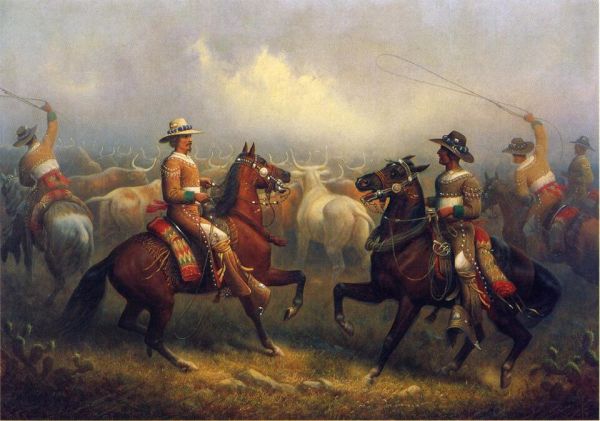 California Vaqueros by James Walker (1875)

