
Early Battles of the Civil War
After the Civil War began in 1861, armies from the Union and the Confederacy soon moved into action. Fighting spread across different regions as troops gathered near rivers, railroads, and key towns. Many soldiers had little combat experience, and early battles were often confusing and uncertain. These engagements marked the opening phase of a war that would last four years.
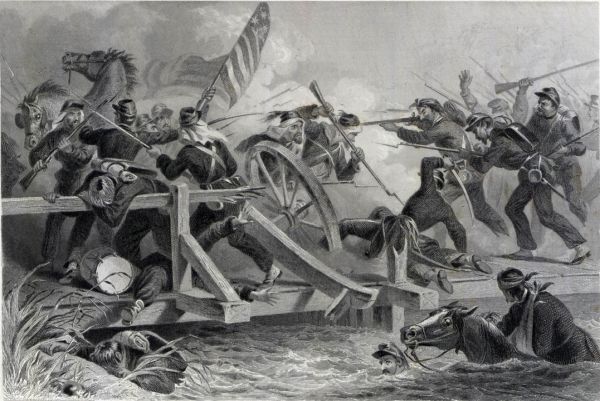
The First Battle of Bull Run (First Manassas Battle)
The First Battle of Bull Run, also called the First Battle of Manassas, took place in July 1861. At the time, many people in the North believed the war could be ended quickly with a single strong attack. Political leaders pushed the Union army to move before its soldiers were fully trained. The goal was to strike Confederate forces in northern Virginia and protect the nation’s capital.
Union troops moved toward Manassas Junction, an important railroad center. Confederate forces defended the area and were able to move additional soldiers by railroad to meet the attack. Fighting moved back and forth across the battlefield, becoming disorganized. Soldiers on both sides found it hard to tell friends from enemies. Units often acted without clear orders. By the afternoon, Confederate forces held their ground and pushed Union troops back.
The Union retreat turned chaotic as soldiers fled toward Washington, D.C. The battle shocked people in both the North and the South. It became clear that the war would not be short or easy. After Bull Run, both sides began preparing for a longer and more costly conflict.
The Battle of Fort Donelson
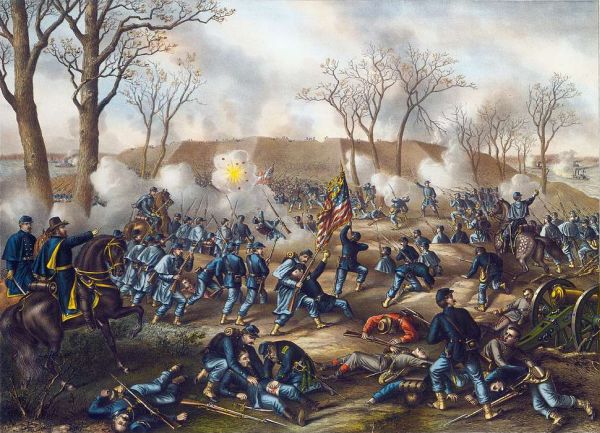
In early 1862, Union leaders focused on gaining control of major rivers in the western part of the Confederacy. Rivers were critical for moving troops and supplies. After capturing Fort Henry, Union forces turned their attention to nearby Fort Donelson on the Cumberland River. Holding this fort allowed the Confederacy to block Union movements deeper into Tennessee.
Union gunboats first attacked Fort Donelson but were forced to withdraw after heavy fire. Union soldiers then surrounded the fort by land. Confederate troops tried to break free. They pushed Union forces back with a strong attack. Instead of continuing their escape, Confederate leaders ordered their troops to return to the fort. Union forces counterattacked and captured key defensive positions.
During the night, Confederate leaders argued over what to do next. Some escaped, but most soldiers remained inside the fort. The next day, Confederate forces surrendered. This Union victory opened important rivers to Union control and allowed Union troops to move into Nashville without a fight. Control of this region gave the Union a stronger position in the western theater of the war.
The Battle of Shiloh
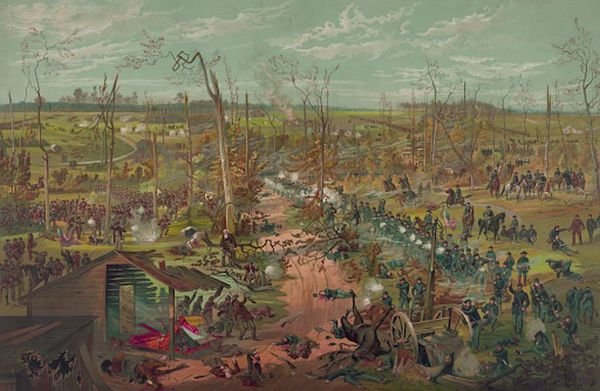
By the spring of 1862, Union forces had pushed deeper into Tennessee. Union troops set up camp near Pittsburg Landing, close to a small church named Shiloh Meeting House. Confederate leaders hoped to attack before Union forces could fully organize or receive reinforcements. Their goal was to stop the Union advance and protect important railroad lines farther south.
Early on April 6, Confederate troops surprised Union camps. Fighting spread across fields and wooded areas. Confederate forces pushed Union soldiers back toward the Tennessee River during a long and violent day. Commanders struggled to control their armies as units became mixed and confused. The fighting caused heavy losses on both sides.
Overnight, Union reinforcements arrived. On April 7, Union forces attacked and slowly drove Confederate troops away from the battlefield. Confederate forces retreated to Corinth, Mississippi. The battle resulted in nearly 24,000 casualties. Shiloh showed the deadly scale of the war and made clear that future battles would be long, violent, and costly.
The Battle of Antietam
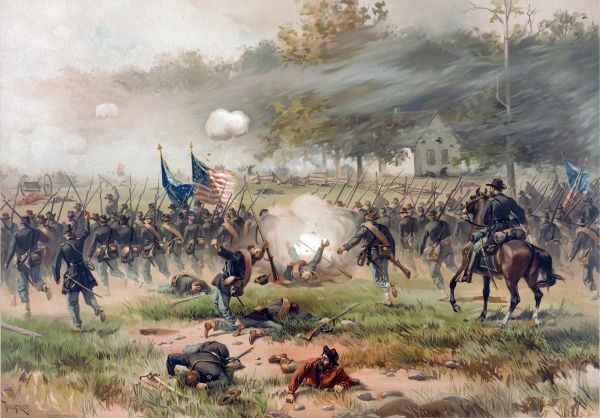
In September 1862, Confederate forces moved north into Maryland. Confederate leaders hoped this invasion would weaken Northern support for the war and encourage foreign countries to support the Confederacy. During this campaign, Union soldiers found a copy of Confederate plans, giving Union leaders valuable information.
Union forces attacked near Antietam Creek, close to Sharpsburg, Maryland. Fighting moved across the battlefield throughout the day. Some of the most intense combat occurred along a sunken road that later became known as Bloody Lane. Although Union forces had more soldiers, their attacks were not well coordinated. Confederate forces shifted their troops to hold their ground.
The next day, Confederate forces withdrew across the Potomac River, ending the invasion. The battle caused enormous losses on both sides, making it the bloodiest single day in American history. Five days later, President Abraham Lincoln issued the preliminary Emancipation Proclamation. After Antietam, the war began to shift in both purpose and direction.

,_Virginia_1861.jpg)