
From the first days of freedom, many formerly enslaved people demanded access to education. In Georgia, it was illegal to teach enslaved people to read. Also, the small free Black community faced discouragement about literacy. Schools for freedpeople opened in early 1865, and the rooms filled fast. Within one year, at least 8,000 Black students were in school in Georgia, and about eight years later, the number was nearly 20,000.
Black communities were the main force behind this growth. Literate Black men and women started schools, and families helped run them. People paid tuition fees and raised money for teachers’ room and board. Black communities also bought land for schoolhouses and donated labor and supplies. Adults wanted literacy too. Many studied with their children. Teachers set up night schools and Sabbath schools.
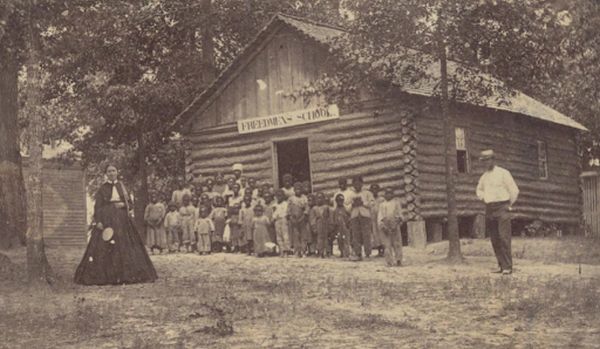
Northern aid groups and the federal government also helped. The Freedmen’s Bureau started in March 1865. It helped schools by renting buildings, providing books, and assisting teachers with travel. It also supervised schools and offered military protection. Still, local Black support remained crucial, even as many freedpeople also paid school taxes for schools they could not always use.
During Reconstruction, Black men gained the right to vote and run for office, and their newfound political power shaped education. Black officeholders and their white Republican allies argued that public education should be a state responsibility. New state constitutions required free public schools and set aside certain taxes to fund them. By 1875, about half the children in Florida, Mississippi, and South Carolina were enrolled in school.
Education laws also shaped higher learning. Black politicians pressed for colleges and teacher training, and they helped change what states would support. In 1871, a biracial group in Mississippi's legislature approved the purchase of a former college campus. This led to the creation of Alcorn University, which focused on Black higher education. Hiram Revels, the first Black U.S. senator, later became the school’s first president. In Louisiana, Black politicians proposed the creation of Southern University during the 1879 state constitutional convention.
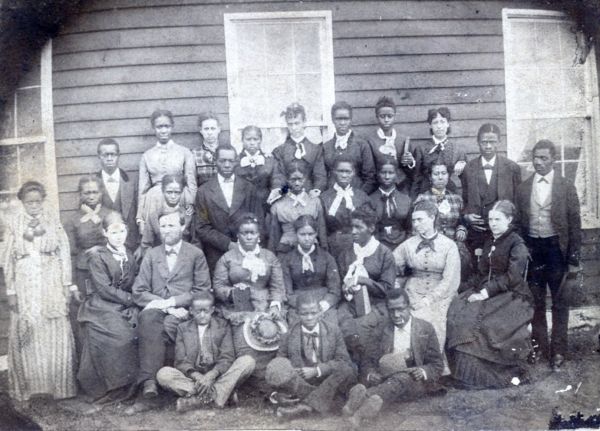
Teacher training mattered because the new schools needed educators. Normal schools were “model” schools that trained teachers in the standards of teaching. Georgia had normal schools for teacher training in places like Macon, Columbus, and Savannah. In 1877, North Carolina selected the Howard School in Fayetteville as a state-supported normal school. It then became the State Colored Normal School. Over time, schools like these helped strengthen public education and supported the rise of colleges that expanded opportunities for Black students.
