
When Americans set out to create a new government in the late 1700s, they were responding to years of conflict, debate, and uncertainty. Independence meant freedom from British rule, but it also meant responsibility for designing a system that could actually govern a nation. Many Americans worried that government power was dangerous, yet they also recognized that some power was necessary to protect people and resolve conflict. The Constitution reflects this tension by organizing government around guiding principles rather than relying on trust in leaders alone.
These principles did not appear suddenly or accidentally. They developed out of historical experience, especially life under British rule and the challenges faced after independence. Colonists had seen what happened when power was distant, unaccountable, or concentrated in too few hands. At the same time, early Americans struggled with weak government under the Articles of Confederation, which made it difficult to solve national problems. The principles of American government grew out of this push and pull between fear of tyranny and fear of disorder.
Popular Sovereignty
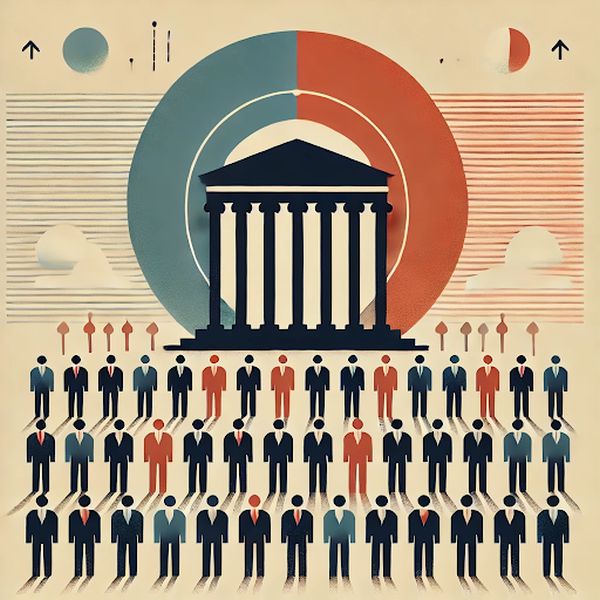
Popular sovereignty is the principle that government authority comes from the people rather than from a king, inherited position, or divine right. In a system based on popular sovereignty, the people are understood as the original source of power, and government exists to serve their collective interests. Leaders do not rule because they are born into power or chosen by a higher authority. Instead, they govern only because the people grant them that authority. This idea reshaped how Americans thought about legitimacy, obedience, and political power.
The principle of popular sovereignty developed in response to colonial experiences under British rule. Colonists were subject to laws made by Parliament, an institution in which they had no direct representation. Decisions affecting their lives were often made far away by officials who did not share their circumstances or priorities. Over time, many colonists concluded that government without consent was unjust and illegitimate. These frustrations helped fuel revolutionary arguments that people should have the right to govern themselves.
When Americans created a new government, they placed popular sovereignty at its foundation. The Constitution assumes that authority begins with the people and is temporarily entrusted to representatives. This belief shaped expectations about elections, representation, and accountability. It also placed responsibility on citizens, since a government based on popular sovereignty depends on public participation and informed judgment.
Limited Government
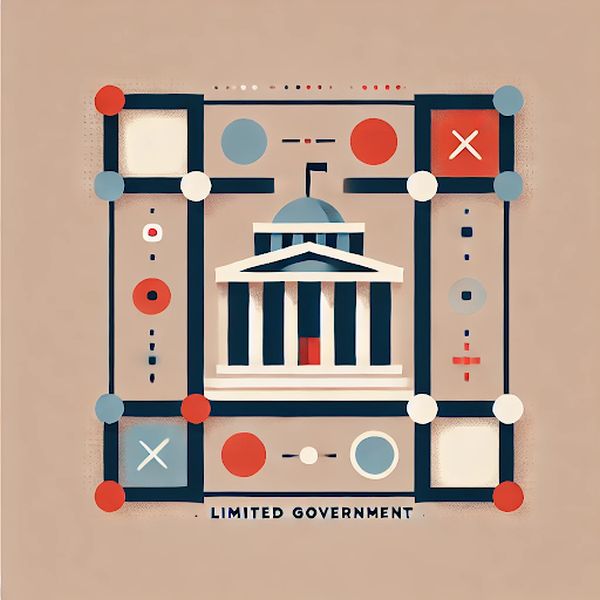
Limited government is the principle that government power must be restricted by law and clearly defined boundaries. In a system based on limited government, leaders do not have unlimited authority, even when they claim to act in the public interest. Instead, government power is carefully constrained so that it cannot be used arbitrarily or excessively. This principle reflects the belief that freedom is most secure when authority is restrained. Americans came to see limits on power as essential to protecting individual liberty.
The idea of limited government developed largely from colonial experiences under British rule. Many colonists believed that Parliament and the king had exceeded their rightful authority through actions such as taxation without representation, restrictions on trade, and the use of military force to enforce laws. These experiences convinced colonists that unchecked power could easily become abusive. Independence did not eliminate these fears; instead, it intensified concerns about how any government might misuse authority if left unconstrained.
When Americans created a new system of government, they deliberately built limits into its structure. The Constitution defines government powers rather than assuming them, making clear what leaders are allowed to do. Officials are required to follow laws and procedures, not personal judgment alone. By limiting authority in advance, the system aims to prevent future abuses and ensure that government remains accountable to the people.
Separation of Powers

Separation of powers is the principle that government authority should be divided among different branches, each with its own responsibilities. Instead of placing all power in a single leader or institution, authority is split so that no one part of government controls everything. In the American system, this means lawmaking, enforcing laws, and interpreting laws are handled by separate branches. The purpose of this division is to reduce the risk of abuse by preventing power from becoming too concentrated.
Americans believed that liberty was safer when authority was shared rather than unified.
This principle developed from historical experiences with governments that concentrated power in one place. Many Americans associated monarchies with tyranny because kings often controlled lawmaking, enforcement, and the courts. Under British rule, colonists had seen how concentrated authority could lead to unfair laws and limited accountability. These experiences convinced them that dividing power was necessary to protect freedom. Separation of powers was therefore seen as a structural safeguard rather than a matter of trust in leaders.
When Americans designed their new government, they intentionally separated authority to force cooperation and restraint. Each branch depends on the others to function fully, which encourages debate and compromise. Decision-making becomes slower and more deliberate, but this was viewed as a benefit. By separating powers, the system reduces the likelihood that any single branch can dominate or threaten individual liberty.
Checks and Balances
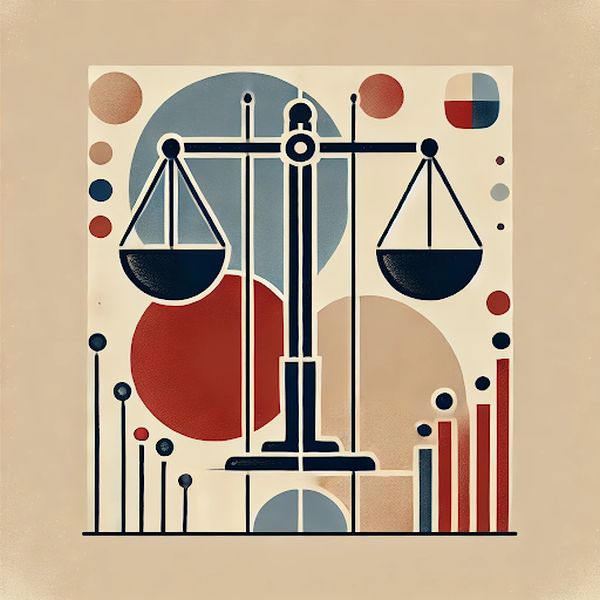
Checks and balances is the principle that government power should be restrained through internal limits built into the system itself. Rather than trusting any single part of government to act responsibly at all times, this principle assumes that power needs oversight. Authority is distributed in a way that allows different parts of government to monitor and restrain one another. The goal is to prevent any one part from becoming too powerful or acting without accountability. This principle reflects a cautious approach to power rather than blind confidence in leadership.
The idea of checks and balances grew out of deep concerns about human nature and political ambition. Many Americans believed that people in positions of authority might place their own interests above the public good if left unchecked. History provided many examples of leaders who expanded their power once given the opportunity. As a result, Americans designing their government focused on preventing abuse before it occurred. Checks and balances were intended to make power self-regulating rather than dependent on virtue alone.
When incorporated into the American system, checks and balances made government action more deliberate and restrained. Decisions are rarely simple or immediate, which forces discussion and reflection. While this can slow the process of governing, it was seen as a worthwhile tradeoff. By creating a system where power is limited through oversight, checks and balances help protect liberty while still allowing government to function.
Federalism
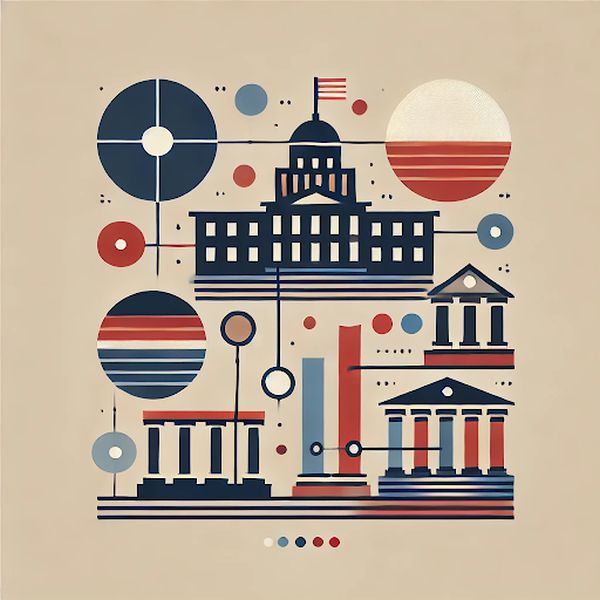
Federalism is the principle that government power is divided between a national government and state governments. Instead of placing all authority in one central government, power is shared across levels, with each responsible for different areas of public life. This structure allows the system to address issues that affect the entire nation while also responding to local needs and priorities. Federalism reflects the belief that no single level of government should control all decisions. It creates a balance between unity and regional independence within one political system.
The idea of federalism developed from disagreements among the states after independence. Some Americans feared that a strong national government would threaten local authority and recreate the kind of distant rule they had experienced under Britain. Others worried that weak coordination among states would lead to disorder, conflict, and economic instability. These competing concerns made it clear that compromise was necessary. Federalism offered a solution that allowed states to retain meaningful power while still forming a unified nation.
When Americans designed their government, federalism became a way to manage diversity across a large and varied country. Different regions had different economies, traditions, and political priorities. Sharing power allowed flexibility without sacrificing national cohesion. By dividing authority between levels of government, federalism helps prevent the concentration of power while allowing government to function at both local and national scales.
Rule of Law
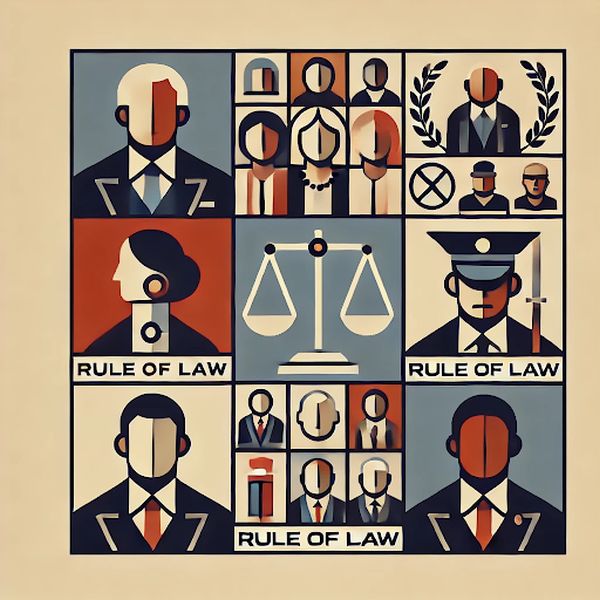
Rule of law is the principle that laws apply equally to everyone, including those who hold power. In a system governed by the rule of law, authority is exercised according to established rules rather than personal will. No individual or group is above the law, and decisions are meant to follow known procedures. This principle emphasizes fairness, consistency, and predictability in government. It stands in contrast to systems where leaders can act arbitrarily or change rules to benefit themselves.
The idea of rule of law developed from colonial experiences with British authority. Many colonists believed that officials enforced laws unevenly and without accountability. Decisions were sometimes made based on position or influence rather than clear legal standards. These experiences led Americans to view arbitrary power as a threat to liberty. Over time, they came to believe that just government required stable rules applied consistently.
When Americans created a new government, they placed the rule of law at its center. The Constitution ties authority to legal procedures rather than personal status. Government officials are required to follow the same laws as everyone else. By making power dependent on law, the system seeks to prevent abuse and build trust. Rule of law helps ensure that government authority is legitimate, restrained, and accountable.
Individual Rights

Individual rights are freedoms and protections that belong to people and place limits on what government is allowed to do. These rights exist to protect individuals from abuse of power, even when government claims to be acting in the public interest. In a system that values individual rights, personal liberty is treated as essential rather than optional. Government authority must operate within boundaries that respect these freedoms. This principle reflects the belief that protecting liberty is one of the main reasons government exists.
The idea of individual rights developed from experiences with British rule and long-standing debates about freedom. Many colonists believed their rights had been violated through unfair laws, restrictions on speech, and the use of force to maintain control. These experiences convinced Americans that government could not be trusted to respect liberty unless limits were clearly established. As a result, protecting individual rights became a central concern during the creation of the new government.
When Americans designed their system of government, individual rights were understood as safeguards against both government power and majority rule. Even when most people support a policy, rights protect individuals from being overridden simply because they are unpopular or vulnerable. This principle helps ensure that freedom is preserved during times of fear, conflict, or rapid change. By placing limits on authority, individual rights help balance order and liberty in the American system.