
Democracy depends on disagreement. People have different needs, experiences, values, priorities, and ideas about what government should do. Some people may want government to act quickly on a public problem. Others may worry about cost, limits on government power, or unintended effects. Some people may care most about individual rights. Others may focus on public safety, economic opportunity, fairness, or stability.
Disagreement is not a weakness in a democracy. It can help people identify problems, debate solutions, organize, vote, advocate, and hold leaders accountable. People can disagree strongly and still recognize one another as legitimate participants in civic life.
Disagreement becomes more concerning when people stop treating different views as part of democratic life and begin treating the other side as an enemy or threat. At that point, the problem is not only that people disagree about policy. The problem is that disagreement becomes tied to distrust, identity, and hostility. This is where the difference between ordinary disagreement and political polarization begins.
What Political Polarization Means
Political polarization is a pattern in which political differences become more deeply divided, more identity-based, more distrustful, and harder to bridge. Polarization is not only about people having strong opinions. People can care deeply about an issue without being polarized. Polarization is about how people relate to those who disagree with them and how political systems respond to division.
In a polarized environment, people may sort into opposing political teams. They may feel strong loyalty to their own side and growing distrust or dislike toward those on the other side. Compromise may feel like betrayal. People may assume bad motives from political opponents, even before listening to their reasons. Political disagreement can become connected to identity and belonging, so changing one’s mind or working with someone from another side may feel personally threatening.
Ordinary disagreement often asks, “What should government do?” Polarization often adds, “Can people on the other side be trusted?” That second question changes the meaning of disagreement. It makes politics less about comparing ideas and more about defending a group against another group.
How Polarization Affects Political Attitudes and Actions
Political polarization can shape political attitudes and actions. It can influence what information people trust, which candidates or parties they support, whether they vote, donate, post, protest, or volunteer, and how they interpret the same event or policy. It can also shape whether people are willing to listen, compromise, or accept outcomes they do not like.
Polarization can increase participation because politics may feel urgent. People who believe the stakes are extremely high may be more likely to vote, share political messages, attend meetings, donate money, volunteer for campaigns, or speak out. Strong concern can move people into civic action.
At the same time, polarization can discourage participation. Some people may withdraw because politics feels too angry, exhausting, hostile, or pointless. Others may feel that elected officials are more focused on defeating opponents than solving problems. Polarization can make people more active, but it can also make others feel pushed out of civic life.
These effects do not appear from nowhere. Polarization can be shaped by political systems, election rules, campaign messages, media structures, information habits, and the ways people talk with others. The next sections examine several factors that can drive polarization and make ordinary democratic disagreement harder to manage.
Political Parties, Sorting, and Primary Pressure
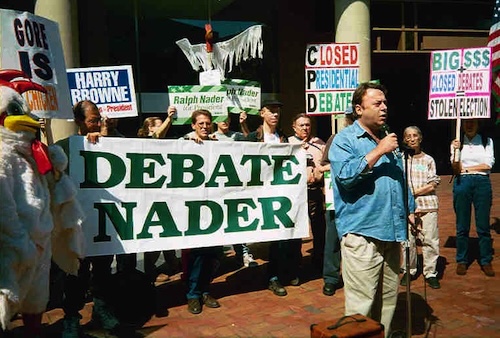
Political parties are an important part of democracy. Parties recruit candidates, create platforms, help voters make choices, organize campaigns, and form governing coalitions. They give people a way to connect their beliefs to candidates and public action. Parties can help citizens participate in government.
Parties can also contribute to polarization when political identity becomes more team-based. One important pattern is party sorting. Party sorting happens when people with similar views increasingly cluster within the same party. When parties are less mixed internally, fewer voters and elected officials feel cross-pressure from people with different views inside their own political group. Over time, the parties may become easier to see as opposing teams.
Electoral districts can also shape political behavior. Redistricting is the process of redrawing electoral district boundaries. Gerrymandering happens when district boundaries are drawn to advantage a party or group. Gerrymandered districts, and some naturally one-party districts, can make general elections less competitive because one party is very likely to win. In those safe districts, the most important contest may become the primary election, where candidates compete against others from the same party. That can matter because candidates may worry more about being challenged by someone with more extreme views inside their own party than about losing to the other party in the general election. If voters in the primary see compromise or working across party lines as a betrayal, candidates may feel pressure to speak, vote, and campaign in ways that prove loyalty to the party.
Primary voters are often fewer in number and more politically engaged than general-election voters. Candidates may feel pressure to appeal to voters who are more committed, more active, or more strongly partisan. This does not mean that parties, primaries, or voters are “the problem.” It means electoral incentives can reward more polarized behavior.
One result is that compromise can become politically risky. More extreme voices may gain visibility or influence. Citizens may become disillusioned if parties seem more focused on defeating each other than governing.
Interest Groups, PACs, Campaigns, and Political Messages
Interest groups form when people, organizations, businesses, workers, professions, causes, or communities organize around shared policy goals. Political action committees, often called PACs, and other campaign-related organizations can raise money, support candidates, fund messages, mobilize voters, and shape public attention.
Organized groups can strengthen democracy. They can inform people, represent interests, bring expertise to public debates, and help citizens participate. Many people use interest groups to make their voices more visible in a large political system.
Interest groups, PACs, and campaigns can also contribute to polarization when political messages emphasize fear, threat, anger, or identity. A campaign message may frame politics as a high-stakes battle where the other side is dangerous rather than simply different. Messages that warn people about what they could lose may be powerful because fear can capture attention and motivate action.
Contributions and spending can affect which issues receive attention, which messages are repeated, and which voters are mobilized. This does not mean that organized groups automatically polarize politics. The key point is that some forms of organized messaging can deepen division when they repeatedly encourage people to see politics as a fight between enemies.
Media Structures, 24-Hour News, and Attention
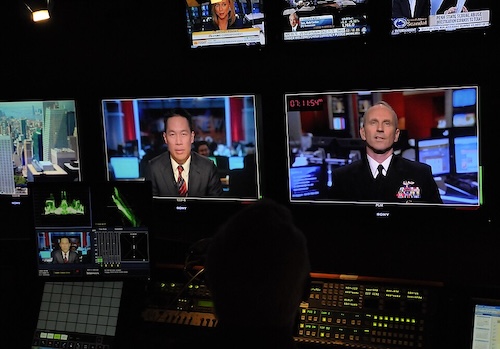
The media environment has changed dramatically over time. For much of American history, people received news through newspapers, radio, local television, evening news broadcasts, or scheduled news programs. News still contained disagreement, opinion, and bias, but there were fewer channels and fewer hours to fill. People often encountered news at certain times of day rather than through a constant stream.
Twenty-four-hour media changed that pattern. Cable news and other round-the-clock formats made news, commentary, updates, and political conflict available all day and night. A 24-hour news environment needs a steady flow of content to keep audiences watching, listening, clicking, or subscribing. Many media organizations depend on attention for revenue through ratings, subscriptions, clicks, shares, and advertising. Content that feels urgent, emotional, dramatic, or conflict-centered can attract more attention than slower explanation.
Sensationalism and clickbait can reward stories that make people angry, afraid, or suspicious. A headline or video clip may be designed to provoke a quick reaction rather than help people understand a complicated issue. Over time, repeated exposure to conflict-centered content can shape how people think politics works.
Changes in technology, regulation, and business models have also made it harder for some audiences to separate news reporting, opinion, commentary, entertainment, and political persuasion. Opinion commentators may appear in news-like formats. Audiences may not always distinguish reporting from analysis or opinion. When people repeatedly consume content that frames politics as conflict between enemies, polarization can deepen.
Social media is part of this attention economy. Likes, shares, comments, reposts, and algorithms can reward emotional or conflict-driven content. Social media did not create every incentive in the modern media environment, but it can intensify those incentives by spreading attention-grabbing content quickly.
Information Environments and Different Political Realities
People may not only disagree about solutions. They may receive different information about what is happening in the first place. An information environment is the set of sources, platforms, habits, and communities that shape what people see and believe about public life.
Information environments shape which facts people encounter, which sources they trust, which problems seem urgent, who seems responsible, and whether compromise seems reasonable or dangerous. People can also end up in information bubbles, where most of the news, posts, videos, opinions, and conversations they encounter reinforce what they already believe. Sometimes people curate these bubbles on purpose by following only sources that agree with them. Other times, platforms and social circles gradually show them more of the same kind of information.
When people live in different information environments, they may interpret the same event in very different ways. This makes polarization harder to bridge. Disagreement is difficult enough when people disagree about values or policies. It becomes even harder when people also disagree about facts, trust, and motives. If one group believes a source is reliable and another group believes the same source cannot be trusted, they may struggle to even begin a shared conversation.
Social media is one powerful part of the modern information environment because it can shape what people see, share, and react to. It can connect people to new information, but it can also reinforce the information patterns they already have.
Effects on Governance, Participation, and Social Trust
Polarization can affect governance by making compromise harder. Elected officials may fear punishment from their own supporters if they work across party lines. Lawmaking can become slower, more conflict-centered, or more focused on defeating opponents than addressing public problems. When this happens, democratic institutions may still function, but cooperation becomes more difficult.
Polarization can also affect public trust in institutions. People may begin to view courts, elections, agencies, or legislatures mainly through political identity. If an institution makes a decision people dislike, they may assume the decision was corrupt or illegitimate rather than considering the legal or procedural reasons behind it. This can weaken confidence in government.
The effects also reach beyond elections and lawmaking. Social trust means people believe others can participate in civic life honestly, even when they disagree. When polarization grows, people may assume that those with different views are ignorant, corrupt, dangerous, or acting in bad faith. This can affect schools, families, peer groups, communities, and workplaces.
These effects matter because democracy depends on both disagreement and some level of shared civic trust. People do not have to agree on every issue, but they need enough trust to accept rules, evaluate information, share public spaces, and work through conflict without treating every disagreement as a threat.
Why Understanding Causes Matters
If people treat polarization only as something caused by “the other side,” they may deepen the problem. Blame can make people feel certain, but it may also make them less willing to understand the systems and behaviors that shape polarization.
Understanding causes matters because polarization is shaped by systems, incentives, media structures, information habits, and social behaviors. Political parties, primaries, districts, interest groups, campaign messages, media platforms, social media, and personal information habits can reinforce one another.
Reducing polarization does not mean eliminating disagreement. A healthy democracy still needs debate, advocacy, elections, and competing ideas. People should be able to disagree about values, priorities, and policies.
Reducing polarization means helping disagreement become more honest, informed, respectful, and possible to bridge. Later, you will think about realistic ways people can reduce polarization in peer groups and civic spaces. Those strategies may involve slowing down before sharing outrage, checking information, asking clarifying questions, listening across difference, separating people from positions, and looking for shared civic commitments.

