
The Mexican Revolution began in 1910 after many years of rule by President Porfirio Díaz. During Díaz’s time in power, Mexico experienced economic growth, new railroads, increased mining and industry, and greater foreign investment. However, Díaz also limited political opposition and remained in power through elections that were not fully free or fair.
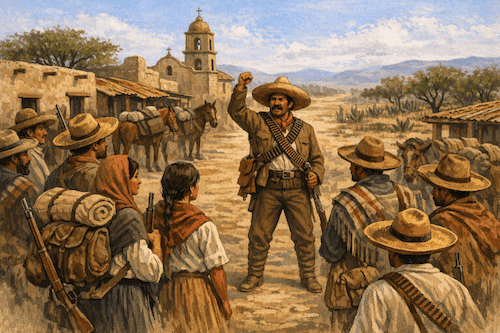
Economic growth did not benefit everyone equally. Large landowners and companies gained control of large areas of land, sometimes taking land that had been used by Indigenous communities and small farmers. Many rural workers faced low wages and difficult working conditions. These political and economic problems contributed to growing opposition to Díaz.
Francisco Madero challenged Díaz in the presidential election of 1910 and called for free elections and political change. After Díaz left power in 1911, Madero became president. However, different revolutionary groups wanted different kinds of change. Some demanded land reform, while others focused on political rights or greater local control.
In 1913, General Victoriano Huerta seized power in a military coup. Madero was arrested and killed. Revolutionary leaders, including Venustiano Carranza, Francisco “Pancho” Villa, and Emiliano Zapata, opposed Huerta, although they did not always agree with one another. Huerta was forced from power in 1914, but fighting continued among the revolutionary groups.
Carranza eventually gained control of much of the country and called for a convention to create a new constitution. The Constitution of 1917 established important changes. It strengthened the federal government, included protections for workers, allowed the government to redistribute some land, and placed limits on foreign ownership of Mexico’s natural resources.
The Constitution of 1917 was a major turning point, but it did not immediately end the Revolution. Fighting continued for several more years, and many reforms took decades to carry out. The Revolution changed Mexico’s political system and created ideas about land, labor, and government that continued to shape the country long afterward.