
The framers of the Constitution knew that the country would change over time. They also believed that the nation’s basic laws should be stable and not easily altered. For that reason, Article V of the Constitution created a process for making amendments that is possible, but intentionally difficult.
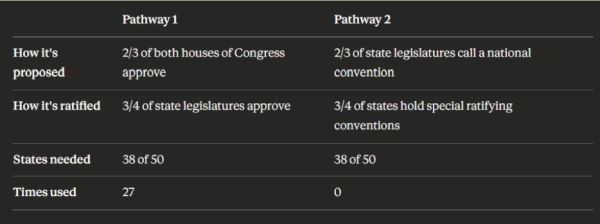
There are two ways to propose a constitutional amendment. The most common method begins in Congress. If two-thirds of both the House of Representatives and the Senate approve a proposed amendment, it is sent to the states for consideration. A second method exists but has never been used: if two-thirds of state legislatures request it, Congress must call a national constitutional convention to propose amendments.
Once an amendment is proposed, it must be ratified by three-fourths of the states before it becomes part of the Constitution. Today, that means approval from 38 of the 50 states. States may ratify an amendment through their state legislatures or through special state conventions, depending on the method Congress specifies.
Because of these high requirements, amendments are rare. More than 11,000 amendments have been proposed throughout U.S. history, but only 27 have been successfully added to the Constitution. Some amendments expanded rights, such as the amendment that granted women the right to vote, while others changed government policies, such as the amendment lowering the voting age to 18.
Amendments can also reverse earlier changes. However, the Constitution does not allow an amendment to simply be removed. Instead, repealing an amendment requires passing a new amendment that cancels it. This has happened only once in American history. In 1919, the Eighteenth Amendment banned the manufacture and sale of alcohol. Fourteen years later, the Twenty-First Amendment repealed it.
This process reflects the balance the framers wanted: the Constitution can adapt over time, but only when a broad national agreement supports the change.