
Technology can make life easier, help people communicate, and solve important problems. But creating and using technology can also affect the environment in harmful ways. Phones, computers, cars, factories, power plants, and other technologies require energy and materials. Making, using, and throwing away these products can create pollution, use natural resources, and produce large amounts of waste.
Understanding these effects can help people make better choices about how technology is designed, used, and disposed of.
Using Natural ResourcesMany technologies are made from materials that come from Earth. Metals such as copper, gold, lithium, and other minerals are used in phones, computers, batteries, and other electronic devices.
Getting these materials often requires mining. Mining can disturb land, use large amounts of water, and sometimes create pollution. Manufacturing technology also requires energy and other resources.
Some resources are renewable, which means they can be replaced naturally over time. Others are nonrenewable, meaning there is a limited supply. Using resources carefully can help reduce the environmental effects of producing new technology.
Energy Use and Air PollutionMost technology needs energy to operate. Computers, phones, factories, data centers, transportation systems, and other technologies all use electricity or fuel.
When electricity is produced by burning fossil fuels such as coal, oil, or natural gas, carbon dioxide is released into the atmosphere. Carbon dioxide is a greenhouse gas. Greenhouse gases trap heat in Earth's atmosphere, and increasing their amount contributes to climate change.
Technology does not always use fossil fuels. Electricity can also come from sources such as solar, wind, hydroelectric, and nuclear power. This means the environmental impact of using technology can depend partly on where its energy comes from.
Electronic Waste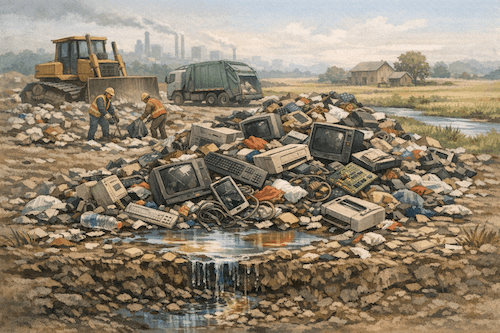
What happens when a phone breaks or a computer becomes too old to use? Many electronic devices eventually become electronic waste, or e-waste.
E-waste includes unwanted or broken phones, computers, televisions, batteries, and other electronic devices. Electronics may contain useful materials that can be recovered and reused. They can also contain substances that may be harmful if they are not handled properly.
When electronic waste is dumped, burned, or processed unsafely, harmful materials can enter the soil, water, or air. Recycling electronics through programs designed to handle e-waste can help recover valuable materials and reduce some of these risks.
However, recycling alone does not solve the problem. Producing large numbers of new devices also requires more materials and energy. Repairing or continuing to use a device when possible can sometimes reduce waste.
Changing HabitatsBuilding technology also requires space. Roads, factories, mines, power lines, dams, and other projects can change the land around them.
When forests, grasslands, wetlands, or other habitats are cleared or changed, plants and animals may lose places where they find food, water, and shelter. Pollution from construction or industry can also affect nearby ecosystems.
These effects are not the same for every project. Where something is built, how it is designed, and how carefully the surrounding environment is protected can make a difference.
Water and PollutionTechnology can also affect water. Factories, mining operations, power plants, and other industries may use large amounts of water. Some industrial activities can pollute rivers, lakes, groundwater, or oceans if waste is not managed properly.
For example, chemicals or metals from some manufacturing and mining activities can enter water systems. This can affect plants, animals, and people who depend on that water.
Environmental rules, cleaner production methods, and better waste treatment can help reduce these risks.
The Hidden Impact of Digital TechnologyDigital technology may seem like it has little effect on the physical environment because messages, videos, and websites do not look like physical products. But digital technology still depends on equipment and energy.
Data centers contain large numbers of computers that store and process information. These centers use electricity and also require systems to keep equipment from overheating. Phones, tablets, and laptops must also be manufactured, transported, charged, and eventually replaced.
This does not mean digital technology is always harmful. It means that even activities that seem completely online can still use physical resources.
Making Choices About TechnologyTechnology can both help and harm the environment. Solar panels can produce electricity without burning fossil fuels, while manufacturing the panels still requires materials and energy. Electric vehicles do not release exhaust while being driven, but their batteries require minerals and electricity to produce. Computers help people share information without traveling, but the digital systems that make this possible still use energy.
Because of these trade-offs, there is rarely a technology with no environmental impact at all.
Scientists, engineers, businesses, governments, communities, and individuals can all play a role in reducing these effects. Devices can be designed to last longer and use less energy. Materials can be reused and recycled. Energy can come from sources that produce less pollution. People can also repair, reuse, or properly recycle electronics instead of replacing them unnecessarily.
Technology can solve problems, but it can also create new ones. Looking at both the benefits and the environmental costs of technology can help people make more informed choices about how it should be used in the future.