
From Goals and Tools to Power
Foreign policy involves goals and tools, but goals and tools do not use themselves. Someone has to decide which goals matter most, which tools fit the situation, how quickly the United States should act, and how much risk, cost, or uncertainty is acceptable.
That makes foreign policy a question of power as well as policy. The United States may need to respond to threats, allies, trade problems, global risks, or crises beyond its borders. At the same time, government action still needs constitutional authority, accountability, and limits. Foreign policy often begins with the question of what the United States should do in the world. It raises another question too: who has the power to decide?
Why the President Is Central
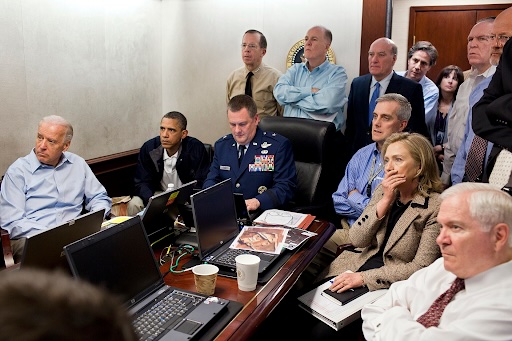
The president is often the most visible leader of U.S. foreign policy. When the United States responds to another country, addresses a crisis, meets with foreign leaders, or explains a national position to the world, the president is usually at the center of public attention.
One reason is the constitutional role. As chief executive, the president leads the executive branch. That branch includes departments and agencies involved in foreign policy, national security, diplomacy, intelligence, trade, and defense. Presidents can direct executive officials and coordinate work across these parts of government.
The president serves as commander in chief of the armed forces. This means the president leads the military. Because of this role, presidents may direct military forces during foreign policy crises or conflicts. This gives the president major influence when foreign policy involves force. It does not mean the president alone controls every war-related decision.
The president acts as chief diplomat and national representative. Presidents meet with foreign leaders, negotiate with other countries, receive ambassadors, and communicate U.S. positions to the world. A president can often speak for the nation in ways that are difficult for Congress as a large lawmaking body.
Practical realities make the president central as well. Foreign policy can move quickly. A threat, attack, diplomatic crisis, or emergency may require a fast response. The president has access to intelligence and national security information that can help guide decisions. The executive branch can coordinate agencies, communicate with foreign governments, and act with more unity than a large legislature usually can.
This does not mean the president makes foreign policy alone. It means the president is often best positioned to lead when foreign policy requires speed, information, coordination, and national visibility.
Why Presidential Power Is Not Unlimited
Presidential leadership creates an important constitutional tension. Foreign policy may require unity, speed, secrecy, and expertise. A country may need one leader who can respond clearly and quickly when events are uncertain or dangerous.
Constitutional government still requires shared power, lawmaking, funding, oversight, rights protections, and accountability. The Constitution does not place all foreign policy authority in one branch. Instead, foreign policy power is shared across institutions. Sometimes the branches cooperate. Sometimes they disagree. Sometimes the boundaries are unclear.
This is why checks and balances matter. The president may be best positioned to lead foreign policy, but leadership is not the same as unlimited power. In a constitutional system, even urgent action exists within a structure of laws, institutions, and limits.
Congress’s Role: Authorize, Fund, Approve, and Oversee
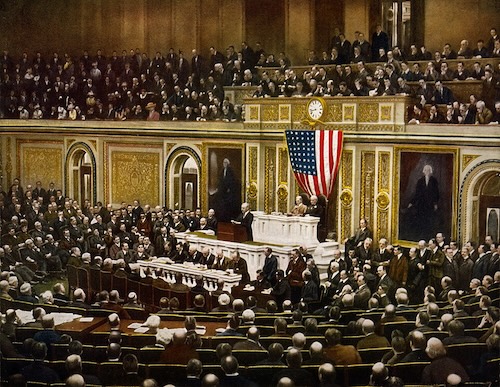
Congress does not usually manage day-to-day diplomacy. Members of Congress do not normally negotiate directly with foreign governments or direct military operations. Still, Congress has major constitutional and legal powers that shape foreign policy.
One of the clearest powers is the power to declare war. The president commands the military, but Congress has the constitutional authority to declare war. War shows the tension between leadership and limits clearly. The president leads the armed forces, while Congress has authority over major war decisions and the resources needed to support them.
Funding is another major congressional power. Congress controls federal spending. It can fund foreign policy and military action, reduce funding, place conditions on funding, or refuse funding. Because foreign policy tools often require money, funding gives Congress an important way to enable, limit, or respond to presidential action.
Congress shapes foreign policy through lawmaking. It can pass laws that authorize, limit, or organize foreign policy actions. Congress can regulate foreign commerce, which means it can shape trade with other countries. Trade rules, economic restrictions, and laws about goods or technology can all affect U.S. relationships with the world.
The Senate has special roles in foreign policy. It has a role in approving treaties, which are formal agreements with other countries. It confirms ambassadors and many high-level officials who help carry out foreign policy.
Oversight is another important congressional role. Congress can hold hearings, investigate decisions, request information, and question officials. Oversight can help lawmakers and the public understand how decisions were made, whether laws were followed, and whether government power was used responsibly.
Congress can enable presidential action by approving funds, passing laws, confirming officials, or supporting agreements. It can limit or challenge presidential action by refusing support, changing funding, passing restrictions, or investigating decisions. This does not make Congress the day-to-day leader of foreign policy, but it does mean the president does not govern alone.
The Courts’ Role: Law, Rights, and Limits
The courts play a role in foreign policy, but their role is different from the president’s or Congress’s. Courts do not usually design foreign policy. They do not negotiate with other countries, command military forces, or manage diplomacy.
Courts can become involved when foreign policy actions raise legal or constitutional questions. A court may be asked whether a government action follows the law, respects constitutional protections, stays within executive authority, or conflicts with laws passed by Congress.
Courts may be especially important when foreign policy affects people directly. Issues involving detention, travel, immigration, property, or individual rights can raise legal questions. In those situations, courts may consider whether the government respected due process or other constitutional protections.
The courts do not control foreign policy daily. They do not decide every disagreement between the president and Congress. But when a legal question reaches the courts, judges may uphold, limit, or reject government action. This means foreign policy power can be shaped not only by what leaders want to do, but by law, rights, and constitutional limits.
Checks and Balances Are Not Just “Stopping” Power
Checks and balances are sometimes described as one branch stopping another branch. That can happen, but it is not the whole story. In foreign policy, checks and balances can involve cooperation.
Congress may fund a policy, authorize action, confirm officials, or support an agreement. Courts may uphold executive action when it follows the law. In these cases, checks and balances help foreign policy move through constitutional institutions.
At other times, branches may conflict. Congress may investigate presidential decisions, limit funding, or pass laws that restrict action. Courts may rule that an action violates the law or exceeds constitutional authority. Lawmakers may challenge executive decisions and argue that the president has gone too far.
Modern foreign policy often happens in gray areas. Events can move quickly, and the Constitution does not provide a simple answer for every situation. Branches may disagree over who has authority, how far that authority reaches, and what limits apply.
Checks and balances shape foreign policy by requiring action to move through institutions, laws, funding, oversight, and legal limits.
