Brown v. Board of Education (1954)
Federalism Focus: Investigate how a Supreme Court ruling affected state laws governing public education.

In 1954, the Supreme Court agreed to hear cases challenging state laws in several states that required public schools to operate separately for different racial groups. Public education had long been organized and regulated at the state level, and these laws reflected that authority. Families brought legal challenges arguing that those state systems conflicted with national legal standards. The case raised a central question about how far state authority over education extended when national legal claims were involved.
The Supreme Court reviewed the state education laws and became directly involved in determining whether those practices could continue. Because school systems were administered by states and local districts, any shift in legal interpretation required action at more than one level of government. In the period that followed, state responses did not unfold uniformly, and the interaction between federal judicial authority and state governance continued to develop. The situation created ongoing questions about how national decisions function when states retain primary responsibility for education.
Wickard v. Filburn (1942)
Federalism Focus: Investigate how federal agricultural regulations interacted with individual farming practices within a state.

In 1942, during World War II, Congress established limits on how much wheat farmers could grow in order to stabilize national supply and prices. One Ohio farmer grew more wheat than his federal allotment allowed, explaining that the extra grain was for use on his own farm rather than for sale. Because agriculture had traditionally been managed locally, the situation raised a question about how far national authority extended into farming decisions made within a single state. The dispute moved into the federal court system.
Federal regulators sought to enforce nationwide production limits, even when the activity in question took place entirely within one state. The case reached the Supreme Court, where the interaction between national economic policy and state-level agricultural practices came under review. The decision would shape how production activity was understood in relation to federal authority. The situation left open broader questions about the scope of national power when local actions contribute to larger economic systems.
No Child Left Behind Act (2001)
Federalism Focus: Investigate how federal education funding requirements interacted with state control of public schools.

In 2001, Congress passed a federal education reform law known as No Child Left Behind, which introduced new accountability measures and required standardized testing in public schools. The law tied federal education funding to compliance with these requirements. Because public schools are primarily administered by states, the legislation brought national expectations into state education systems. The reform raised questions about how much influence federal funding conditions could exert over state-run schools.
The federal government established benchmarks and reporting requirements that states were expected to implement in order to receive funding. State education agencies remained responsible for carrying out the testing systems and meeting performance targets. Some states expressed concerns about how much flexibility they retained in adapting the law to local contexts. The interaction highlighted ongoing tension about how funding conditions shape the balance between national direction and state administration.
Hurricane Katrina (2005)
Federalism Focus: Investigate how state emergency authority and federal disaster response systems interacted during Hurricane Katrina.

In 2005, Hurricane Katrina caused widespread devastation along the Gulf Coast, particularly in Louisiana and Mississippi. The scale of destruction created an urgent need for coordinated emergency response, evacuation, and recovery efforts. Multiple levels of government became involved as communities faced infrastructure collapse and displacement. The situation raised questions about how authority operates when immediate action is required across state lines.
Federal disaster response systems were activated to provide assistance and coordinate resources. At the same time, state governments retained primary responsibility for emergency management within their borders. As response efforts unfolded, coordination between federal agencies and state officials became central to recovery efforts. The moment prompted an ongoing examination of how responsibility and authority function during large-scale emergencies involving multiple levels of government.
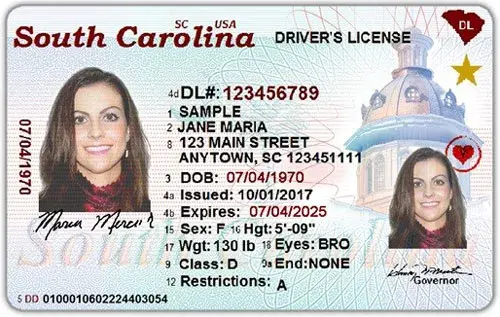
REAL ID Act (2005)
Federalism Focus: Investigate how federal identification standards interacted with state-issued driver’s licenses.

In 2005, Congress passed the REAL ID Act, establishing new security standards for state-issued identification cards and driver’s licenses. The law emerged in a national security context and sought to create more uniform identification requirements across the country. Because driver’s licenses are issued by states, the federal standards directly affected state administrative systems. The legislation raised questions about how national requirements influence documents traditionally managed at the state level.
The federal government set benchmarks that states would need to meet for their identification cards to be accepted for certain federal purposes. States then faced decisions about whether and how to adjust their licensing systems to comply with the new standards. Implementation did not proceed identically across all states, and timelines varied. The situation highlighted questions about federal leverage and state discretion in areas where authority intersects.
Clean Air Act
Federalism Focus: Investigate how federal air quality standards and state implementation plans interacted under the Clean Air Act.

Air pollution often crosses state boundaries, making it difficult for individual states to address air quality issues independently. In response, Congress enacted the Clean Air Act to establish national standards for air pollution control. The law created a framework intended to reduce harmful emissions while recognizing that states manage many environmental programs within their borders. The legislation raised structural questions about how national standards operate within state-administered systems.
A federal agency was tasked with setting environmental benchmarks that applied across the country. States were responsible for developing and submitting plans describing how they would meet those standards locally. Federal oversight remained part of the process, especially if state plans did not meet national expectations. The arrangement reflected an ongoing interaction between uniform national goals and state-level implementation authority.
Affordable Care Act – Medicaid Expansion (2012)
Federalism Focus: Investigate how federal funding conditions interacted with state decisions about Medicaid expansion.

In 2012, the Affordable Care Act included provisions to expand Medicaid eligibility to more low-income adults. The expansion was supported by significant federal funding tied to state participation. Because Medicaid is jointly administered by federal and state governments, the proposal placed state officials in a position to evaluate new participation terms. The expansion raised questions about how funding incentives shape state policy decisions.
Federal lawmakers attached conditions to the new funding, outlining requirements for states that chose to expand coverage. States were then faced with decisions about whether to participate under those terms. The issue reached the Supreme Court, bringing additional attention to the interaction between national spending authority and state autonomy. The moment left open questions about the limits of federal influence when financial incentives are involved.
COVID-19 Public Health Authority (2020)
Federalism Focus: Investigate how federal public health guidance interacted with state-level authority during the COVID-19 emergency.

In 2020, the United States declared a nationwide public health emergency in response to the spread of COVID-19. Federal agencies issued guidance, coordinated research, and mobilized resources to address the crisis. At the same time, many decisions about closures, public health measures, and safety rules were made within individual states. The situation created a complex landscape of authority during a rapidly evolving emergency.
Federal officials provided recommendations and support across states, while governors and state agencies exercised authority over many public health policies within their jurisdictions. As conditions changed, state responses varied in timing and scope. The interaction prompted ongoing questions about how national coordination functions alongside state-level decision-making during a public health crisis.