
In 1862, the United States government passed the Homestead Act and the Pacific Railroad Act—two laws that changed the West forever. Under the Homestead Act, the government granted 160 acres to any adult citizen who hadn't fought for the Confederacy, provided they lived on the land for five years. Simultaneously, the Pacific Railroad Act provided the funding and land to build a transcontinental railroad. This led to a huge construction race. The Central Pacific began in Sacramento, while the Union Pacific started in Omaha. They finally met at Promontory Point, Utah, in 1869.
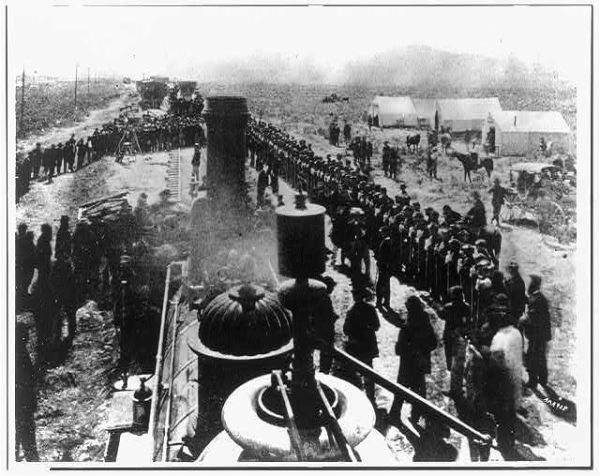
This expansion brought thousands of settlers into the homelands of Indigenous people. The railroad tracks cut through traditional hunting grounds, and this movement caused many violent conflicts. The United States wanted to clear the path for progress and Manifest Destiny. They needed a way to end the wars without spending too much money. Fighting the Indigenous people in the area cost the government one million dollars every single week.
In 1867, Congress created the Indian Peace Commission. Its goal was to move tribes onto reservations to make room for white settlers. The government hoped these treaties would bring lasting peace, yet the conflict continued. Many Indigenous leaders wanted to avoid more bloodshed. They agreed to move to protect their people from the growing tide of expansion.
The Commission met with several nations at Medicine Lodge Creek in 1867. They signed treaties with the Kiowa, Comanche, and Plains Apache. Other agreements included the Arapaho and Cheyenne. The United States promised these Indigenous people food, clothes, and protection on their new lands. In return, the Indigenous people had to stop attacking the railroads. They also had to move into the Indian Territory, and any future land sales required the consent of three-fourths of all adult tribal males.
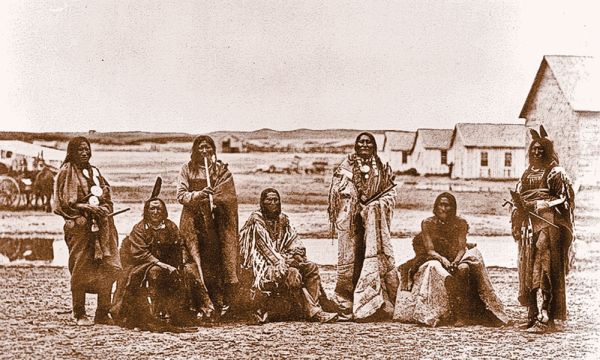
In 1868, the government signed the Treaty of Fort Laramie with the Sioux and Arapaho. This agreement ended Red Cloud's War. It created the Great Sioux Reservation in the Dakota Territory. This land included the sacred Black Hills, and the Sioux were promised that no white people would settle there. They were also told they would receive schools and tools to help them adapt.
These treaties became more common because of the rush for land and gold. The United States wanted title to the land to ensure the safety of settlers. Military leaders like General Sherman believed the tribes must stay on reservations, and he wanted to change their way of life. He promoted the use of education and farming.
Then, in 1887, Congress passed the Dawes Act. This law broke up tribal land and gave small plots to individual Native Americans. The government hoped Native Americans would farm the land and assimilate into white American society.
These changes made life even harder for many Native nations in the West. Settlers continued to ignore the borders of the reservations, while the government failed to provide the promised supplies. This led to starvation and deep anger among the tribes. The stage was set for more conflict and broken promises in the West. Many tribes soon realized the treaties did not protect their homes. Their struggle for sovereignty was not over.
