
As the Civil War spread, enslaved people faced stricter control and worse treatment. By the spring and summer of 1861, some slaveholders feared rebellion and strengthened plantation discipline. Enslaved men were also hired out or forced into dangerous labor. In Virginia, thousands were forced to build fortifications. They dug trenches and raised walls to defend cities like Richmond and Petersburg. In cities like Richmond, some enslaved people working for the Confederacy lost key privileges. They were no longer able to pick their employers or receive cash payments. Additionally, Black and enslaved communities faced random, violent attacks aimed at keeping them in submission.
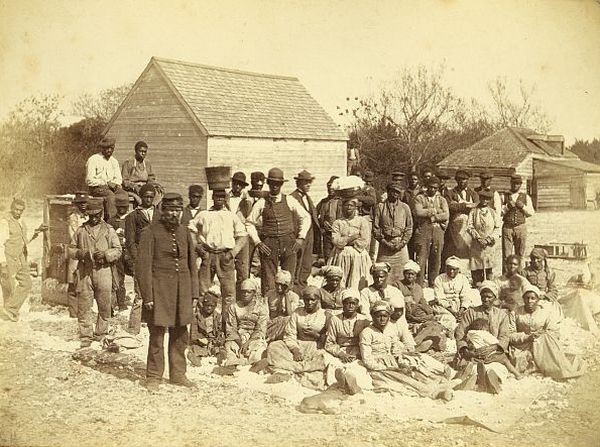
The war also disrupted daily life and families. More farm work fell to enslaved women when white men left to join the Confederate army, and employers hired mostly male laborers. Some families were separated when men were sent away to forts, factories, railroads, or army hospitals as cooks, nurses, and laundresses. In other places, slaveholders moved enslaved people away from approaching Union forces. This forced relocation was sometimes called refugeeing. It left many communities unsettled.
At the same time, enslaved people acted within these changing conditions. When enslavers and overseers went to fight, slave patrols got weaker or vanished in some places. Some enslaved people resisted growing cash crops without better incentives. They worked slowly, pretended to be sick, or broke tools. Others came together to share details about the war. They learned where Union troops were and what might happen if they got close. In areas with less oversight, enslaved people pushed boundaries. They also made daily choices with more freedom.
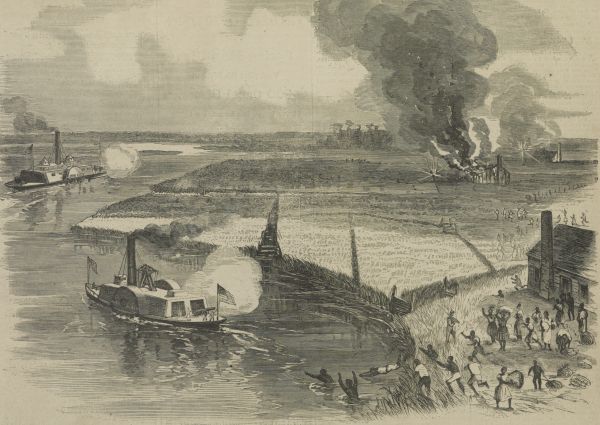
Many enslaved people chose to leave slavery altogether. When Union armies moved nearby, thousands ran to their lines, sometimes alone and sometimes with family members. At Union camps, they were often labeled contraband, meaning the army treated them as captured property rather than as full citizens. Even so, some enslaved people made decisions about where to go and how to survive. In Missouri, 129 enslaved people escaped together. They traveled in a long train with wagons, livestock, and household goods on their way to Kansas. Others ran away at night, using what they knew about local roads, rivers, and communities. Some enslaved men joined the Union army. Women and children looked for protection, food, or work in Union camps. Others remained on plantations but used the disruptions of war to make choices about labor, movement, family life, and survival that had not been possible before.