
Source 1
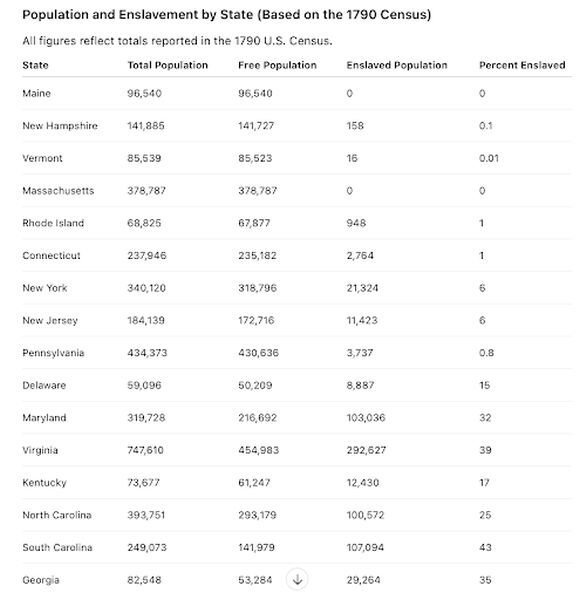
This table presents population data for U.S. states based on the 1790 census, including total population, free population, enslaved population, and the percentage of enslaved people. The data shows wide variation among states in both population size and the extent to which enslaved labor was part of the population. These differences shaped how states understood their interests and what they might gain or lose from decisions about power, representation, and national authority.
Source 2
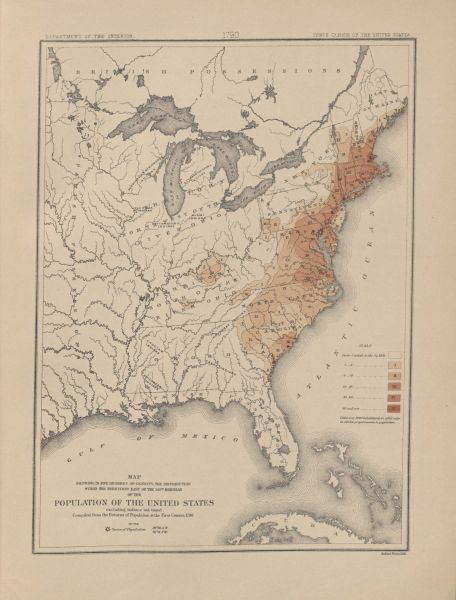
This map shows how the population of the United States was distributed among states in 1790, based on data from the first national census. States are shaded to indicate relative population size, with darker shading representing larger populations. The map highlights significant differences in population between states, particularly between densely populated eastern states and less populated frontier areas.
Source 3
Voices from the Convention: Gouverneur Morris
Gouverneur Morris was a delegate to the Constitutional Convention and a representative of New York. Coming from a background of wealth and commercial interests, he was outspoken during the Convention debates. In this passage, he argues against allowing states that permitted slavery to count enslaved people when determining representation in Congress, raising concerns about fairness, power, and whose interests the new government would represent.
Mr. Govr. MORRIS. He never would concur in upholding domestic slavery. It was a nefarious institution. It was the curse of heaven on the states where it prevailed. Compare the free regions of the Middle States, where a rich and noble cultivation marks the prosperity and happiness of the people, with the misery and poverty which overspread the barren wastes of Virginia, Maryland and the other states having slaves. ... Upon what principle is it that the slaves shall be computed in the representation? Are they men? Then make them citizens and let them vote. Are they property? Why then is no other property included? The houses in this city [Philadelphia] are worth more than all the wretched slaves which cover the rice swamps of South Carolina. The admission of slaves into the representation when fairly explained comes to this: that the inhabitant of Georgia and South Carolina who goes to the coast of Africa, and in defiance of the most sacred laws of humanity tears away his fellow creatures from their dearest connections and damns them to the most cruel bondages, shall have more votes in a government instituted for protection of the rights of mankind, than the citizen of Pennsylvania or New Jersey who views with a laudable horror, so nefarious a practice.
Source 4
Voices from the Convention: Charles Pinkney
Charles Pinckney and Charles Cotesworth Pinckney were delegates from South Carolina at the Constitutional Convention and members of a prominent family whose wealth was closely tied to plantation agriculture and enslaved labor. Their state relied heavily on slavery as part of its economy. In this passage, Charles Cotesworth Pinckney argues in favor of continuing the transatlantic slave trade, emphasizing the interests and concerns of slaveholding states. His position reflects how economic dependence, regional priorities, and existing social systems shaped what different delegates believed the new national government should protect or allow.
General PINCKNEY declared it to be his firm opinion that if himself and all his colleagues were to sign the Constitution and use their personal influence, it would be of no avail towards obtaining the assent of their constituents. South Carolina and Georgia cannot do without slaves. As to Virginia she will gain by stopping the importations.
Her slaves will rise in value, and she has more than she wants. It would be unequal to require South Carolina and Georgia to confederate on such unequal terms. . .. He contended that the importation of slaves would be for the interest of the whole Union. The more slaves, the more produce to employ the carrying trade; the more consumption also, and the more of this, the more of revenue for the common treasury
Source 5
Voices from the Convention: Roger Sherman
This excerpt comes from the recorded debates of the Constitutional Convention, as documented by James Madison. In this passage, Roger Sherman proposes a structure for Congress that treats representation differently in each chamber. His argument reflects concerns held by smaller states that population-based representation alone would allow a few large states to dominate national decision-making. Sherman emphasizes the need for states to protect their interests within the new system of government while still participating in a unified national structure.
Mr. SHERMAN proposed, that the proportion of suffrage in the first branch should be according to the respective numbers of free inhabitants; and that in the second branch, or Senate, each State should have one vote and no more. He said, as the States would remain possessed of certain individual rights, each State ought to be able to protect itself; otherwise, a few large States will rule the rest. The House of Lords in England, he observed, had certain particular rights under the Constitution, and hence they have an equal vote with the House of Commons, that they may be able to defend their rights.
Source 6
Voices from the Convention: Elbridge Gerry
Elbridge Gerry was a delegate from Massachusetts and a former member of the Continental Congress. In this passage from the Constitutional Convention, Gerry reflects on the weaknesses of the Articles of Confederation and criticizes the idea that states were fully sovereign and independent. Drawing on his experience in national government, he argues that equal voting power for states created injustice and instability. Gerry describes rising tension among delegates and warns that failure to agree could lead to the collapse of the existing system, revealing deep disagreements over state power, representation, and the future of the Union.
Mr. GERRY urged that we never were independent States, were not such now, & never could be even on the principles of the Confederation. The States & the advocates for them were intoxicated with the idea of their sovereignty. He was a member of Congress at the time the federal articles were formed. The injustice of allowing each State an equal vote was long insisted on. He voted for it, but it was agst. his Judgment, and under the pressure of public danger, and the obstinacy of the lesser States. The present confederation he considered as dissolving. The fate of the Union will be decided by the Convention. If they do not agree on something, few delegates will probably be appointed to Congs. If they do Congs. will probably be kept up till the new System should be adopted. He lamented that instead of coming here like a band of brothers, belonging to the same family, we seemed to have brought with us the spirit of political negociators.