
In 1871, the United States government changed its official relationship with Native nations. The Indian Appropriations Act ended the tradition of making treaties. Before this law, the government recognized tribes as Native and independent nations. Now, the federal government viewed them as wards in need of management. This choice forced the United States to stop negotiating as equals. Instead, they used federal laws to control tribal land. Native people were not asked for input. This shift took away the legal power of tribal contracts. The era of negotiation was over.
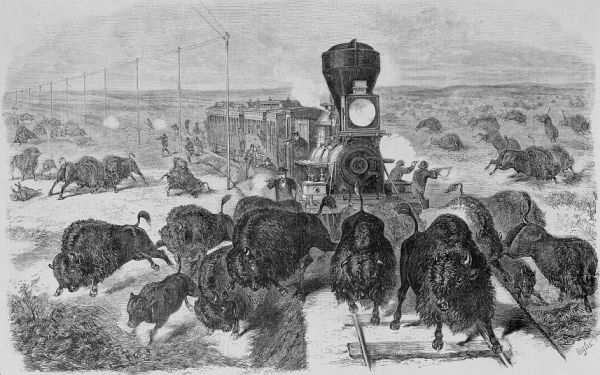
During this time, the great buffalo population on the Great Plains collapsed. In 1853, millions of bison roamed the land. By the 1880s, only a few thousand remained. Professional hunters killed animals for hides and tongues. The U.S. Army supported this slaughter by providing free ammunition. Generals believed the slaughter would settle the question of the tribes. Because the buffalo provided basics for survival, their loss made independence nearly impossible. This blow forced many starving groups to move onto the reservation for food rations.

Many tribes took action to defend their territory. In 1876, the Great Sioux War began due to gold in the Black Hills. The Sioux and Cheyenne defeated the Army at Little Bighorn, but the military used the railroad to move troops. Across the region, the Red River War followed an invasion of tribal lands. In the south, tribes like the Comanche and Kiowa fought hard to stop the destruction of the bison. Since the Army had more supplies and the railroad, they could stay in the field longer. Eventually, these tribes had to surrender to the soldiers and the government.
Other nations tried to flee to safety. The Nez Perce were ordered to move to a reservation in 1877. Famous Chief Joseph led his people on a long, hard journey toward Canada. They fought eighteen battles against the military during their flight. After the Nez Perce fled for months, they were captured just forty miles from the border. They were forced into a hot place in Oklahoma. Many people died from disease and sadness. Although many leaders wanted peace, the loss of land and food led to new conflicts.
The Apache Wars were the longest conflicts in the history of the country. Apache war leaders like Cochise and Geronimo led warriors against the Army for many years. In 1872, the Army surprised a group of Yavapai at Skeleton Cave, and many died from boulders rolled over the cliffs. While some groups surrendered early, others, like the fierce Apache, fought for decades to keep their ways. Brave warrior Geronimo finally surrendered in 1886. He and his people were sent to prison in Florida and Alabama. They were not allowed to return home for many years.
As Indigenous resistance weakened, the government began trying to change Indigenous ways of life. In 1879, the Carlisle Indian Industrial School opened in Pennsylvania. Indigenous children were taken from their families and sent to live at the school. They were forced to speak English and learn American customs so they would assimilate into white society.
By the end of the nineteenth century, tribal resistance was completely broken, and Native nations were confined to small pieces of land. The entire American West had been fully transformed by all of these historical events.
