
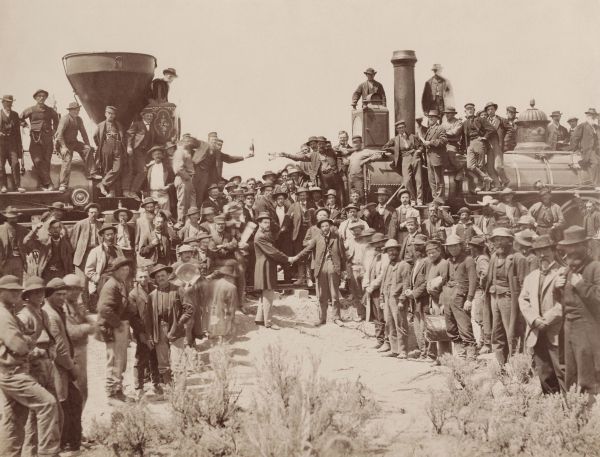
In 1869, the first railroad linked the East and West Coasts with one line. News of the final spike spread instantly by telegraph, and people celebrated across the country.
Travel changed fast. A stagecoach trip had cost about $1,000 and could take five or six months. After the railroad opened, passengers could travel between San Francisco and New York in about a week, and some accounts described a five-day trip costing about $150 for a first-class sleeper.
Because the trip became faster and cheaper, more people and goods could move between coasts. The railroad helped trade grow. Within ten years, it shipped about $50 million worth of freight coast to coast each year. Western farm products, coal, minerals, and other resources could move to the East. Goods from eastern factories could reach growing communities beyond the Mississippi.
New towns appeared along the rail line. Railroads founded many towns on the Great Plains on land granted by the federal government, and the companies sold land to settlers. Some temporary camps vanished. However, other sites turned into permanent rail terminals and repair centers. The growth of rail travel also helped create four standard time zones.
As rails spread outward from the main line, settlers and businesses followed the new routes. The railroad also had serious costs. It led to quicker expansion into Indigenous lands. Also, it quickened the decline of buffalo herds by increasing hunting and shipping hides.
