
June 18, 1812
The United States Declares War: Congress declares war on Great Britain after years of conflict over trade, impressment, and frontier tensions. Many Americans expected a quick victory, but the young nation was not fully prepared for war.
August 16, 1812
The Siege of Detroit: British, Canadian, and Indigenous forces capture Detroit after General William Hull surrenders without a major battle. The defeat exposes the weaknesses of the United States Army and gives Britain an early advantage.
August 19, 1812
USS Constitution Defeats HMS Guerriere: The USS Constitution defeats the British warship HMS Guerriere in one of the war's first major naval battles. The victory boosts American confidence and earns the ship the nickname "Old Ironsides."
September 10, 1813
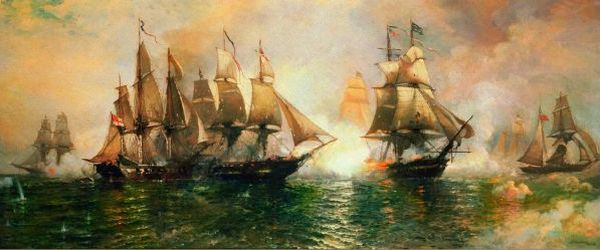
Battle of Lake Erie: American naval forces under Oliver Hazard Perry defeat the British and gain control of Lake Erie. The victory allows the United States to recapture Detroit and shifts momentum in the Northwest.
October 5, 1813
Battle of the Thames: American forces defeat the British and their Indigenous allies in present-day Canada. Shawnee leader Tecumseh is killed during the battle, ending his confederation's resistance and weakening British alliances in the region.
August 24, 1814
Burning of Washington: After defeating American forces at the Battle of Bladensburg, British troops capture Washington, D.C. They burn the White House, the Capitol, and other government buildings, shocking the young nation but failing to end the war.

September 11, 1814
Battle of Plattsburgh: American soldiers and sailors defeated a British invasion force near Lake Champlain, forcing the British to retreat into Canada. The failed invasion gave Britain less leverage to demand American territory during the peace negotiations.
September 13-14, 1814
Battle of Baltimore: British ships bombard Fort McHenry for more than 24 hours but fail to capture Baltimore. Watching the attack, Francis Scott Key writes the poem that later becomes "The Star-Spangled Banner."
December 24, 1814
Treaty of Ghent: American and British representatives sign a peace treaty ending the war. The treaty restores the borders that existed before the conflict, with neither side gaining territory.
January 8, 1815
Battle of New Orleans: Before news of the peace treaty reaches North America, Andrew Jackson leads American forces to a decisive victory over the British. The victory makes Jackson a national hero and leaves many Americans feeling they had successfully defended their independence.


