
When the framers wrote Article III of the Constitution, they devoted far fewer words to the judicial branch than they did to Congress or the presidency. Yet the system they created has become one of the most powerful institutions in American government. The federal judiciary was not designed simply to resolve disputes. It was designed to uphold the Constitution, limit government power, and protect individual rights within a system committed to the rule of law.
To understand how it accomplishes that goal, it is necessary to examine three interconnected elements: the structure of the federal courts, the power of judicial review, and the way federal judges are appointed and serve.
The Constitutional Foundation: Article III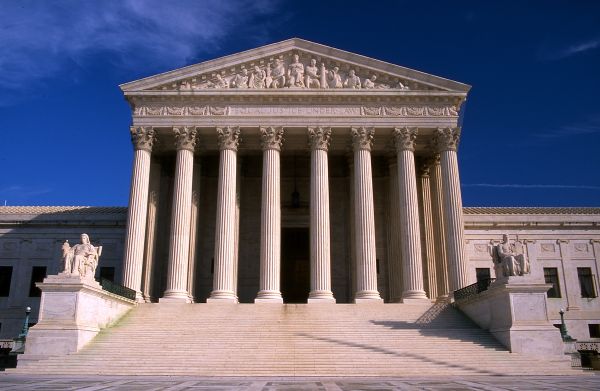
Article III begins with a clear structural decision: “The judicial Power of the United States, shall be vested in one supreme Court.” The Constitution guarantees the existence of a Supreme Court but allows Congress to create “inferior Courts.” This language establishes two principles at once: there will be a single highest court in the nation, and the lower federal courts exist because Congress chooses to create them.
Section 1 also includes two important protections for federal judges. Judges serve “during good Behaviour,” which has been understood to mean life tenure unless removed through impeachment. In addition, their compensation “shall not be diminished” while they remain in office. These protections are intended to allow judges to make decisions without fear of losing their jobs or their income because of unpopular rulings.
Section 2 defines the scope of judicial power. Federal courts may hear cases arising under the Constitution, federal laws, and treaties; disputes between states; cases involving ambassadors; and controversies between citizens of different states, among other categories. By listing these types of cases, the Constitution both grants authority and sets limits. Federal courts cannot decide any dispute they choose—they must have jurisdiction, or constitutional authority, over the matter.
Article III also distinguishes between original and appellate jurisdiction. Most cases begin in lower courts, but some may be reviewed on appeal. The Supreme Court has limited original jurisdiction—meaning it hears only certain types of cases first—but it exercises broad appellate jurisdiction over constitutional questions.
Notably, Article III does not explicitly mention the power to declare laws unconstitutional. That authority would develop through interpretation.
The Structure of the Federal Court SystemAlthough Article III establishes only the Supreme Court directly, Congress has created a three-tiered federal court system that reflects the Constitution’s framework.
At the base are the U.S. District Courts, which serve as trial courts. There are 94 district courts across the country. These courts exercise original jurisdiction: they hear evidence, determine facts, and apply the law to individual cases. Most federal cases begin here.
Above them are the U.S. Courts of Appeals, often called circuit courts. There are 13 circuits. These courts do not conduct new trials. Instead, they review decisions from district courts to determine whether the law was applied correctly and whether proper procedures were followed. They exercise appellate jurisdiction and generally do not consider new evidence.
At the top is the Supreme Court of the United States. The Court receives thousands of petitions each year, but chooses to hear only a small percentage. Most of its work involves appellate review of lower federal courts or state supreme courts when constitutional issues are involved. Because it is the highest court in the federal system, its interpretations of the Constitution are final unless altered by constitutional amendment.
This hierarchical structure allows cases to move upward through appeals, creating opportunities to correct errors and promote consistency in how federal law is interpreted.
Judicial Review and Marbury v. Madison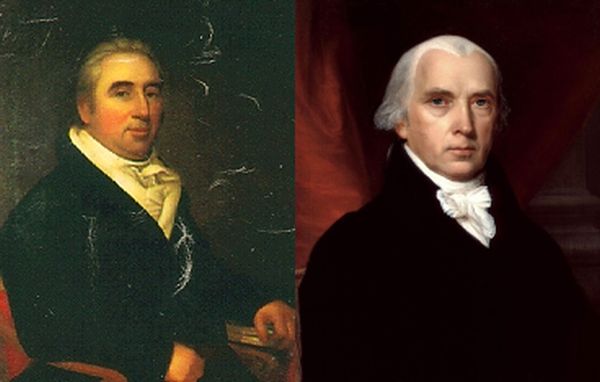
One of the most important powers of the federal judiciary—judicial review—is not explicitly written in Article III.
Judicial review is the authority of courts to declare laws or executive actions unconstitutional. This power was established in 1803 in the Supreme Court case Marbury v. Madison.
In that case, Chief Justice John Marshall argued that because the Constitution is the supreme law of the land, courts must interpret it when resolving disputes. If a law passed by Congress conflicts with the Constitution, the Court must follow the Constitution. As a result, the Supreme Court concluded that it had the authority to invalidate laws that violate constitutional provisions.
Judicial review significantly expanded the role of the courts. It meant that the judiciary could determine whether the actions of other parts of government were consistent with the Constitution. In doing so, the courts became central to maintaining constitutional limits and protecting individual rights.
At the same time, this authority places significant power in the hands of judges who are not elected by voters. That reality continues to shape debates about the proper role of the courts.
Appointment and Length of Service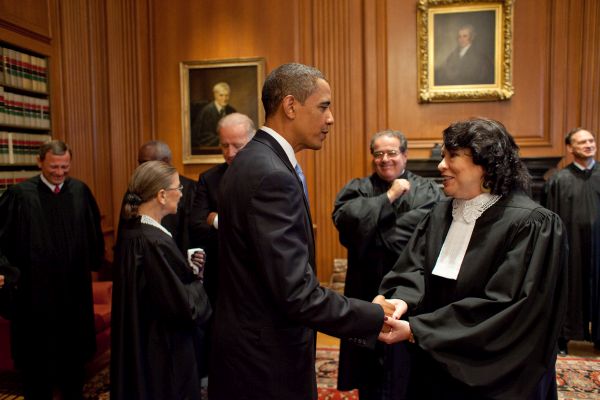
Federal judges, including Supreme Court justices, are nominated by the President of the United States. The nominee must then be confirmed by a majority vote in the Senate before taking office.
Once confirmed, federal judges serve for life, as long as they maintain “good Behaviour.” There are no term limits. Judges do not face reelection, and they do not need to campaign to remain in office. They may choose to retire, or they may be removed through impeachment by Congress, but removal is rare.
In addition, their salaries cannot be reduced while they are in office. This prevents other branches from pressuring judges by threatening their income.
Because federal judges often serve for decades, a single presidential nomination can shape the direction of the courts long after that president has left office. Life tenure provides stability and independence, but it also means that judges may influence constitutional interpretation for a generation or more.
Protecting Rights and Limiting PowerTaken together, the structure and powers of the federal judiciary are designed to support the rule of law.
The hierarchical system promotes consistency and allows for correction of legal errors. Defined jurisdiction limits the scope of judicial authority. Judicial review allows courts to enforce constitutional boundaries on government action. Life tenure and salary protections allow judges to make decisions without fear of political retaliation.
These features are intended to ensure that laws are applied consistently, that constitutional limits are enforced, and that individual rights can be defended in court.
Yet the design also raises important questions. Unelected judges may overturn laws passed by elected officials. Appeals can require time and resources, making access uneven. The Supreme Court hears only a small fraction of the cases brought before it.
The federal judiciary was intentionally structured to balance strength and independence. It is powerful enough to interpret and enforce the Constitution, yet structured in ways that attempt to preserve stability and continuity over time. The tensions that result from this design continue to shape debates about the role of the courts in American government today.


(c).jpg)
