
When George Washington announced that he would retire, the United States faced something new. For the first time, Americans would choose a new president in a contested election. The election of 1796 tested whether power could be transferred peacefully from one president to another in the young nation.
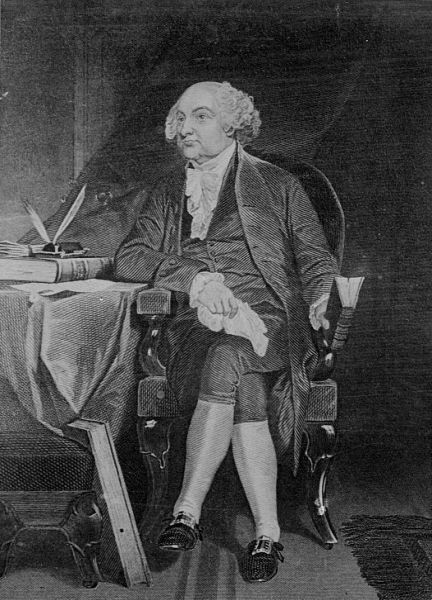
John Adams, a Federalist, faced Thomas Jefferson, a Democratic-Republican. Adams won the election by a narrow margin, receiving 71 electoral votes to Jefferson's 68. Under the original rules of the Constitution, the candidate with the most electoral votes became president, while the candidate with the second-highest total became vice president. As a result, Adams became the nation's second president. Jefferson became vice president even though he belonged to the opposing party.
As Adams took office in 1797, he inherited a growing problem with France. During Washington's presidency, war had broken out in Europe between Britain and France. Washington believed the United States should remain neutral and avoid becoming involved in European conflicts. Adams agreed with this approach. He believed the young nation was not strong enough to fight another major war.
Maintaining neutrality was not easy. In 1794, the United States signed Jay's Treaty with Great Britain. The treaty helped improve relations between the two countries and reduced the chance of war. Many Americans supported the treaty because it helped preserve peace and protect trade.
France viewed the treaty very differently. French leaders believed the United States was becoming too friendly with Britain, France's enemy. To them, the treaty seemed to favor Britain and ignore the alliance France had formed with the United States during the American Revolution. Many French leaders felt that the United States was turning away from a country that had helped it win its independence.
As tensions increased, France began seizing American merchant ships that traded with Britain. French ships captured hundreds of American vessels. This hurt trade and threatened American sailors. These actions angered many Americans and created pressure for the government to respond.
Adams now faced a difficult challenge. He wanted to protect American trade and national security, but he also hoped to avoid a costly war. The crisis with France continued to grow, and the new president would soon have to decide how the United States should respond.
