
When the Civil War ended, four million formerly enslaved people faced the challenge of building new lives. In 1865, Congress created the Freedmen’s Bureau to help with this transition. The bureau provided food, clothing, medical care, legal assistance, and educational support. It supervised abandoned lands and tried to organize paid labor. By 1870, it supported more than 1,500 schools and over 100,000 students. It distributed millions of rations and helped families legalize their marriages. Although the bureau offered important support, critics attacked it, and Congress reduced funding. The agency closed in 1872, leaving Black communities with far less federal protection.
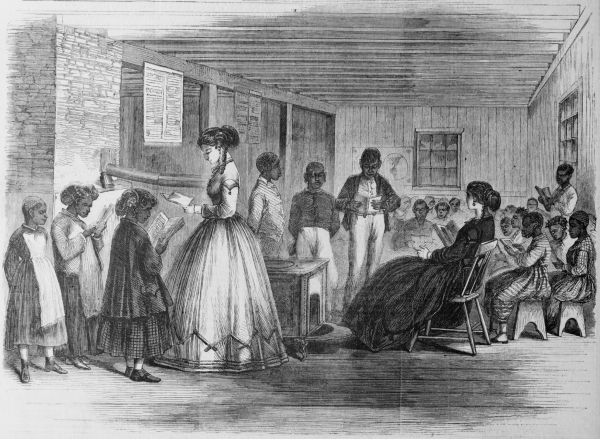
Even after the bureau ended, African Americans did not give up on freedom. From the first days after emancipation, they demanded schools for themselves and their children. In Georgia alone, thousands of freedpeople filled classrooms within a year. Black families paid tuition, raised money for teachers, bought land for schoolhouses, and donated labor to build them. Adults studied beside children in night schools and Sabbath schools. Teachers came from both the North and the South, and many were African American. Education was seen as a path to independence and leadership.
Freedpeople also built strong community institutions. Churches, schools, businesses, and associations provided safety and leadership. African Americans formed burial societies to help members pay funeral costs. The Grand United Order of Odd Fellows expanded after the war and supported members in times of sickness or hardship. These groups promoted pride, self-help, and unity. They became centers for political discussion and training. Through organizing, Black communities created networks that strengthened their independence.
Economic independence was another goal. Freedpeople sought land for two main reasons. First, land offered self-determination. Second, it provided security. Black farmers saved extra wages, used relationships, or settled unused land in hopes of ownership. Over time, Black landownership grew in places like Durham, where land was more affordable. Families connected land to heritage and home. At the same time, Black entrepreneurs built businesses and self-sustaining communities. In places like Greenwood in Tulsa, Oklahoma, residents owned shops, schools, banks, and churches, and money often circulated many times within the community before leaving.
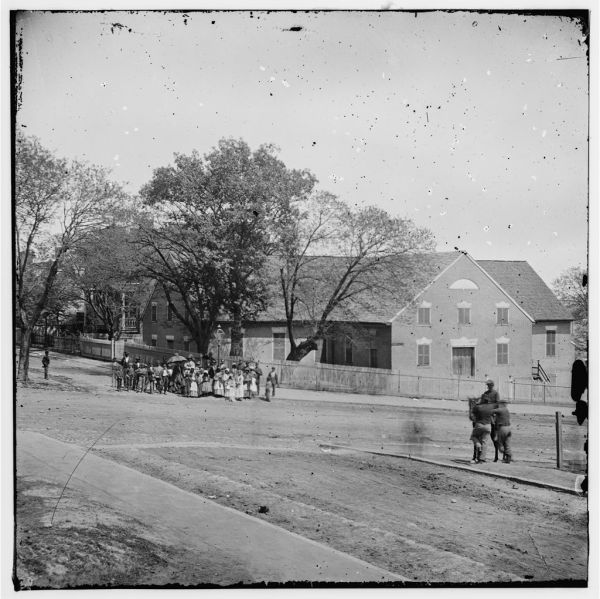
African Americans also resisted violence and intimidation. White supremacist groups such as the Ku Klux Klan tried to stop Black political and social progress through threats and attacks. Black communities did not stand by quietly. Some formed militias to patrol neighborhoods and defend families. Black federal troops and Union veterans sometimes protected communities from armed white groups that attacked Black citizens. In some towns, armed Black residents fought back when attacked. Testifying before Congress became another form of resistance because it allowed African Americans to tell their stories publicly for the first time.
The Freedmen’s Savings Bank was created in 1865 to help freedpeople manage and protect their money. It held millions of dollars in deposits and served tens of thousands of depositors. Its collapse in 1874 was a serious blow to economic hope. Even so, Black Americans continued to build institutions, organize communities, defend themselves, and pursue education. After Reconstruction, federal protection faded. Still, African Americans remained resilient and determined. Their efforts laid the foundations for future generations.
Freedom did not survive on its own. African Americans protected it by building schools, communities, businesses, and defense systems with the goal of strengthening their futures.
